Every Lubbock homeowner who has fought to keep a natural lawn green through a West Texas summer has wondered the same thing: is it worth it, or should I just switch to artificial turf? Natural grass has its charms, but our climate, brutal sun, watering restrictions, dust, and heat, stacks the deck against it. This guide compares artificial turf and natural grass head to head on cost, water use, maintenance, durability, and looks, so you can decide which really makes sense for a Lubbock yard.
Here is artificial turf vs natural grass in Lubbock, compared honestly on cost, water, upkeep and how each one actually holds up to a West Texas summer.
On this page, a complete guide to artificial turf vs natural grass in Lubbock, TX:
- Quick Answer: Artificial Turf vs Natural Grass in Lubbock
- Cost Compared: Upfront vs. Lifetime
- Artificial Turf vs Natural Grass: Where Each One Wins
- Why West Texas Tips the Scale Toward Turf
- Artificial Turf vs Natural Grass: Which Should You Choose?
- Final Word: Match the Yard to Your Life
- Frequently Asked Questions About Artificial Turf vs Natural Grass
Quick Answer: Artificial Turf vs Natural Grass in Lubbock
For most Lubbock yards, artificial turf wins on total cost and hassle over time, while natural grass wins only on upfront price and that soft, living feel. Grass is cheap to install but expensive forever: constant water, mowing, fertilizer, and reseeding. Turf costs more up front (see our artificial turf cost guide) but eliminates watering and mowing and stays green year-round for 15–25 years. In a semi-arid, drought-prone climate, that math usually favors turf.
The right answer depends on how you use your yard and how much upkeep you’re willing to do. Below we break down each factor so you can see exactly where turf and grass differ, and where each one still makes sense.
Cost Compared: Upfront vs. Lifetime
Sticker price tells only half the story. Natural grass is far cheaper to install but carries a heavy ongoing cost; turf flips that equation. Here’s how they compare over time:
- Natural grass, upfront: low. Sod or seed is inexpensive to lay.
- Natural grass, lifetime: high. Water bills every summer, mowing or lawn service, fertilizer, weed control, aeration, and reseeding add up year after year.
- Artificial turf, upfront: higher (roughly $8–$15 per sq ft installed in Lubbock).
- Artificial turf, lifetime: low. No watering, mowing, fertilizing, or reseeding for 15–25 years, often paying for itself in saved water and upkeep.
The break-even point varies by yard size and water rates, but many Lubbock homeowners recoup the cost difference within several years through water and maintenance savings, and everything after that is money in your pocket.
Artificial Turf vs Natural Grass: Where Each One Wins
Water Use
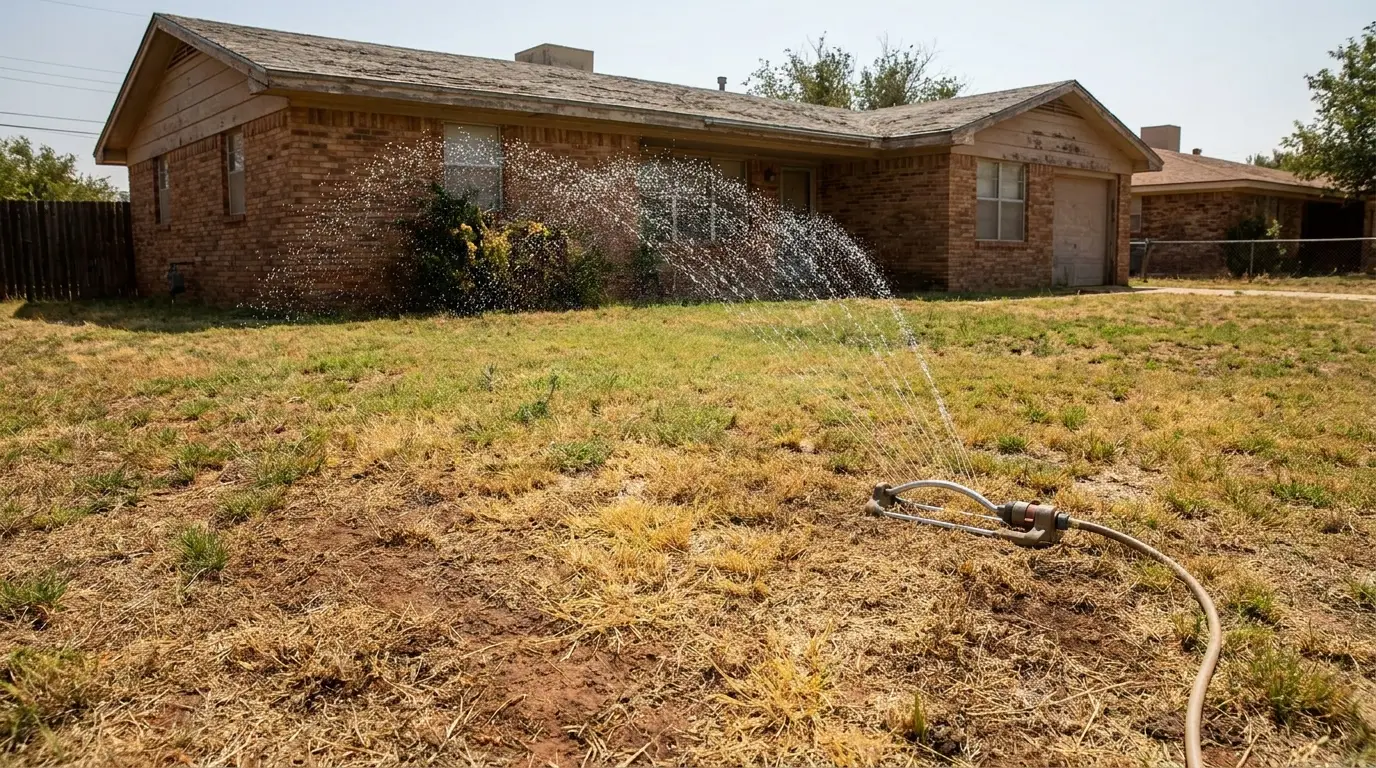
No contest in West Texas. Natural grass is thirsty and struggles under Lubbock’s watering restrictions; turf needs zero irrigation. This is the single biggest reason homeowners here switch.
Maintenance
Grass means weekly mowing, edging, fertilizing, and seasonal reseeding. Turf needs only occasional rinsing and brushing. If you value your weekends, turf wins big.
Appearance
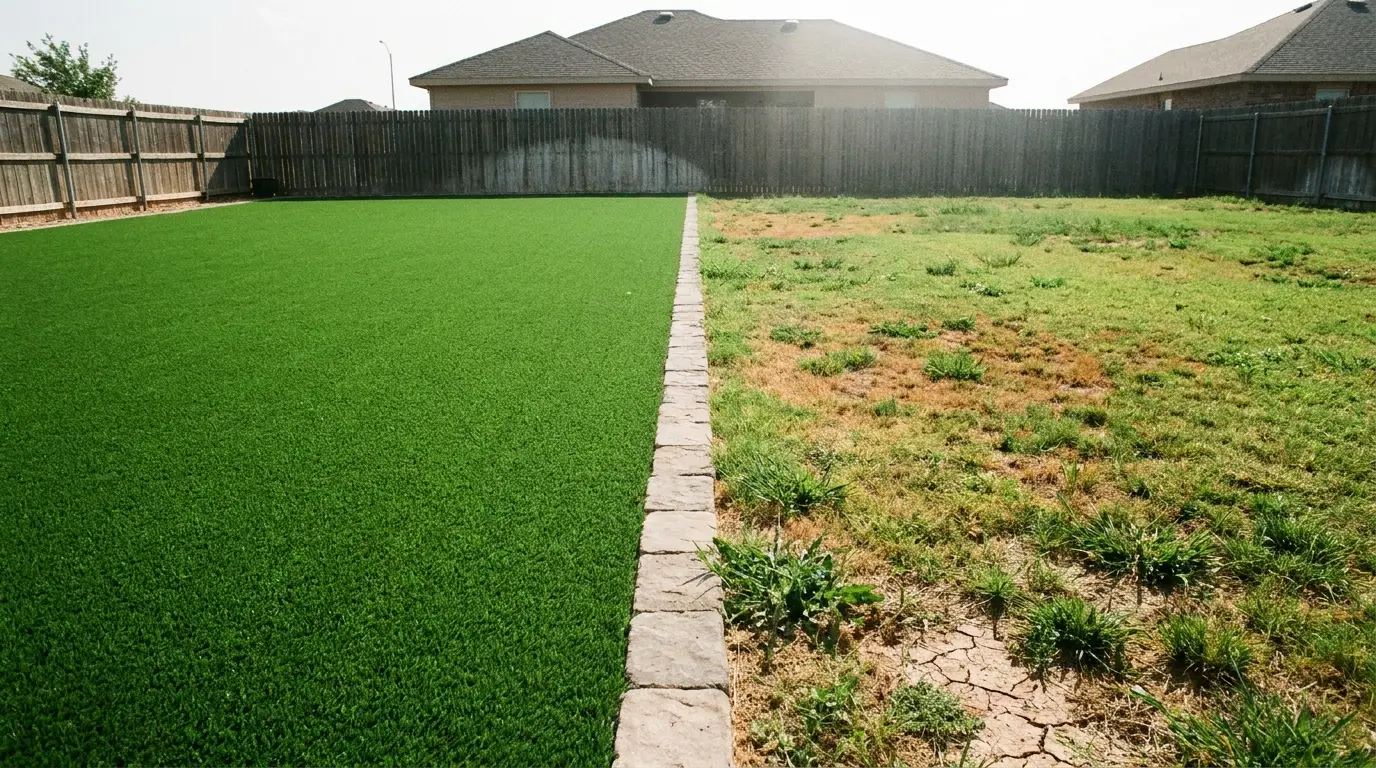
Grass looks and feels natural, when it’s healthy. In Lubbock, keeping it lush all summer is a real fight. Quality turf stays perfectly green year-round with no brown patches.
Durability & Pets
High-traffic areas and dogs quickly wear natural grass into dirt and mud. Turf shrugs off traffic, drains well, and won’t turn to mud, a favorite feature for pet owners.
Feel & Environment
This is where grass keeps a foothold: it’s cooler underfoot on hot days, supports soil life, and feels natural. Turf warms in direct sun (a quick rinse cools it) and is a manufactured surface.
Why West Texas Tips the Scale Toward Turf
In a milder, wetter climate this would be a closer call. On the High Plains, three local realities push most homeowners toward turf:
Water is the hinge the whole comparison turns on. EPA WaterSense puts outdoor watering at roughly a third of residential use nationwide, and in a semi-arid climate a thirsty lawn is the single biggest line on a summer bill.
Water Is Scarce and Restricted
Lubbock’s semi-arid climate and periodic watering limits make a lush natural lawn expensive and sometimes impossible to maintain. Turf sidesteps the problem entirely.
Sun and Heat Punish Grass
The intense sun and long, hot summers stress cool-season grasses and brown out lawns fast. UV-stabilized turf holds its color through it all.
Dust and Wind
Blowing dust and dry soil leave natural lawns patchy and hard to establish. Turf gives you a consistent green surface no matter the wind or drought.
Artificial Turf vs Natural Grass: Which Should You Choose?
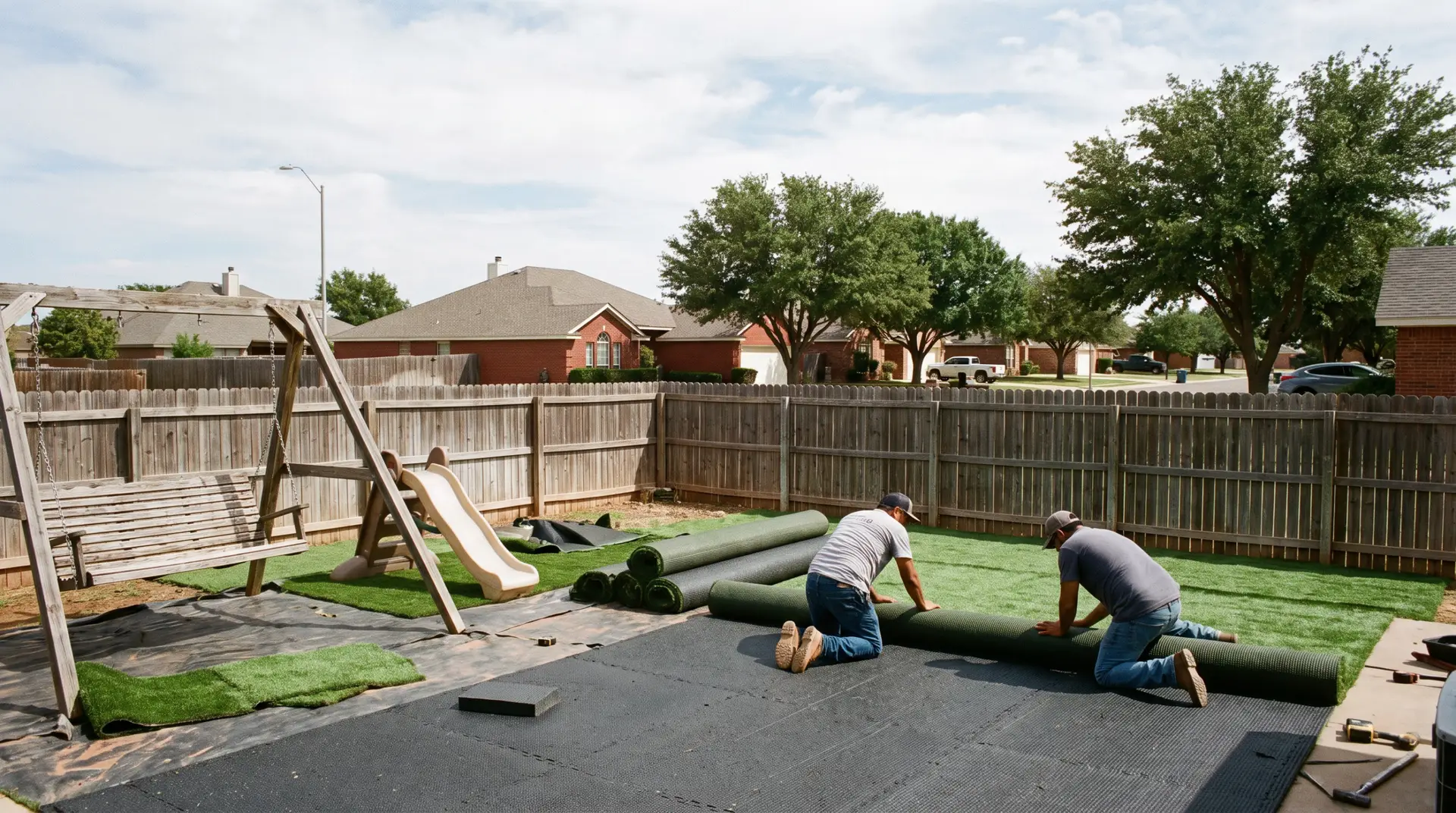
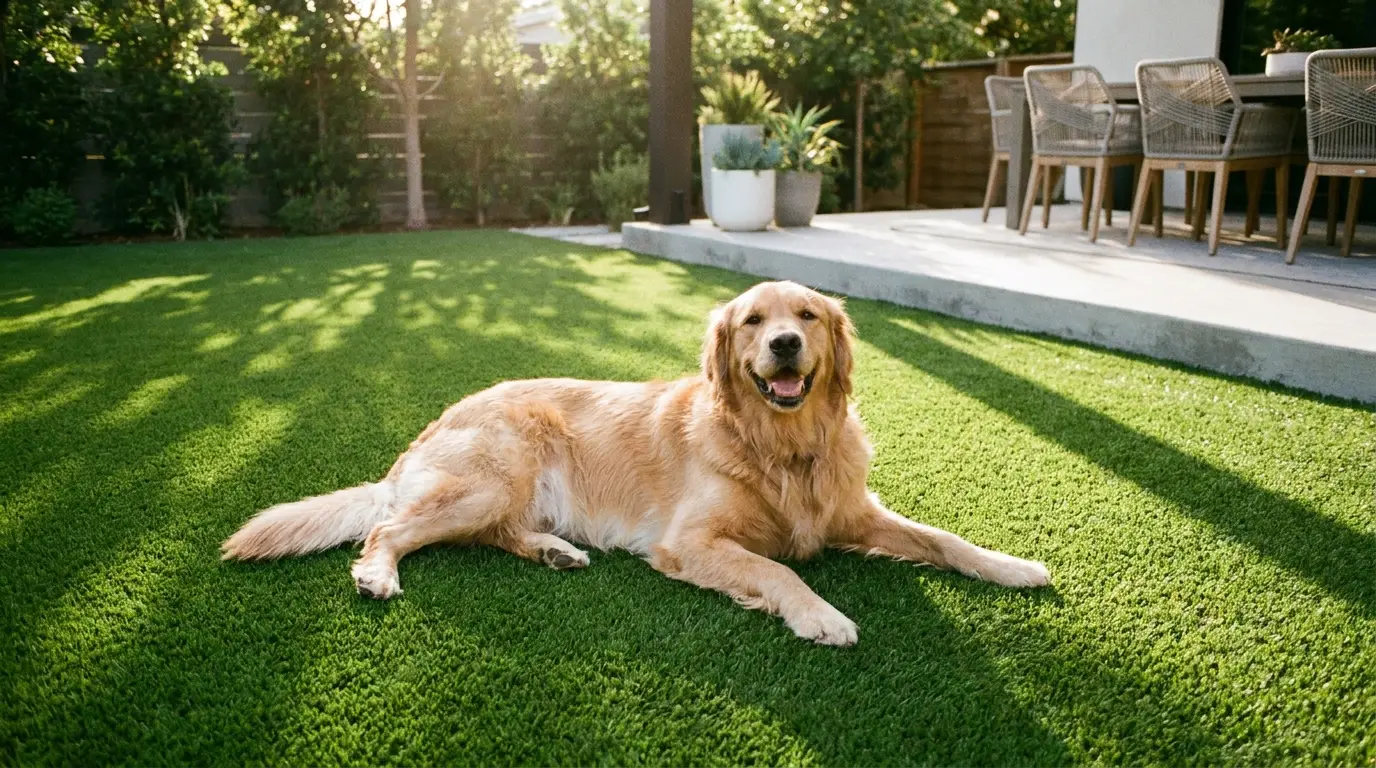
Choose natural grass if upfront budget is your top priority, you love the feel of real grass, and you’re willing to water, mow, and maintain it through every West Texas summer. Choose artificial turf if you want a green, clean, low-maintenance yard that saves water and weekends and pays for itself over time: the right call for most Lubbock homeowners, especially those with pets, high-traffic areas, or water bills they’d love to shrink. If you go the turf route, professional installation and a little turf maintenance keep it looking its best for decades.
Final Word: Match the Yard to Your Life
There’s no universally “right” answer, but in Lubbock’s climate, artificial turf solves more problems than it creates for the average homeowner. If you’re tired of watering a lawn that never quite looks great, turf is likely your best move. Elite Roofing and Exterior installs premium artificial turf and can walk your yard to give you honest numbers. Explore our turf installation service, see all our exterior services, or call (806) 451-3393 for a free quote.
Frequently Asked Questions About Artificial Turf vs Natural Grass
Quick answers to what Lubbock homeowners ask most about artificial turf vs natural grass
Not upfront, natural grass is much cheaper to install. But turf is usually cheaper over its lifetime because it eliminates watering, mowing, fertilizing, and reseeding for 15 to 25 years. In Lubbock's climate, with high summer water use, many homeowners find turf pays back its higher upfront cost within several years.
Yes, especially here. Keeping a natural lawn green through a Lubbock summer takes substantial, regular irrigation, often the biggest driver of a warm-season water bill. Artificial turf needs no irrigation at all, which is why water savings is the number-one reason West Texas homeowners make the switch.
Turf, for most pet owners. Dogs quickly wear natural grass into dirt and mud, especially along fence lines and favorite paths. Turf drains well, won't turn to mud, can't be dug into bare patches, and stays clean with periodic rinsing, making it a durable, low-maintenance surface for pets.
Quality modern turf looks remarkably realistic, with multi-tone blades and varied textures that mimic natural grass. Cheap turf can look plasticky and flat, which is why product choice and professional installation matter. Installed well, most people can't tell the difference from the street.
Absolutely. Many Lubbock homeowners put turf in the high-traffic or hard-to-grow areas, pet runs, side yards, shady spots, play areas, and keep natural grass where it thrives. A hybrid approach gives you the low-maintenance benefits where you need them most while keeping some living lawn.