You made the switch to artificial turf so you could stop mowing, watering, and fighting the West Texas heat for a patch of green that never quite cooperated. Good call. But somewhere along the way you probably heard turf is “zero maintenance,” and that’s not quite true. Synthetic grass in Lubbock needs a little attention to stay soft, upright, and vibrant: especially with our blowing dust, brutal summers, and pets.
The good news: it’s genuinely easy, cheap, and quick. This guide walks you through exactly how to handle artificial turf maintenance so your lawn still looks brand-new years down the road, without turning into another weekend chore.
Here is the artificial turf maintenance routine that keeps a Lubbock lawn looking new: what to do, how often, and what West Texas dust and heat demand.
On this page, a complete guide to artificial turf maintenance in Lubbock, TX:
- Quick Answer: Artificial Turf Maintenance in Lubbock
- Your Artificial Turf Maintenance Routine
- What Affects How Much Artificial Turf Maintenance You Need
- Keeping Turf Great in West Texas
- DIY vs. Professional Turf Maintenance
- Final Word: A Little Care, Years of Green
- Frequently Asked Questions About Artificial Turf Maintenance in Lubbock
Quick Answer: Artificial Turf Maintenance in Lubbock
Artificial turf needs far less care than real grass, but not zero. The core routine is simple: rinse it regularly to wash off dust and pollen, brush the blades upright in high-traffic spots so they don’t mat down, clear leaves and debris before they break down, treat pet areas to control odor, and top up the infill every year or so.
That’s essentially it. Budget 15 minutes here and there, a quick rinse, an occasional brush, a leaf blow, and quality turf stays looking new for its full 15–25 year lifespan. No mowing, no watering to keep it alive, no fertilizer, no weekly commitment.
Think of turf care as light housekeeping rather than yard work. A monthly rinse, a seasonal brush of the busy areas, prompt debris removal, and pet-spot treatment cover 95% of what you’ll ever need to do. Once a year, check the infill and top it off. Compared to what you’d spend keeping natural grass alive in Lubbock, the upkeep is minimal, part of why the numbers work out in turf’s favor, as we break down in our artificial turf cost guide.
Your Artificial Turf Maintenance Routine
You don’t need special training or expensive equipment to keep turf looking sharp: a hose, a stiff broom or turf rake, and a leaf blower cover most of it. Here’s the full routine broken into the five things that actually matter, along with how often each one comes up for a typical Lubbock yard.
- Rinse the surface: Hose it down roughly monthly to clear dust, pollen, and fine debris, more often if you have pets or live near open, dusty ground.
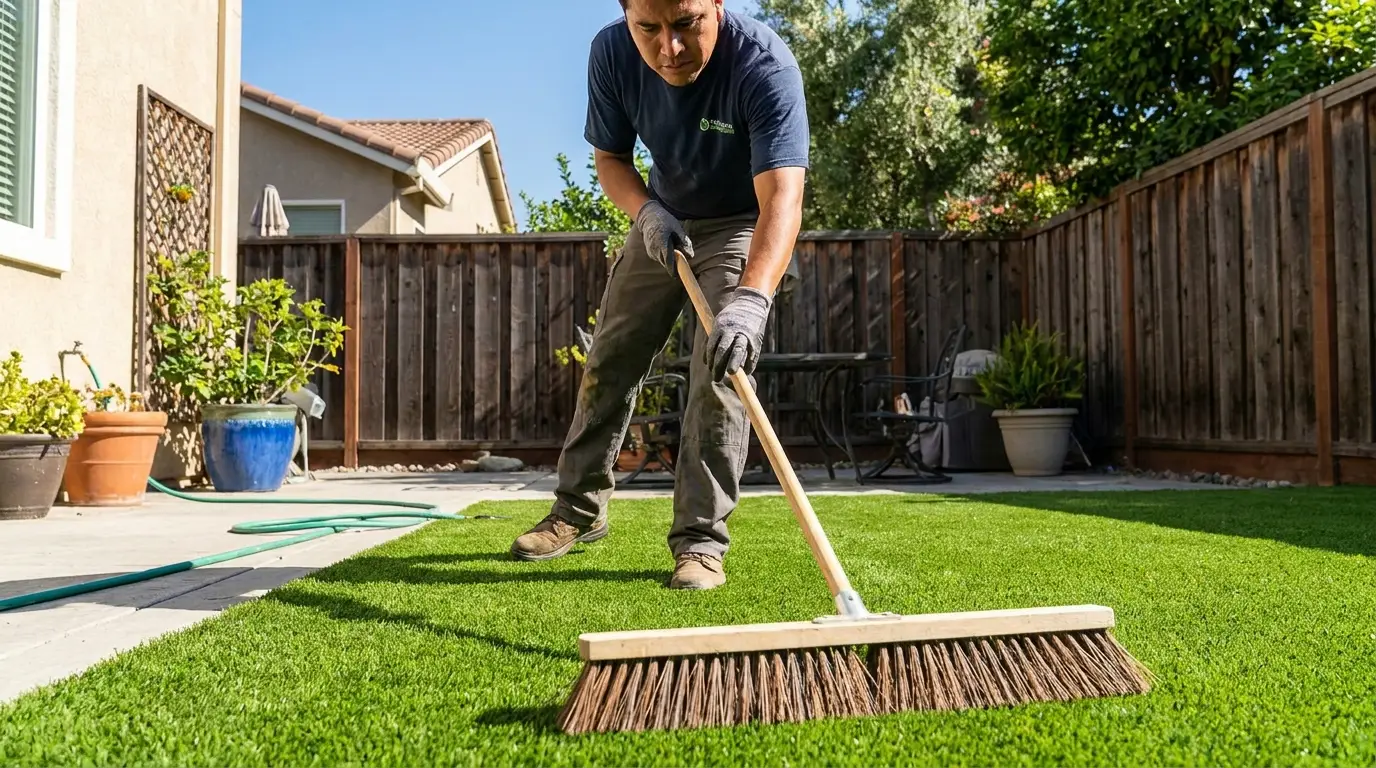
- Brush and groom high-traffic areas: Sweep matted or flattened blades upright with a stiff synthetic-bristle broom, working against the grain in walkways and play zones.
- Remove leaves and debris: Use a leaf blower, plastic rake, or your hands to keep organic matter off the turf before it decomposes and feeds weeds.
- Treat and deodorize pet spots: Rinse pet areas often and apply an enzyme-based turf deodorizer to break down waste and stop odor from building up.
- Check and top up infill: Inspect the infill layer yearly; add sand or antimicrobial infill where traffic has thinned it to keep blades supported and cushioned.
None of this is rigid. Frequencies shift with your yard: a shady, pet-free patio might only need a rinse a few times a year, while a busy backyard with two dogs and a nearby elm will ask for more attention. The point is to spread small, easy tasks across the seasons rather than let dust, debris, and matting pile up into one big job.
What Affects How Much Artificial Turf Maintenance You Need
Two turf lawns on the same street can need very different amounts of care. A few factors drive how often you’ll be out there with the hose and broom.
Pets
Dogs are the single biggest maintenance variable. Urine doesn’t kill turf like it does grass, but it needs rinsing and enzyme treatment to prevent odor, and solid waste has to be picked up promptly. Heavy pet zones also get walked down faster, so they need more frequent brushing and occasional infill top-ups.
Nearby Trees and Debris
Turf under or beside trees collects leaves, seed pods, blossoms, and berries. Left alone, that organic matter rots into the infill, encourages weeds along the edges, and stains lighter blades. More overhanging foliage simply means more frequent blowing and raking to keep the surface clean.
Foot Traffic
The more a section gets walked, played, or lounged on, the faster its blades mat down and its infill compacts or displaces. Pathways, gate areas, and kids’ play zones need the most brushing against the grain and the most attention when you check infill levels each year.
Sun and Heat Exposure
Full-sun turf takes the hardest UV and thermal load. Quality turf resists fading, but hot surfaces benefit from an occasional cooling rinse in summer, and heat-reflective infill helps. South- and west-facing areas with no shade run hotter and warrant a little extra care.
Keeping Turf Great in West Texas
Lubbock and the South Plains throw a specific set of conditions at synthetic grass. None of them are dealbreakers, turf handles our climate beautifully, but they do shape where you should focus your maintenance minutes.
Even with rinsing, turf uses a fraction of the water a live lawn does, EPA WaterSense puts landscape irrigation at roughly a third of household use nationally, which is the whole reason artificial turf maintenance stays so cheap here.
Blowing Dust
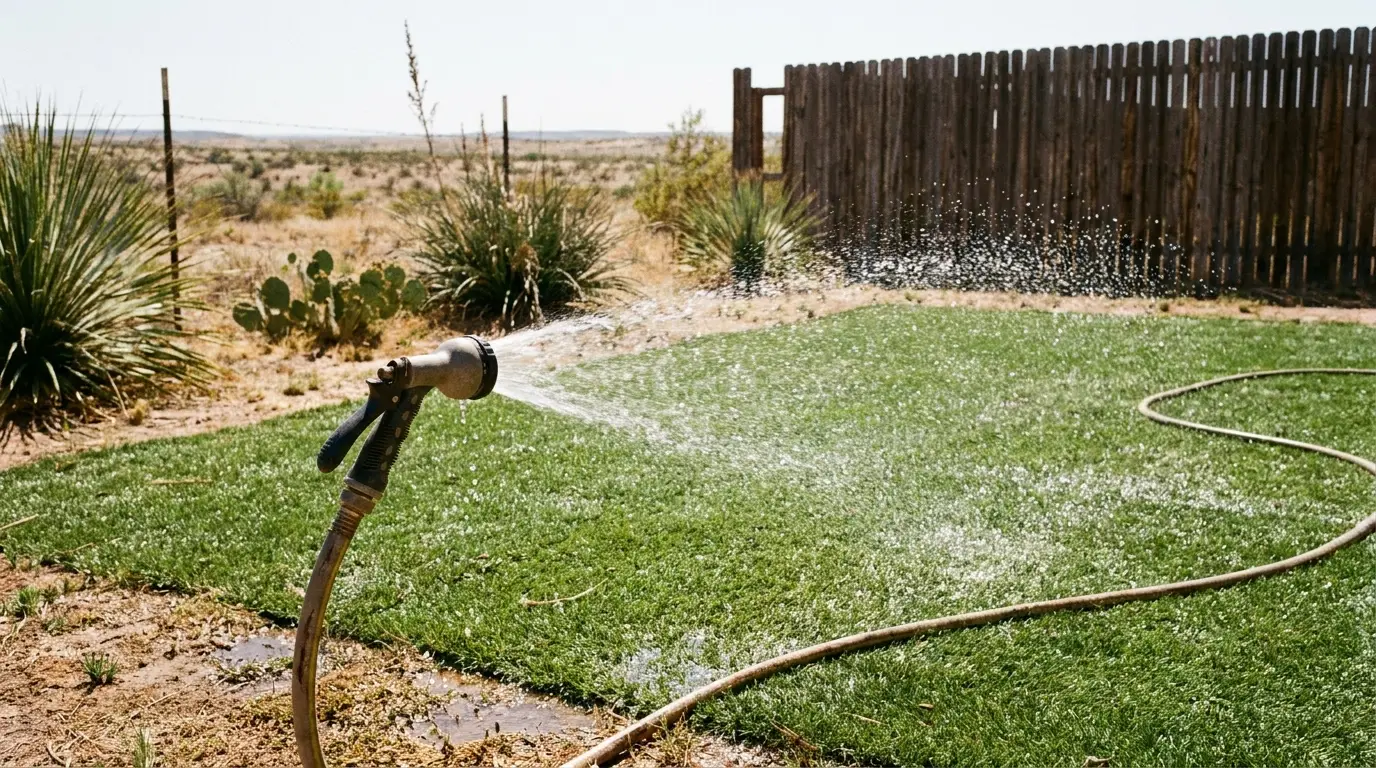
Our wind and open terrain mean fine dust settles into turf far faster than in wetter, greener regions. That’s why rinsing matters more here than almost anywhere. A regular hose-down keeps dust from packing into the infill, dulling the color, and making the surface feel gritty. During dusty stretches, a quick rinse every couple of weeks makes a visible difference.
Summer Heat
Triple-digit Lubbock afternoons heat dark turf surfaces significantly. A brief cooling rinse before the kids or dog go out drops the temperature fast, and heat-reflective or cooling infill helps the surface shed heat between rinses. Choosing lighter-toned, quality turf up front also keeps things more comfortable through July and August.
Occasional Deep Clean
A couple of times a year, typically after peak dust season and before you want the yard looking its best, give the turf a deeper clean: a thorough rinse, a full brushing against the grain, debris removal, and an enzyme treatment on pet zones. This resets the lawn and undoes any gradual buildup our dry, dusty air creates.
DIY vs. Professional Turf Maintenance
The honest truth is that most artificial turf upkeep is comfortably DIY. Rinsing, brushing, blowing off leaves, and treating pet spots need nothing more than basic tools and a few minutes, and doing them yourself keeps the lawn in great shape year-round at essentially no cost. For the vast majority of Lubbock homeowners, that’s the whole story.
Where a pro earns their keep is the periodic heavy lifting: power-brushing and deep-cleaning a large lawn, redistributing or topping up infill correctly, inspecting seams and edges for lifting, and rehabbing pet-heavy yards where odor has gotten ahead of you. If you’d rather hand off the annual reset entirely, or you’re not sure your infill and seams are holding up, a scheduled turf maintenance service keeps everything dialed in without you lifting a broom.
Final Word: A Little Care, Years of Green
Artificial turf is one of the lowest-maintenance upgrades you can make to a Lubbock yard, but “low” isn’t “none.” Give it a rinse, brush the busy spots, clear the debris, stay on top of pet areas, and check the infill once a year, and your lawn will still look showroom-new well into its second decade.
If you want it handled by people who know West Texas turf inside and out, whether that’s a maintenance reset or a brand-new turf installation, the Elite Roofing and Exterior team is ready to help. Call us at (806) 451-3393 and keep your yard green with next to no effort.
Frequently Asked Questions About Artificial Turf Maintenance in Lubbock
Quick answers to what Lubbock homeowners ask most about artificial turf maintenance
For most Lubbock yards, a rinse about once a month keeps dust and pollen from building up, with more frequent rinsing if you have pets or live near open, dusty ground. Brush high-traffic areas seasonally, remove leaves and debris as they fall, and give the whole lawn a deeper clean a couple of times a year. Pet zones need more regular rinsing and enzyme treatment. It’s light, flexible upkeep, a few minutes here and there rather than a weekly chore.
Yes, but only where it matters. High-traffic areas, walkways, gate zones, and play spots, get walked down over time, and the blades mat flat. Brushing them upright with a stiff synthetic-bristle broom, working against the grain, restores that fresh, full look and helps the infill stay evenly distributed. Low-traffic areas rarely need it. A seasonal brush of the busy spots is usually plenty to keep the whole lawn looking new.
Rinse pet areas frequently to flush urine through the turf’s drainage layer, and pick up solid waste promptly. For odor control, apply an enzyme-based turf deodorizer, which breaks down the compounds that cause smell rather than just masking them. Antimicrobial infill installed under the blades also helps a lot in pet-heavy yards. If odor has already built up, a professional deep clean can reset things, but staying consistent with rinsing prevents the problem in the first place.
Infill is the layer of sand or specialty granules brushed down between the turf blades. It weighs the turf down, keeps the blades standing upright, cushions the surface, and helps with drainage and cooling. You don’t fully replace it, but foot traffic gradually thins and displaces it, so it’s worth checking yearly and topping up the low spots. Keeping infill at the right level is one of the biggest factors in turf staying soft, upright, and new-looking.
Not if you keep up with basic care. Quality turf is UV-stabilized to resist fading through our intense summers, and dust doesn’t harm the fibers, it just settles into the surface and dulls the look until you rinse it off. That’s why regular rinsing matters more in West Texas than in wetter climates. For heat, a quick cooling rinse and heat-reflective infill keep the surface comfortable. Handled right, our climate barely dents a good turf lawn’s 15–25 year lifespan.