Lubbock winters have a way of finding the weak spots in a roof. One week it’s sixty and sunny, the next a hard freeze rolls off the Caprock with 40-mph wind and a glaze of ice. That freeze-thaw cycle, plus the wind and blowing dust we live with out here on the South Plains, is exactly what turns a small, ignorable roof issue into a January ceiling stain.
The good news: a short round of winter prep every fall handles almost all of it. This guide walks you through a practical winter roof maintenance checklist built for Lubbock homes: what to check, why each step matters, and when it’s smart to call a pro instead of climbing up yourself.
This winter roof maintenance checklist covers what a Lubbock roof needs before the first hard freeze, why each step matters, and what to hand to a pro.
On this page, a complete guide to winter roof maintenance in Lubbock, TX:
- Quick Answer: Winter Roof Maintenance in Lubbock
- Your Winter Roof Maintenance Checklist for Lubbock
- Why Each Step Matters
- Lubbock Winter Realities
- DIY vs. Professional Winter Roof Maintenance
- Final Word: A Little Prep Prevents Winter Leaks
- Frequently Asked Questions About Winter Roof Maintenance in Lubbock
Quick Answer: Winter Roof Maintenance in Lubbock
Before winter, do six things: clean your gutters and downspouts, check and reseal flashing, inspect for loose or missing shingles, confirm your attic has good insulation and ventilation, trim overhanging branches, and schedule a professional inspection. Lubbock winters aren’t brutally long, but they’re unpredictable: sudden cold snaps, high wind, and the occasional ice or snow event that lingers because temperatures whipsaw above and below freezing.
That freeze-thaw action is what pries at loose shingles and worn seals. Knock out this checklist in an afternoon in October or November and you’ll head into the cold season with a roof that sheds water, holds heat, and stays put when the wind kicks up. Most of it is low-cost prevention.
Think of winter prep as protecting the two things a roof does: keep water out and keep heat in. Clean drainage and solid flashing handle the water; attic insulation and ventilation handle the heat and moisture. Skip these and small problems compound fast in freeze-thaw weather. If your inspection turns up curling, bald, or widespread damage, those may be signs you need a new roof rather than a quick reseal, worth knowing before the first freeze.
Your Winter Roof Maintenance Checklist for Lubbock
Here’s the full checklist in order. None of it is complicated, but the sequence matters: clear the drainage first so water has somewhere to go, then work your way up to the parts that keep water out and heat in. Aim to finish before the first hard freeze, in Lubbock that can arrive as early as mid-November.
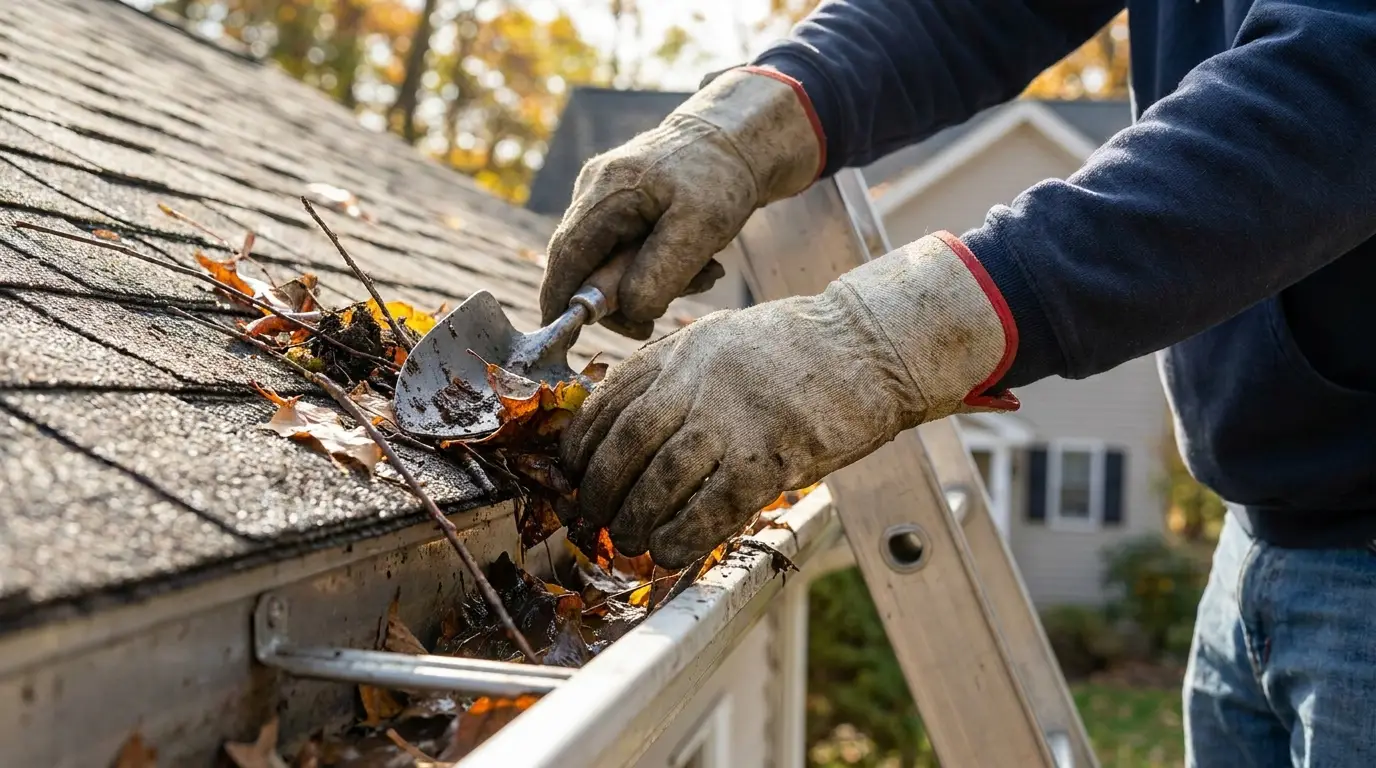
- Clean gutters and downspouts: Clear leaves, dust, and grit so meltwater drains instead of pooling, backing up under the eaves, or freezing into a dam.
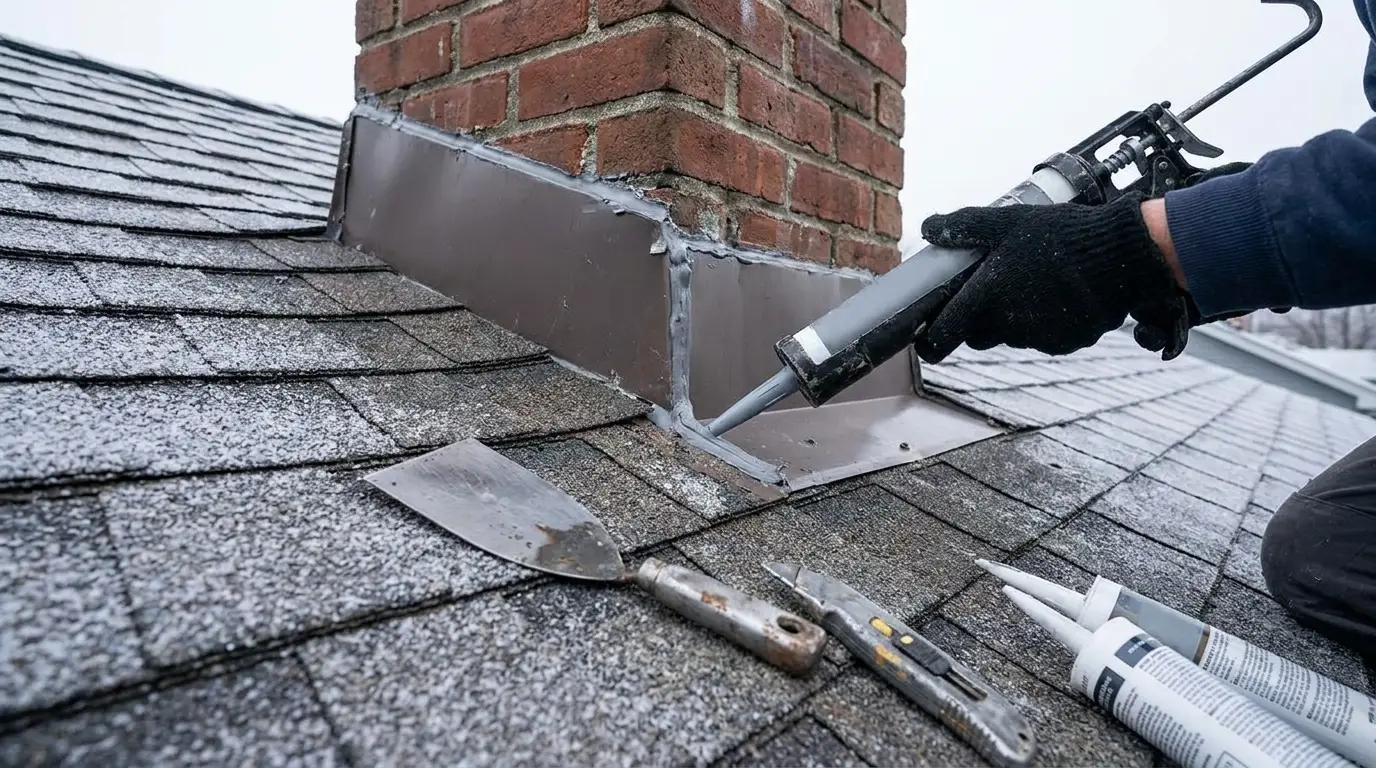
- Inspect and reseal flashing: Check the metal around chimneys, vents, and valleys for gaps or cracked sealant, these are the number-one leak points.
- Check for loose or missing shingles: Wind-lifted or cracked shingles let water and cold in; replace or refasten them before freeze-thaw makes it worse.
- Verify attic insulation and ventilation: Good insulation keeps heat down where you want it; balanced ventilation stops condensation and ice dams up top.
- Trim overhanging tree branches: Limbs that scrape or snap in winter wind gouge shingles and dump debris into your gutters.
- Book a professional roof inspection: A trained eye catches the subtle wear, hairline flashing gaps, soft decking, you’ll miss from the ground.
You don’t have to do all six in one day, and you don’t have to do all of them yourself. The ground-level items, gutters, visible branch trimming, a binocular shingle scan, are fair game for most homeowners. The reseal, the attic assessment, and anything requiring you to walk the roof are safer left to a pro, especially on a cold or windy Lubbock day when footing is bad and a slip has real consequences. If you are already booking fall roof work, it is worth scheduling Christmas light installation at the same time: the same crew, ladders, and fall-protection gear cover both jobs.
Why Each Step Matters
Every item on the list traces back to one of two failures: water getting in or heat getting out. Here’s what’s actually happening on your roof when you skip a step.
Gutters and Drainage
When gutters clog, meltwater has nowhere to go. It backs up under the shingle edge, soaks the fascia, and, in a Lubbock cold snap, freezes into ice that widens every gap it touches. Clear gutters let a quick thaw drain in minutes instead of pooling for days. Ten minutes of scooping now prevents rotted eaves and interior water stains later.
Flashing and Seals
Flashing is the metal that bridges your roof to chimneys, vents, and valleys, and it’s where the vast majority of leaks start. Sealant dries out and cracks under our intense West Texas sun, then contracts in the cold and pulls away. A fresh bead of roofing sealant or a re-secured piece of flashing closes the exact seams that winter water loves to exploit.
Attic Ventilation
Warm, moist indoor air rises into the attic. Without balanced intake-and-exhaust ventilation, that moisture condenses on cold decking and drips, a leak that isn’t a leak. Worse, trapped heat melts rooftop snow unevenly, which refreezes at the cold eaves as an ice dam. Good airflow keeps the whole roof deck a consistent temperature.
Shingle Integrity Before the Cold
Shingles get brittle in the cold, so a shingle that’s already cracked or lifted from summer wind is far more likely to fail once temperatures drop. Fixing them while it’s still mild means the adhesive strips can re-seal in the warmth. Wait until January and you’re patching in freezing wind with material that won’t bond.
Lubbock Winter Realities
Winter roofing advice written for the Midwest doesn’t quite fit the South Plains. Our cold season is shorter and sunnier, but it comes with its own hazards, and they’re exactly the ones that stress a roof.
Time it against the real forecast rather than the calendar, the National Weather Service in Lubbock publishes the local first-freeze climatology and the cold-snap outlooks that should set your winter roof maintenance date.
Cold Snaps and Freeze-Thaw
Lubbock rarely stays frozen for weeks, and that’s the problem. We swing from the 60s to a hard freeze and back within days. Every time water in a crack or under a shingle freezes and expands, then thaws, it pries the gap a little wider. Freeze-thaw cycling is the single biggest winter wear factor on High Plains roofs, and it targets exactly the loose seams you should seal in the fall.
Winter Wind
The wind doesn’t take the winter off out here. Cold fronts routinely bring sustained 30-to-40-mph gusts that lift already-loose shingles, peel back worn flashing, and drive dust and grit into your gutters. A roof that’s buttoned up, shingles fastened, flashing tight, rides out these blows. One with a lifted edge gives the wind a handle to pull on.
Sudden Ice and Snow Events
Snow is occasional in Lubbock, but when it comes it’s often wet, heavy, and paired with ice. Because our temperatures bounce around, that snow tends to partially melt and refreeze rather than simply blow off. That’s when clogged gutters and poor attic ventilation turn into ice dams and interior drips, the two failures most likely to surprise a Lubbock homeowner mid-winter.
DIY vs. Professional Winter Roof Maintenance
Plenty of this checklist is genuinely DIY-friendly. Cleaning gutters, trimming low branches, and scanning your roof with binoculars for lifted or missing shingles are all safe to do from the ground or a stable ladder on a calm day. If you’re comfortable and the weather cooperates, knock those out yourself and save the service call.
Where it’s worth bringing in a pro is anything that puts you on the roof or hides behind the surface. Resealing flashing correctly, judging whether decking has gone soft, spotting the hairline gaps that leak, and assessing attic ventilation all take experience: and doing them means walking a roof that may be cold, dusty, or slick. A professional inspection is inexpensive insurance, and it’s the step most likely to catch the problem you’d never see coming. If you’d rather have trained eyes handle the risky parts, schedule an inspection before the first freeze.
Final Word: A Little Prep Prevents Winter Leaks
Winter roof leaks almost never come out of nowhere: they start with a clogged gutter, a cracked bead of flashing sealant, or a shingle the summer wind loosened. An afternoon of prep in the fall closes those doors before the first Lubbock cold snap ever tests them. Do the ground-level items yourself, and let a pro handle the rooftop and attic work where experience and safety matter most. If you’d like Elite Roofing and Exterior to inspect, reseal, and winter-proof your roof, call us at (806) 451-3393 or explore our roofing services. A little prep now keeps your ceilings dry all winter.
Frequently Asked Questions About Winter Roof Maintenance in Lubbock
Quick answers to what Lubbock homeowners ask most about winter roof maintenance
Aim for October or November, before the first hard freeze. Lubbock’s cold can arrive as early as mid-November, and you want repairs done while it’s still mild, shingle adhesive re-seals in warmth, and sealant bonds better when it isn’t freezing. Doing prep in the fall also means you’re working on dry, safe footing rather than a cold, windy, or icy roof. If fall gets away from you, a warm winter afternoon still beats waiting until a leak forces the issue.
They’re not as common here as up north, but they do happen. Lubbock’s whipsaw temperatures cause snow to partially melt and refreeze rather than blow off, and if your attic is poorly ventilated, escaping heat melts rooftop snow that then refreezes at the cold eaves. That ridge of ice backs water up under your shingles. Balanced attic ventilation and clean gutters are your best defense, both are on this checklist for exactly that reason.
The ground-level ones. Cleaning gutters and downspouts, trimming low overhanging branches, and scanning your roof with binoculars for loose or missing shingles are all reasonable DIY jobs on a calm day. What’s better left to a pro is anything requiring you to walk the roof, resealing flashing, checking decking, or assessing attic ventilation, especially in cold or windy Lubbock weather where a slip is a serious risk. Know your comfort level and don’t improvise on a steep or icy roof.
A basic professional roof inspection is typically modest, often a low, sometimes free service call for local homeowners, depending on the company and roof size. Compared to the cost of repairing water damage from a missed leak, it’s inexpensive insurance. A good inspector checks flashing, shingles, decking, and attic ventilation, then gives you a clear list of what needs attention before winter. Ask Elite Roofing and Exterior what an inspection runs for your home when you call to schedule.
Flashing is the metal sealing the joints around chimneys, vents, and valleys, the spots where the roof surface is interrupted. Our intense West Texas sun dries out and cracks the sealant over the year, then winter cold makes it contract and pull away from the seam. Once there’s a gap, freeze-thaw water works right through it. That’s why flashing is the top leak point on most roofs, and why resealing it is one of the highest-value items on your fall checklist.