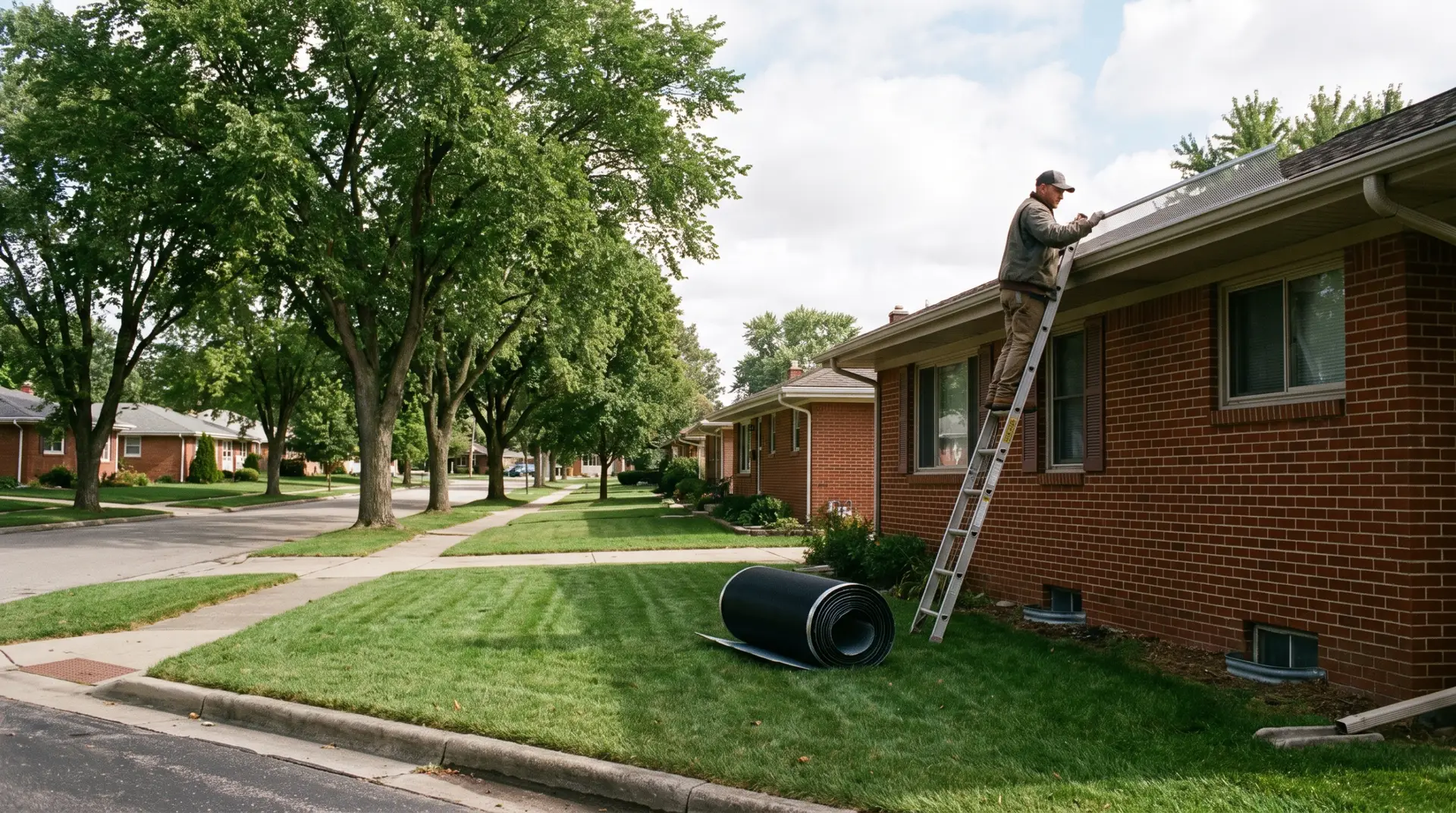
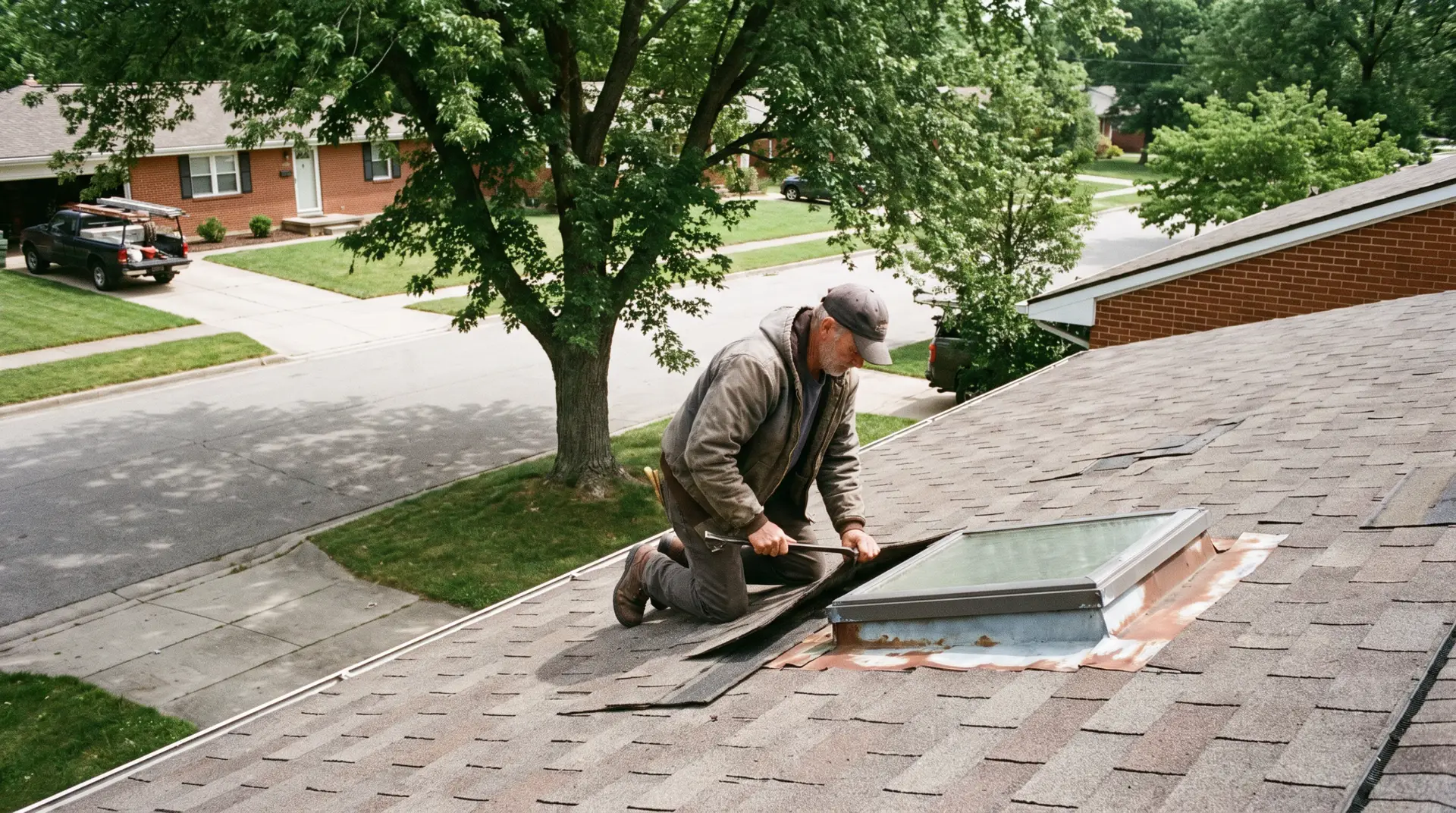
Attic insulation is the cheapest comfort upgrade most Lubbock homeowners can make, and it is also the one most likely to be done wrong by somebody in a hurry. We see it every summer. A crew blows fifteen inches of fiberglass across a ceiling, buries the soffit vents at the eaves, and the homeowner ends up with a hotter attic, a shorter shingle life, and a power bill that barely moved.
The roof and the attic are one system in a house like yours. Insulation slows heat moving through the ceiling. Ventilation moves the heat that already made it into the attic back outside. Do one without thinking about the other and you pay for it twice. This guide covers the R-value that actually makes sense for our climate, how deep that is in real inches, what blocked vents do to a roof, and where a radiant barrier earns its keep on the South Plains.
On this page, a complete guide to attic insulation in Lubbock, TX:
- Quick Answer: How Much Attic Insulation a Lubbock Home Needs
- Five Signs the Insulation Over Your Ceiling Is Not Working
- R-Value, Depth and Material: What Belongs in a West Texas Attic
- Why Attic Insulation and Roof Ventilation Get Planned Together
- What Adding Attic Insulation Actually Saves in Lubbock
- Final Word: Do the Attic When You Do the Roof
- Frequently Asked Questions About Attic Insulation
Quick Answer: How Much Attic Insulation a Lubbock Home Needs
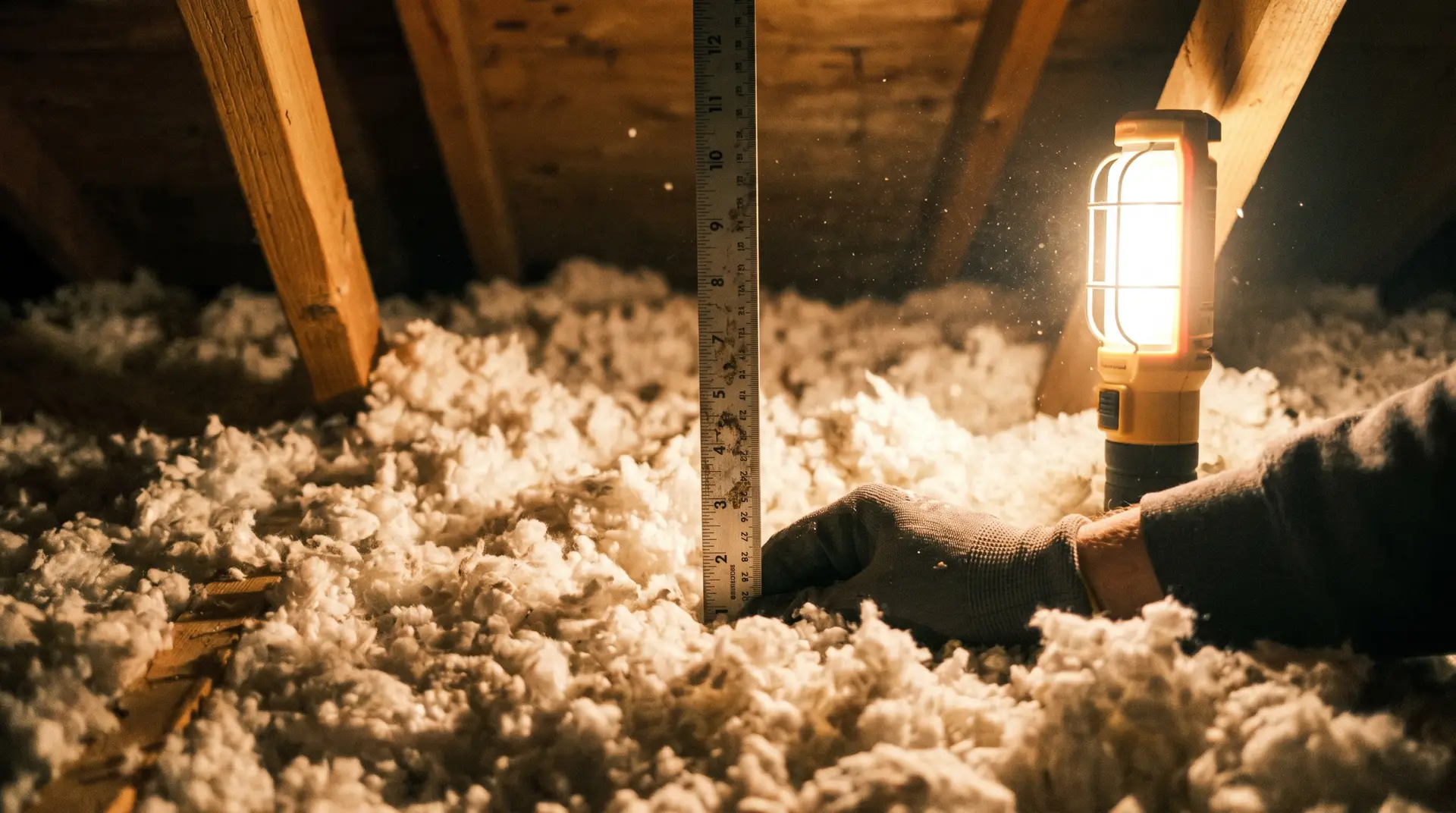
Lubbock sits in energy code climate zone 3, with the counties north of us in zone 4. For an attic here, R-38 is the practical floor and R-49 to R-60 is where you want to be if you care about August. In blown fiberglass that is roughly 13 to 20 inches of settled depth. In blown cellulose, closer to 11 to 17 inches, because cellulose runs about R-3.5 per inch against fiberglass at about R-2.5.
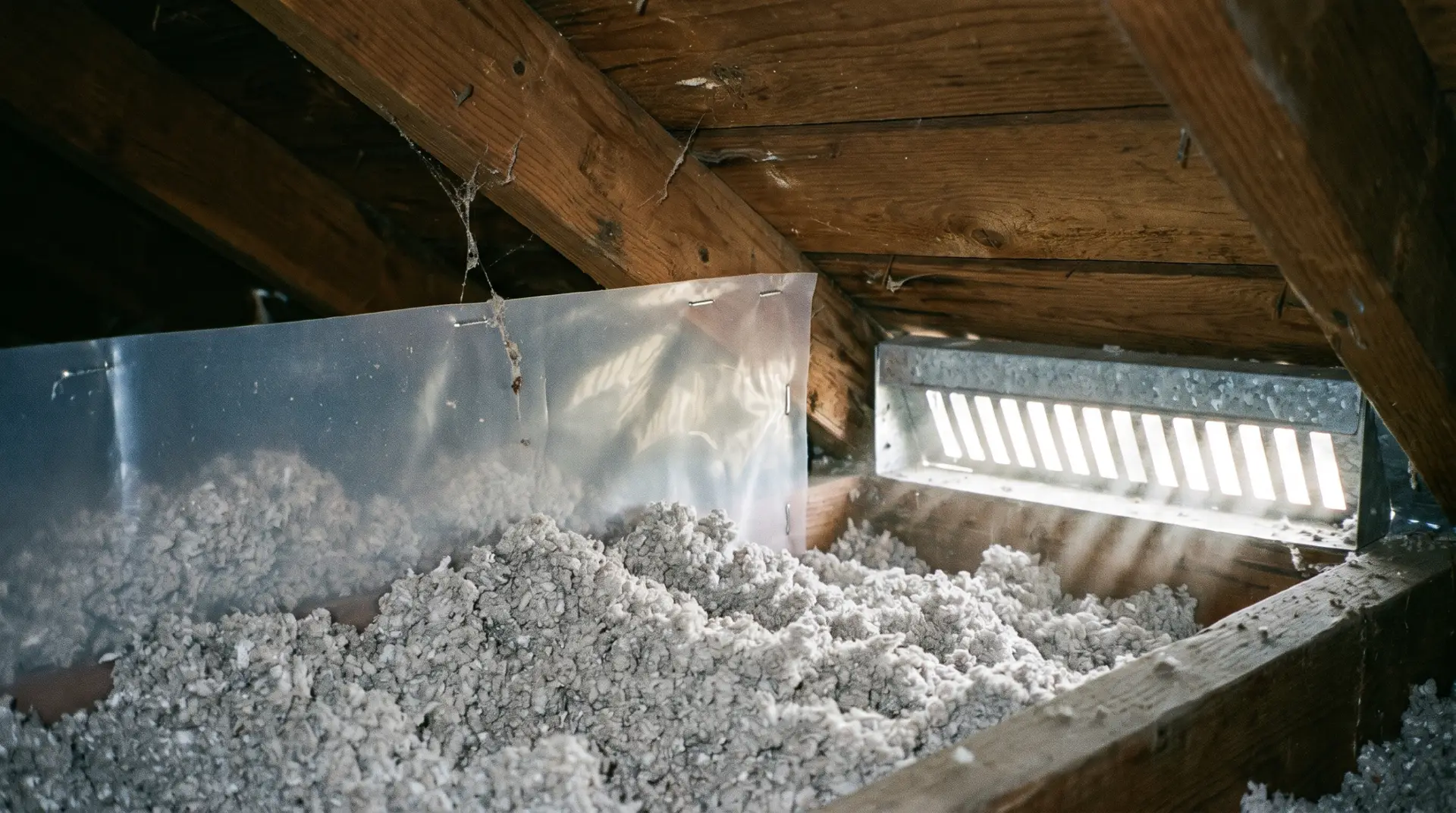
Two rules go with the number. Keep insulation out of the soffit vents by installing baffles at every rafter bay before anyone blows a single bag. And air seal the ceiling plane first, because top plates, can lights and the attic hatch leak more conditioned air than most people expect. Insulation over an unsealed ceiling is a filter, not a barrier.
Target R-38 as a minimum and R-49 to R-60 for real summer performance, which is 13 to 20 inches of blown fiberglass. Air seal the ceiling first, install baffles so the soffit vents stay open, and keep the attic ventilation balanced with the roof.
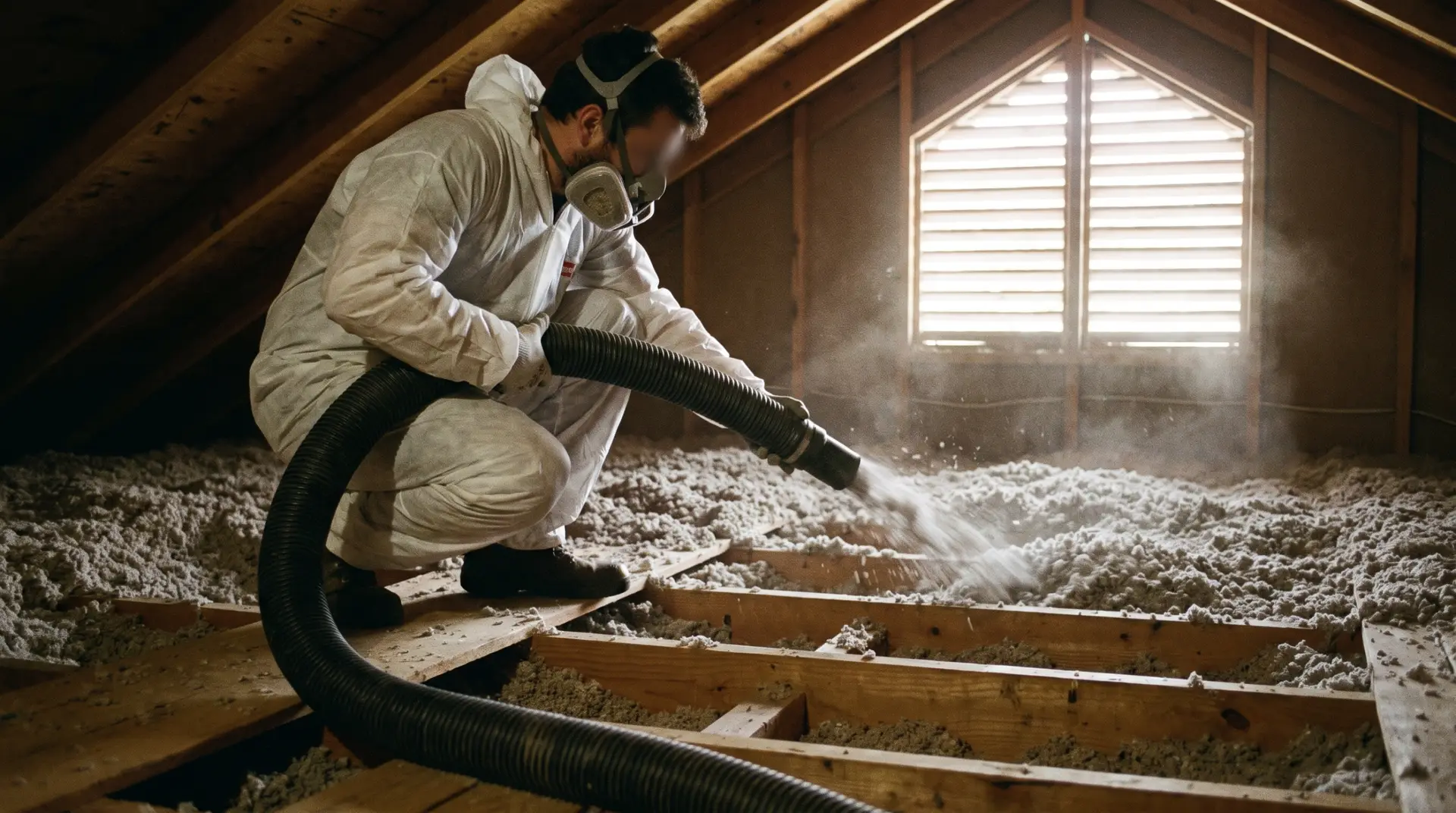
Five Signs the Insulation Over Your Ceiling Is Not Working
Most homes tell you before the utility bill does. The clues show up in how rooms behave, not in anything you can see from the driveway, so people live with them for years and blame the air conditioner. A 3-ton unit that runs from noon to midnight in July is often fighting an attic problem, not a refrigerant problem.
There is also a seasonal clue people miss. A house that is hard to heat in January and impossible to cool in July almost always has a ceiling problem rather than an equipment problem, because the ceiling is working against you in both directions. Go up and look with a flashlight on a mild morning, or have your roofer look during an inspection. You are checking depth, coverage, and whether the eaves are clear. If any of the following sound like your house, the attic is the place to start.
- You can see the ceiling joists: If the tops of the joists are showing above the insulation, you are somewhere around R-19 to R-22. That was code decades ago. It is roughly half of what a Lubbock attic should have today, and the difference shows up in every afternoon of July and August.
- Rooms on the west or south side run hot: Late-day sun on this side of the state is brutal, and thin or gapped attic insulation over those rooms lets the ceiling radiate heat down all evening. If the thermostat says 74 and the back bedroom feels like 80 at nine o clock, look up.
- The system never cycles off in summer: A properly sized unit should cycle even on a 100 degree day. Continuous running usually means heat is pouring in faster than the equipment can remove it, and the ceiling is the largest surface in the house.
- Dust lines and dark streaks in the insulation: Gray streaking along the edges of batts means air is moving through them, carrying dust that the fiberglass filters out. That is an air sealing problem, and adding depth on top of it will not fix the leak underneath.
- Blowing dust in the attic after a windy week: A layer of fine West Texas grit on top of the insulation tells you the attic is taking in unfiltered air somewhere it should not, usually a gap at the gable, a torn vent screen, or a failed flashing detail.
- Uneven snowmelt on the roof: We only get a handful of snows a year, but they are useful. Patches that melt first are the spots losing the most heat through the ceiling below.
One caveat on inspection. Do not walk an attic in July, and never step between joists. Attic temperatures here routinely top 140 degrees on a summer afternoon, and a foot through the ceiling costs more than the insulation you were checking on. Look from the hatch with a good light, or let it be part of a scheduled roof inspection in cooler weather when somebody with a plank and the right shoes can move around up there safely.
R-Value, Depth and Material: What Belongs in a West Texas Attic
R-value is resistance to heat flow, and it stacks. Add R-19 of blown fiberglass on top of an existing R-19 of old batts and you have about R-38, as long as the new material is even and the old batts are not compressed or wadded up. That stacking is why topping off an attic is usually cheaper than the alternatives and why it is the first thing we suggest to homeowners chasing a summer bill.
Blown fiberglass is the common choice around Lubbock. It runs about R-2.5 per inch, it does not settle much, and it will not hold water if a leak gets past the shingles. Blown cellulose gets you about R-3.5 per inch, so it hits the same number in fewer inches, and it fills irregular framing well. Its weakness is water. Cellulose that gets soaked mats down and stays down, and it has to come out and be replaced after a roof leak. Given hail season here, that is a real consideration.
Spray foam on the underside of the roof deck is a different approach entirely. It moves the insulation from the ceiling to the roofline and turns the attic into conditioned space. It performs well and it is expensive, and it changes how the roof deck breathes, which matters if the shingles ever have to come off. If you are considering foam, talk to your roofer before the foam contractor, not after. Coverage matters as much as the number. An attic averaging R-49 with a bare strip along the eaves and a two-foot gap around the mechanical platform is not really an R-49 attic.
Why Attic Insulation and Roof Ventilation Get Planned Together
Here is where good intentions ruin roofs. Insulation and ventilation do opposite jobs in the same space, and the eave is where they collide. Soffit vents let outside air in at the bottom of the roof, ridge or turbine vents let hot air out at the top, and that flow is what keeps decking dry and shingles from cooking. Bury the intake and the whole system stops. Code calls for roughly one square foot of net free vent area for every 300 square feet of attic floor when intake and exhaust are balanced, and that math falls apart the moment the soffits are packed.
Blocked Soffit Vents Kill the Airflow
The single most common mistake we find is insulation blown right into the eave, packing the soffit vents solid. The homeowner got the depth they paid for and lost the intake air that makes the roof work. Without intake, ridge vents and turbines pull air from inside the house instead, the attic stays hot, and decking stays damp in winter. The fix is cheap and has to happen first: install baffles, sometimes called rafter vents, in every bay so there is a clear channel from the soffit up past the insulation line.
Summer Attic Heat, Not Ice Dams
Roofing articles written for the Midwest spend half their length on ice dams. Lubbock gets freeze-thaw swings and the occasional hard snow, so ice at the eaves happens, but it is a minor problem here. The real enemy is a 150 degree attic in July baking the underside of the shingles and pushing heat down through the ceiling all evening. Insulation handles the ceiling side. Ventilation handles the shingle side. Both are needed, and shortchanging either one shortens roof life on the South Plains.
Radiant Barriers and High-Plains Sun
We get intense UV and a lot of clear sky, which is exactly the condition where a radiant barrier pays. A foil-faced roof deck, or foil stapled to the underside of the rafters, reflects radiant heat back out and can knock meaningful degrees off attic temperature. It works with insulation, never instead of it, and it needs an air space facing the foil to do anything. If you are already replacing the roof, foil-faced decking is the easy time to add it.
What Adding Attic Insulation Actually Saves in Lubbock
Be careful with savings claims. Anyone quoting you an exact percentage before looking at your ductwork, your windows and your existing depth is guessing. What we can say honestly is that going from an R-19 attic to R-49 in a Lubbock house makes summer afternoons noticeably better and takes real load off the air conditioner, and that most homeowners feel the comfort difference before they see the bill difference.
The Department of Energy keeps free, unbiased homeowner guidance on insulation levels, air sealing and where to spend first, and it is worth reading before you take a bid, at the DOE Energy Saver site. Their point about sequence matches ours. Air sealing before insulating gets you more per dollar than insulating alone, every time.
Cost in this market is usually quoted per square foot of attic floor. Topping off an existing attic with blown fiberglass is the low end of the range, air sealing adds labor, and baffle installation adds a bit more if none exist. Roughly speaking, a typical single-story Lubbock home with 1,800 square feet of attic runs a few thousand dollars for a complete job with air sealing and baffles. Get the bid in writing with the target R-value, the material, the number of bags, and the baffle count spelled out, because a crew paid by the job has every reason to blow thin and call it done. Attic insulation done properly outlasts two roofs, so it is worth doing once, correctly, rather than blowing more fiberglass over an unsealed ceiling every eight years. Good roof ventilation in Lubbock is the other half of that math.
Final Word: Do the Attic When You Do the Roof
The best time to handle attic work is while the roof is already open. Baffles, a ridge vent, foil-faced decking and a bath fan that finally terminates outside instead of into the attic are all easier and cheaper with the shingles off. Once the new roof is on, some of those become attic-crawling jobs in a 140 degree space, and they get put off for years.
If your roof still has a decade left, the order is simple. Air seal the ceiling plane, install baffles at the eaves, then bring the depth up to R-49. Leave the soffit vents alone and stop the insulation short of them on purpose. Ask whoever bids the work to show you the baffles after installation, from the hatch, before the blowing starts. How long the shingles above it last depends on that airflow as much as on the shingle itself, which we cover in our guide to roof lifespan in Lubbock.
Whether you are in Tech Terrace with a 1950s attic or out in Wolfforth with a newer build, we look at the attic on every inspection because the roof above it depends on what is happening underneath. If you want a set of eyes on both at once, our Lubbock roofing team can walk it with you.
Frequently Asked Questions About Attic Insulation
R-values, depth, ventilation and cost questions we hear from Lubbock homeowners
For blown fiberglass, plan on 13 to 20 inches of settled depth, which puts you between R-38 and R-60. Blown cellulose reaches the same numbers in about 11 to 17 inches because it delivers more R-value per inch. Measure in several places, not one, since blown material is rarely even. If the tops of your ceiling joists are visible anywhere, you are well under target and the house is losing comfort every summer afternoon and every cold January night.
Usually yes, and it is the common approach. Blown fiberglass or cellulose goes right over existing batts and the R-values stack, as long as the old material is dry, not compressed, and not moldy. Two things have to happen first. Air seal the ceiling penetrations, because covering a leak does not stop it, and install baffles at the eaves so the new depth does not bury the soffit vents. Remove and replace old batts only if they are water damaged or rodent infested.
Insulation itself will not, but blocking ventilation can. Most shingle manufacturers require balanced intake and exhaust ventilation as a condition of the material warranty, and insulation packed into the soffits eliminates the intake side. That is the failure we see most often after an insulation job. Keep a clear channel at every rafter bay with baffles, keep exhaust and intake balanced, and take a photo of the eaves after the work is done in case you ever need to show the manufacturer what is up there.
Rarely. We get freeze-thaw cycles and a few snows each winter, so ice at the eaves is possible on a poorly ventilated roof, but it is not the design problem here that it is farther north. Summer attic heat is. A July attic in Lubbock can run 140 to 160 degrees, cooking the underside of the shingles and pushing heat into the rooms below all evening. Build the attic for that condition and the occasional icy eave takes care of itself.
In this climate it is one of the better add-ons, because we get strong sun and clear skies most of the year. A radiant barrier reflects heat rather than resisting it, so it works alongside insulation instead of replacing it, and it needs an air gap facing the foil to function. The cheapest time to install one is during a roof replacement using foil-faced decking. Retrofitting foil under the rafters works too, and it is a hot, awkward job best scheduled for a mild month.