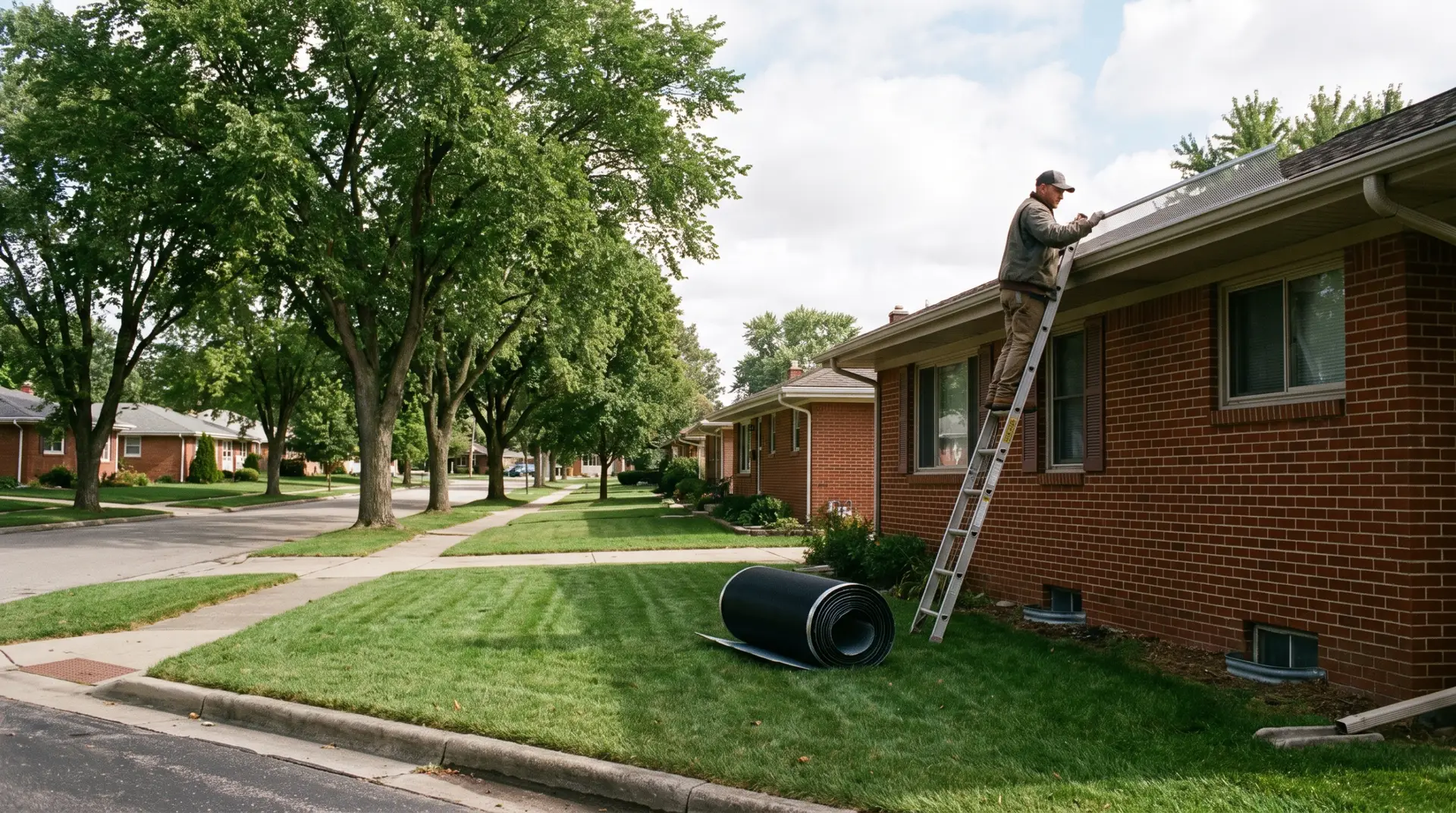
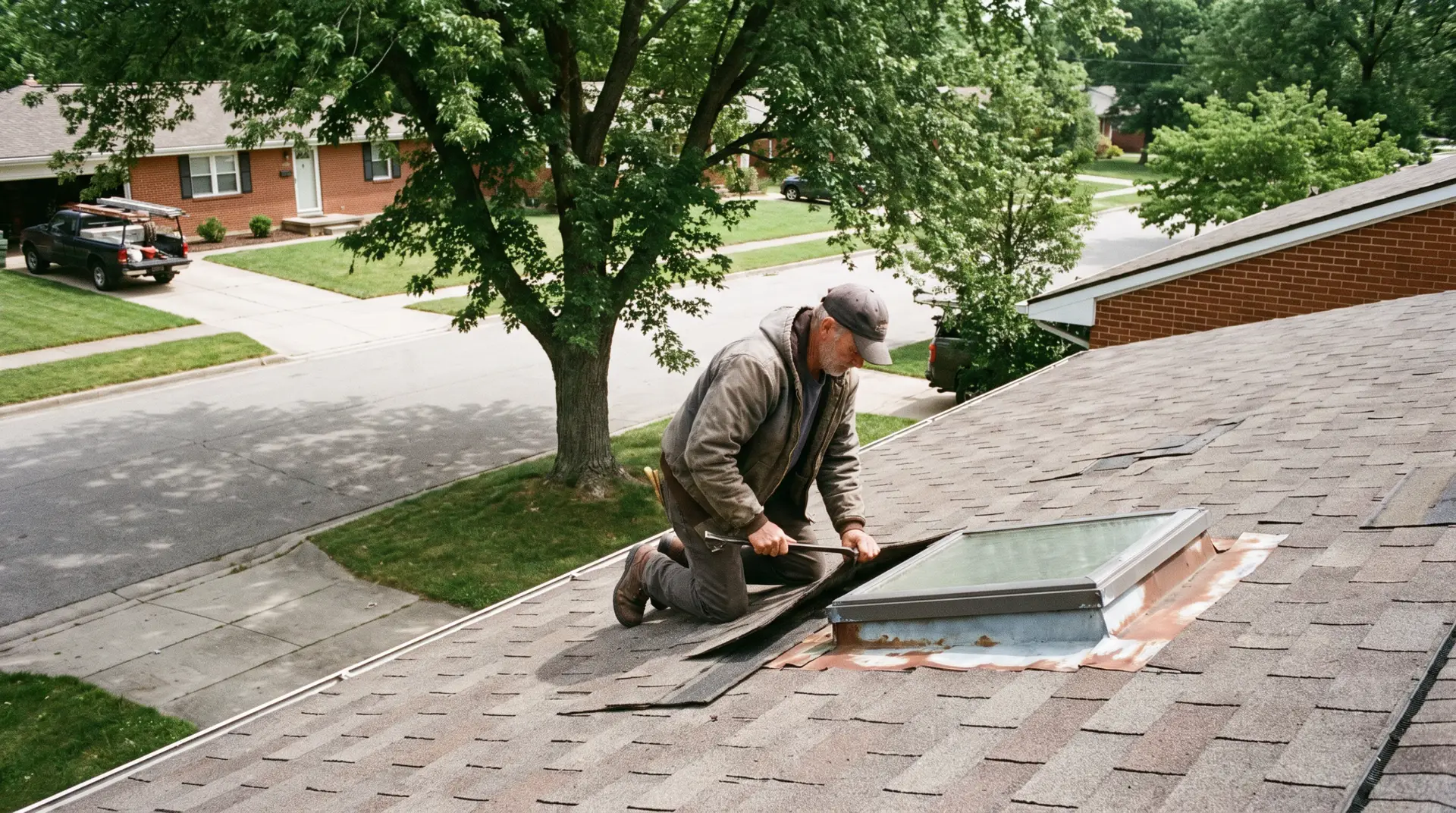
Emergency roof tarping is the first thing that should happen after a Lubbock storm peels shingles off your house, and it needs to happen fast. A hail core or a 70 mph gust front can open a roof in about four minutes, and the rain behind it keeps coming for another hour. Water that gets past the decking does not stop at the ceiling. It runs down wall cavities, soaks insulation, and shows up two rooms away by morning.
This guide covers what to do in the first hour, what a real tarp job looks like next to a blue sheet held down with cinder blocks, how long a tarp survives West Texas wind, and how the cost usually gets handled on a homeowners claim. Read the safety part first. Every spring somebody in this town gets hurt on a wet roof trying to fix a problem that a tarp and a phone call would have held until daylight.
On this page, a complete guide to emergency roof tarping in Lubbock, TX:
- Quick Answer: What Emergency Roof Tarping Does After a Storm
- The First Hour: Six Things to Do Before Anyone Climbs a Ladder
- What a Proper Emergency Roof Tarping Job Actually Looks Like
- How Long Emergency Roof Tarping Holds Up in West Texas Weather
- Insurance, Documentation and Who Pays for the Tarp
- Final Word: Cover It Fast, Then Fix It Right
- Frequently Asked Questions About Emergency Roof Tarping
Quick Answer: What Emergency Roof Tarping Does After a Storm
Emergency roof tarping covers open sections of decking with heavy reinforced poly so water stops entering the house while you wait on a permanent repair. A correct job uses material rated at least 10 mil, runs the tarp over the ridge so wind cannot get under the leading edge, and anchors it with wood battens screwed through the tarp into the deck. Sandbags, spare tires and bricks are not a tarp job. They are a delay.
Do not climb up there yourself. Shut off power to any room with a wet ceiling, move furniture and electronics out from under the drip, photograph everything before it gets covered, and call a roofer who runs a storm crew. Most Lubbock homes get tarped within 24 to 72 hours of a major hail event, and the tarp itself usually runs $400–$1,200 depending on roof size, pitch, and how much decking is exposed.
Stay off the roof, cut power to wet rooms, photograph the damage, then get a tarp on. A proper tarp runs over the ridge and is screwed down with battens instead of weighted, and it should keep water out for roughly 30 to 90 days in West Texas conditions.

The First Hour: Six Things to Do Before Anyone Climbs a Ladder
The hour right after a storm is when most of the avoidable damage happens. People go up ladders in the dark, they pull sagging drywall down with their hands, or they wait until morning while water quietly runs into a can light. None of that helps. The roof is already open and it stays open until a crew gets there, so the job in front of you is limiting what the water ruins on its way through the house.
Work from the inside out. Every item on this list can be done from the ground or from inside, and every one of them makes both the repair and the insurance claim go smoother. Write the time down as you go, because adjusters ask, and it also helps the emergency roof tarping crew understand what they are walking into.
- Cut power to the wet areas: If water is anywhere near a light fixture, a ceiling fan, or an outlet, shut off those breakers at the panel. Do not stand in a puddle to reach the panel, and do not touch a fixture that is dripping. Wet insulation around old wiring is a real hazard in homes built before the 1990s.
- Stay off the roof and off the ladder: Wet asphalt with loose granules on it behaves like gravel on glass, and a hail-bruised deck can be soft in spots you cannot see from above. Nothing you can do up there in the dark is worth a fall. Look at the roof from the yard with a flashlight instead.
- Photograph and video before you move anything: Shoot the ceiling stains, the wet carpet, the fallen limbs, the dented gutter, and the yard full of shingle pieces. Get wide shots and close shots. Timestamped photos taken before cleanup carry more weight with an adjuster than anything you write down later.
- Contain the water, protect the contents: Buckets and trash cans under active drips, towels around the base, plastic sheeting or a shower curtain over furniture you cannot move. Pull rugs up off wet slab. Getting electronics and heirlooms out of the room matters more than saving the drywall, which is coming out anyway.
- Call a roofer the same day: Tarp crews book out fast after a wide hail event, and the order they run is usually the order the calls came in. Tell them what you can see, how many rooms are leaking, and whether the roof is one story or two so they bring the right ladders.
- Open the claim and write down the number: Call your carrier or use the app, note the claim number and the time, and ask directly whether emergency mitigation is covered under your policy. Keep every receipt from that night forward, including tarps, buckets and fans.
One caution. After a big storm, out-of-town crews knock doors in Lubbock neighborhoods within a day or two, and some of them offer a free tarp in exchange for a signature. Read anything before you sign it. Emergency roof tarping should stand on its own as a service with its own price, not as bait. A tarp agreement covers the tarp, not an assignment of your claim or a roof replacement you have not priced yet.
What a Proper Emergency Roof Tarping Job Actually Looks Like
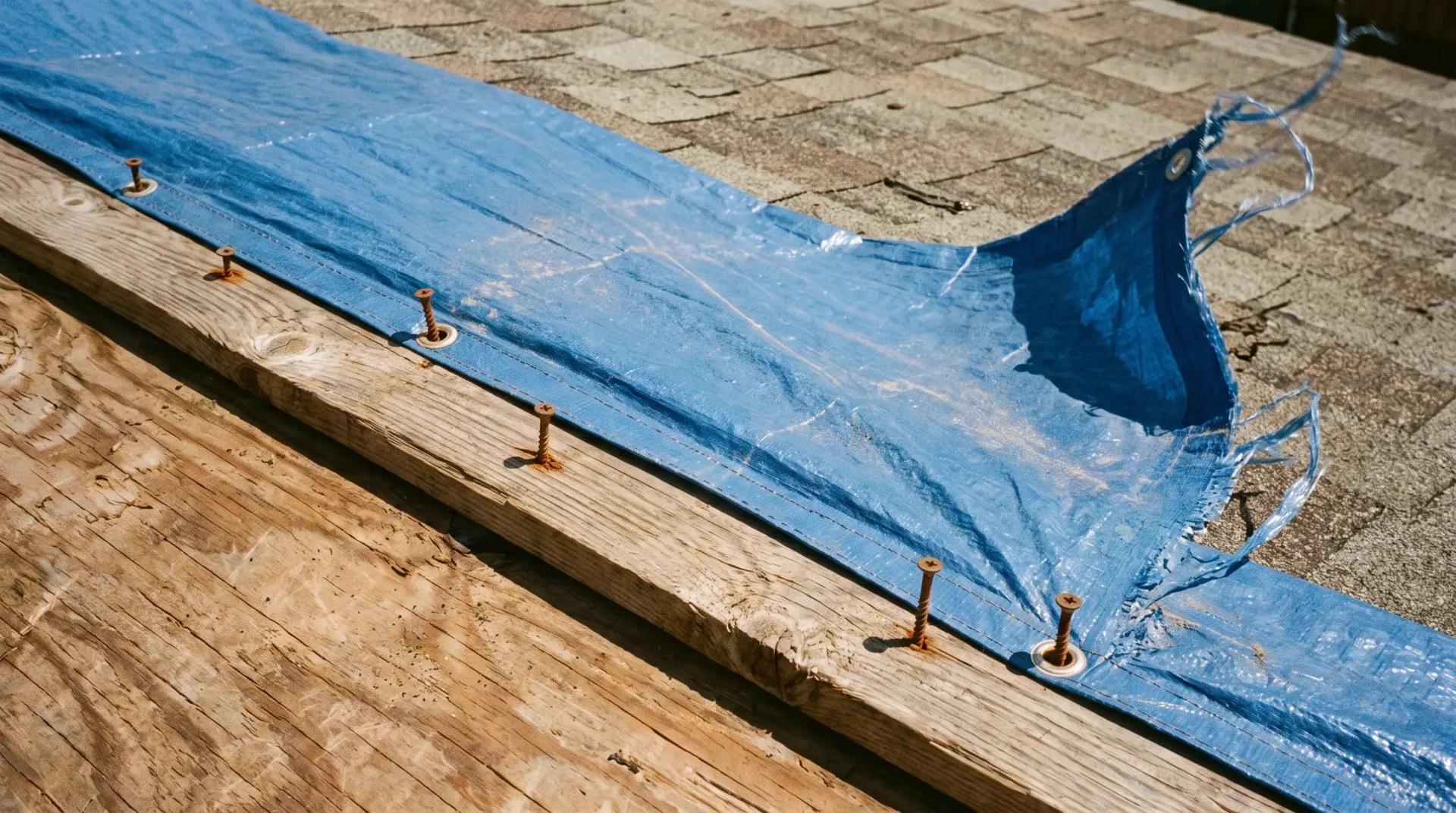
Start with the material. A jobsite tarp for a roof should be reinforced poly in the 10 to 20 mil range with woven scrim and heat-sealed seams, not the light silver-and-blue picnic tarp from the hardware aisle. Thin tarps shred at the grommets in the first good wind, and once one corner lets go the whole sheet acts like a sail and takes shingles with it.
Then the layout. The tarp has to run up the slope and across the ridge, with several feet of material laid over onto the opposite side. Wind in West Texas comes hard out of the southwest and drives up the roof plane, so a tarp that stops short of the ridge gives the wind a lip to grab. Over the ridge, the wind pushes the tarp down onto the roof instead of under it. The bottom edge should reach past the damaged area and, where possible, over the eave so runoff sheds into the gutter rather than behind the fascia.
Finally the anchoring. Furring strips or 1×4 boards get laid on top of the tarp, the tarp is wrapped around them where the detail calls for it, and screws with washers go through board, tarp and deck into solid framing. Yes, that puts holes in the roof. Those holes get covered by the permanent repair, and they are the price of a tarp that stays put through a 60 mph night. Weighted tarps come off. Screwed tarps stay. If your ceiling is already stained, get the interior handled too, because a tarp stops new water but does nothing about what is already in the assembly. Our guide to finding and fixing roof leaks in Lubbock walks through tracing water back to its entry point once the roof is dry.
How Long Emergency Roof Tarping Holds Up in West Texas Weather
Homeowners ask how long they can live under a tarp, and the honest answer depends on the weather more than the tarp. A properly battened 10 mil tarp on a Lubbock roof holds up around 30 to 90 days. A cheap weighted one might last through a calm week. Three local conditions decide which end of that range you land on, and none of them is gentle.
Spring Wind and Blowing Dust
March through June is the hard season for tarps. Sustained wind in the 30s with gusts over 60 mph works every fastener loose a little at a time, and blowing dust acts like sandpaper on the poly wherever it can flutter. A tarp that is drum tight when the crew leaves can be loose at the corners after two windy weeks. That is why battens matter more than tarp thickness here, and why any tarp older than a month deserves a look after a big blow.
Summer UV and Heat
Sunlight is what actually kills a tarp on the South Plains. Polyethylene goes chalky and brittle under intense high-plains UV, and roof surface temperatures well above 150 degrees speed it along. UV-stabilized material buys you time, but by month three most tarps have lost real strength and will tear along a fold rather than at a grommet. A tarp installed in June is a different animal by September.
Freeze-Thaw and Winter Rain
Winter is easier on tarps than spring, with one catch. Standing water that freezes overnight and thaws by noon pushes and pulls at every screw, and any low spot where the tarp sags will pond and then ice. Crews try to keep the tarp on the slope with no dips for exactly that reason. A tarp holding through January is usually fine, but the freeze-thaw cycle here runs both directions in a single day and slowly loosens anything mechanical.
Insurance, Documentation and Who Pays for the Tarp
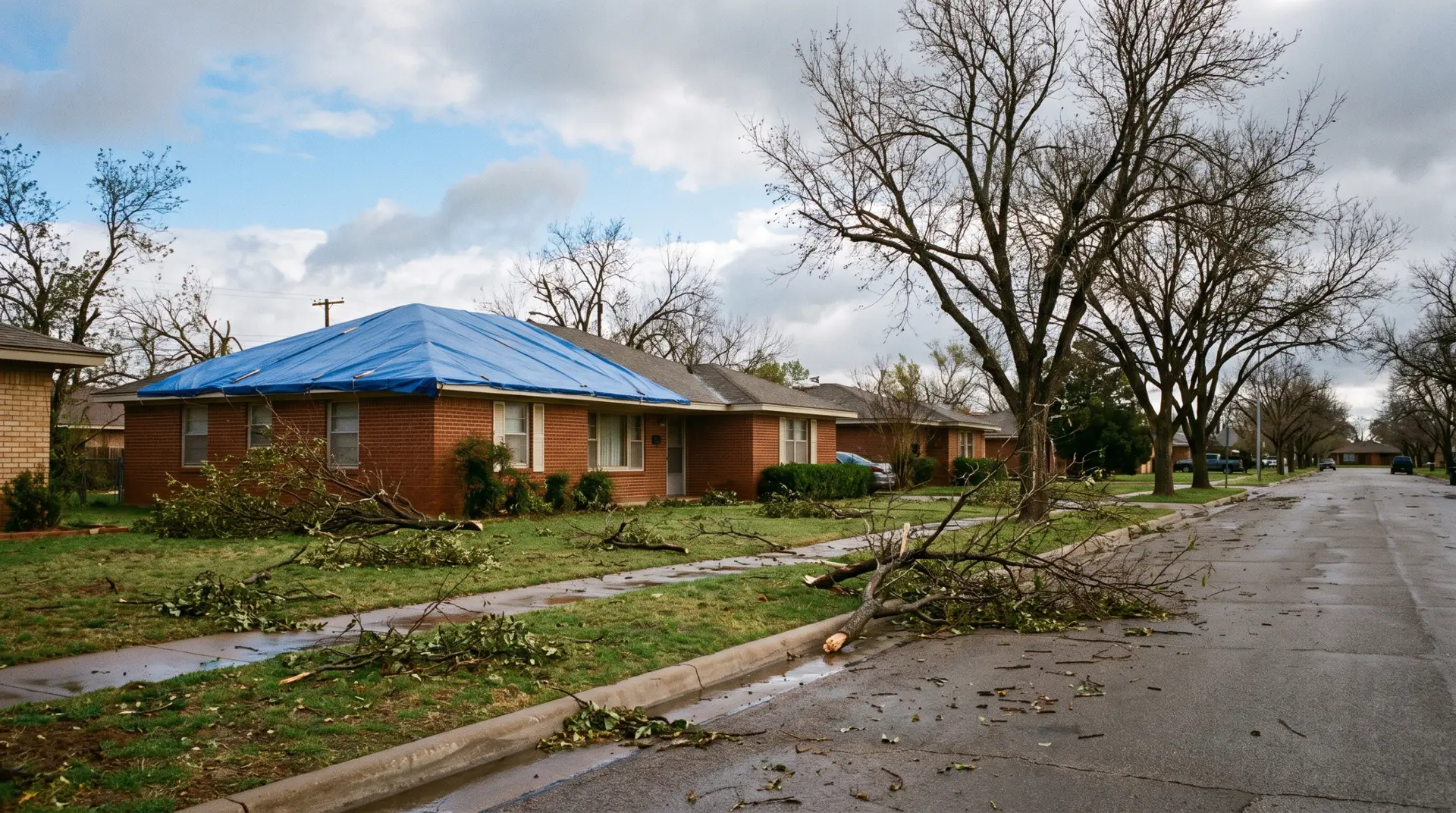
Most Texas homeowners policies require you to take reasonable steps to prevent further damage after a covered loss, and they also pay for those steps. That is the language to know. Emergency mitigation, sometimes listed as reasonable emergency measures, generally covers tarping, board-up and water extraction, and it is usually paid separately from the roof repair itself. Carriers differ, so ask the question directly when you open the claim and get the answer in writing or in the app notes.
Keep your paperwork simple and complete. Save the tarp invoice, the photos taken before the tarp went on, photos of the tarp installed, and the claim number with the date you reported it. If a crew tarps at 11 p.m., ask for a written scope the next business day rather than a handshake. The Texas Department of Insurance publishes plain-language guidance on storm claims, deadlines and what to do if you disagree with an adjuster, and it is worth ten minutes before your inspection at the TDI storm claims page.
One more thing that trips people up. The tarp is mitigation, not repair, and paying for a tarp does not mean the carrier has accepted the roof claim. Those are two separate decisions. If your damage came from hail rather than wind, the inspection follows a different path, which we cover in our hail damage roof repair and claim guide. For downed limbs, lifted shingles and torn ridge caps, start with our storm and wind damage roof repair guide instead.
Final Word: Cover It Fast, Then Fix It Right
A tarp is a bridge. It buys you the days or weeks between the storm and the crew that puts your roof back together, and in a wide hail event those weeks are real, because every roofer in Lubbock County is booked at once. What the tarp cannot do is dry out an attic, replace soaked insulation, or stop a soft deck from getting softer. The sooner the permanent work is scheduled, the less of that secondary damage you pay for.
Whether you live in Tech Terrace, out toward Wolfforth, or on an acreage past Idalou, the sequence is the same. Get people safe, cut the power to wet rooms, document, tarp, then repair. Do not let a tarp sit through a second season because the claim stalled. Poly gets brittle, screws work loose, and a failed tarp does more harm than no tarp at all.
When you are ready to move from covered to fixed, our crew handles inspection, documentation and permanent roof repair in Lubbock and the surrounding towns. Call while the storm is still fresh and we will get you on the tarp list first, then back for the real repair.
Frequently Asked Questions About Emergency Roof Tarping
Straight answers on tarping, cost, timing and claims after a Lubbock storm
Most residential tarp jobs in the Lubbock area run $400–$1,200. Price moves with the size of the area being covered, the pitch of the roof, whether it is one story or two, and how far the crew has to travel after hours. A small section over a bedroom on a walkable roof sits at the low end. A steep two-story with several open areas and night work sits at the high end. Under most policies this is billed as emergency mitigation and paid separately from the roof repair, so keep the invoice.
You can, but we tell homeowners not to. Wet asphalt shingles with loose granules are genuinely slick, hail-bruised decking can be soft in places you cannot see, and most storm damage gets discovered at night or in the rain. A tarp that is not anchored over the ridge and battened down will move in the first strong wind and can tear more shingles loose on its way. If you are determined to do something yourself, do it from inside the house by containing water and protecting contents, and leave the roof to a crew with fall protection.
Usually yes. Texas homeowners policies generally require the insured to take reasonable steps to prevent further damage after a covered loss, and they pay for those measures. Tarping, board-up and water extraction typically fall under that emergency mitigation coverage. The tarp is normally handled as a separate line from the roof repair, and paying it does not mean the carrier has accepted the full roof claim. Report the loss the same day, ask the adjuster directly how mitigation is handled on your policy, and save every photo and receipt.
Plan on 30 to 90 days for a properly installed 10 mil tarp that is screwed down with battens. Spring wind shortens that window, and summer sun shortens it more, because high-plains UV turns polyethylene brittle within a couple of months. Have somebody look at the tarp after any big wind event and again at the 30 day mark. If the corners are flapping, the screws are backing out, or the material has gone chalky and stiff, it needs to be re-tightened or replaced before the next rain.
A batten-style tarp does, and that is intentional. Screws go through the furring strips, the tarp and the decking so the assembly cannot lift in a 60 mph gust. Those fastener holes fall inside the area that gets torn off and rebuilt during the permanent repair, so they do not add to your cost. The alternative, weighting a tarp down with sandbags or tires, leaves the whole sheet free to lift, and a tarp that gets under the wind usually takes good shingles with it.