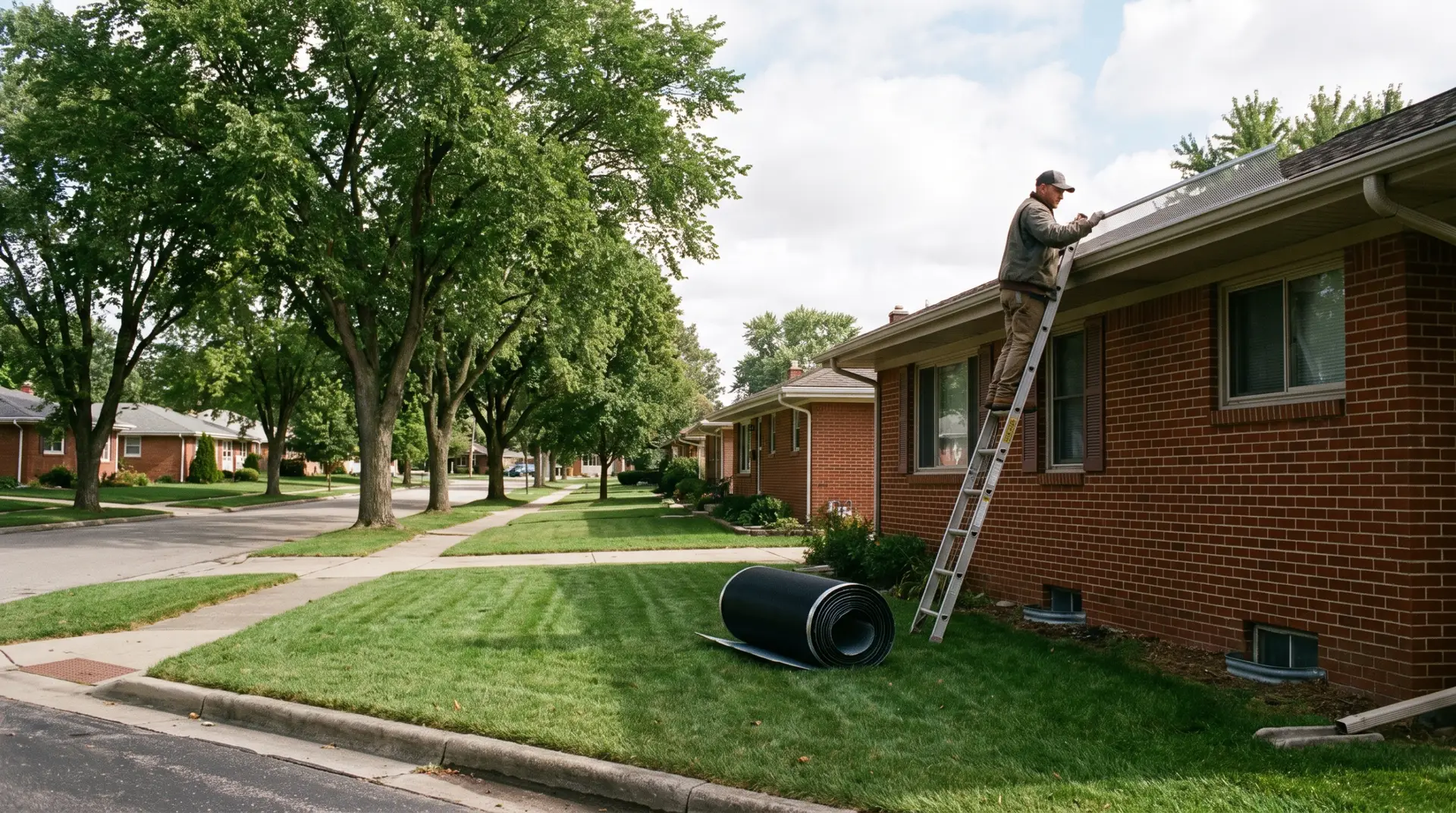
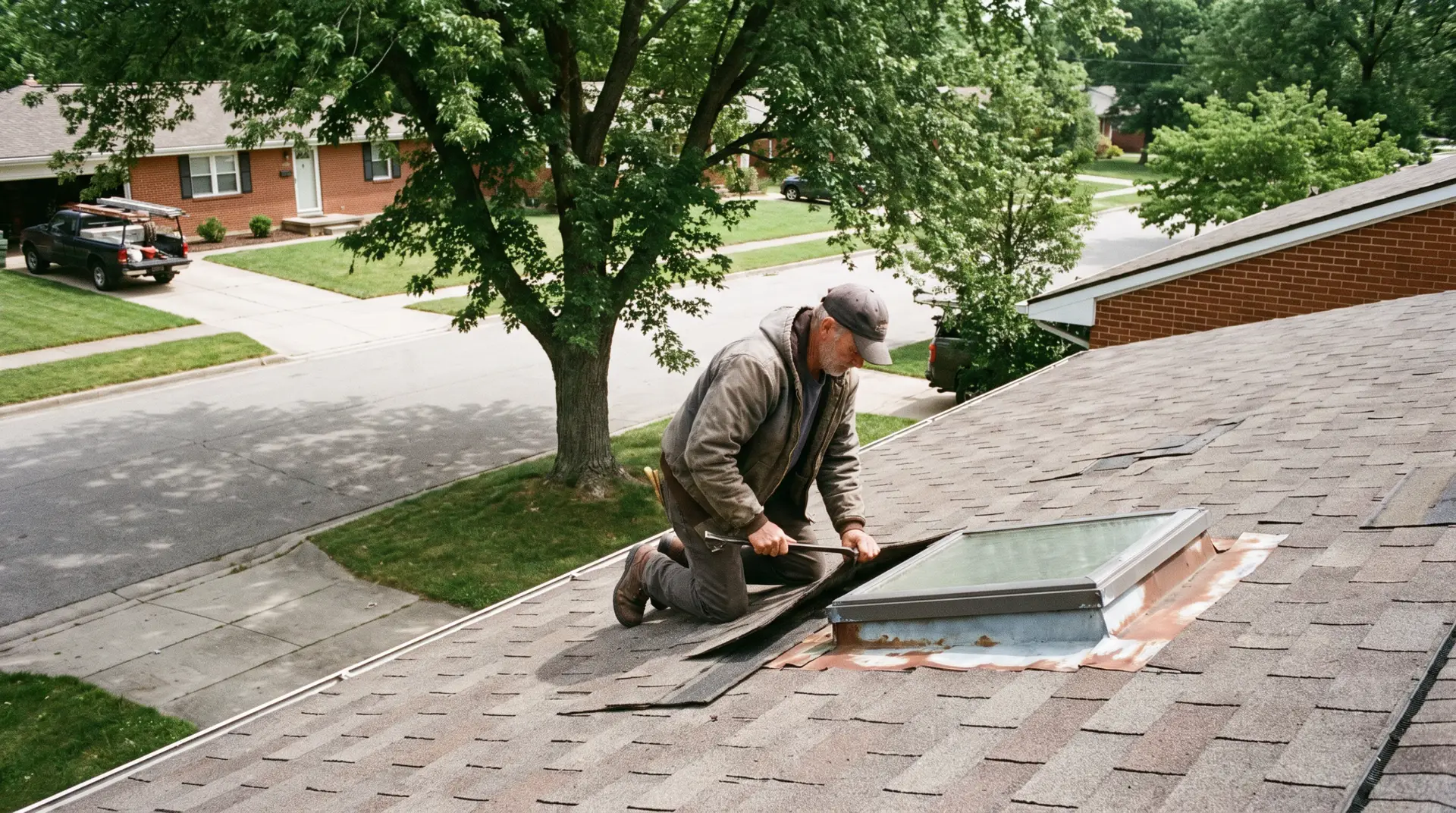
When a High Plains storm rolls across Lubbock, it can go from calm to chaos in minutes, 60-plus mph gusts, wind-driven hail, and flying debris that tear at your roof before you ever hear the alarm on your phone. If you just weathered a blow and you’re staring at grit in the gutters, shingles on the lawn, or a fresh water stain on the ceiling, you need a clear plan, not a panic.
This guide walks Lubbock homeowners through exactly what storm and wind damage looks like out here, the emergency steps that protect your home and your insurance claim, and how to decide between a repair and a full replacement, without getting burned by an out-of-town storm chaser.
This guide covers storm damage roof repair in Lubbock: the first moves after a West Texas blow, what insurance covers, and how to avoid the door-knockers.
On this page, a complete guide to storm damage roof repair in Lubbock, TX:
- Quick Answer: Storm Damage Roof Repair in Lubbock
- Common Storm and Wind Roof Damage in Lubbock
- Emergency Steps Before Storm Damage Roof Repair
- West Texas Wind and Storms
- Insurance and Repair vs. Replacement
- Final Word: Act Fast, Hire Local
- Frequently Asked Questions About Storm Damage Roof Repair in Lubbock
Quick Answer: Storm Damage Roof Repair in Lubbock
After a storm, work in this order: stay safe first, never climb a wet or damaged roof and steer clear of downed power lines. Next, document everything with dated photos from the ground. If water is actively coming in, get a temporary tarp over the leak to stop further damage. Then schedule a professional inspection to find the wind and hail damage you can’t see from the yard.
File your insurance claim promptly, most policies expect notice within days, not weeks. Finally, hire a licensed local roofer who’ll still be in Lubbock next year, not a storm chaser working out of a rental truck. Moving fast on these six steps protects both your home and your claim.
In short: safety, documentation, and speed win. The homeowners who fare best after a Lubbock storm are the ones who photograph damage early, tarp active leaks the same day, and get a licensed inspection on the books before problems spread. Hail often rides in with the wind, so if you saw both, review our hail damage and insurance claim guide alongside these wind-damage steps. And always choose a local roofer over a door-knocking storm chaser.
Common Storm and Wind Roof Damage in Lubbock
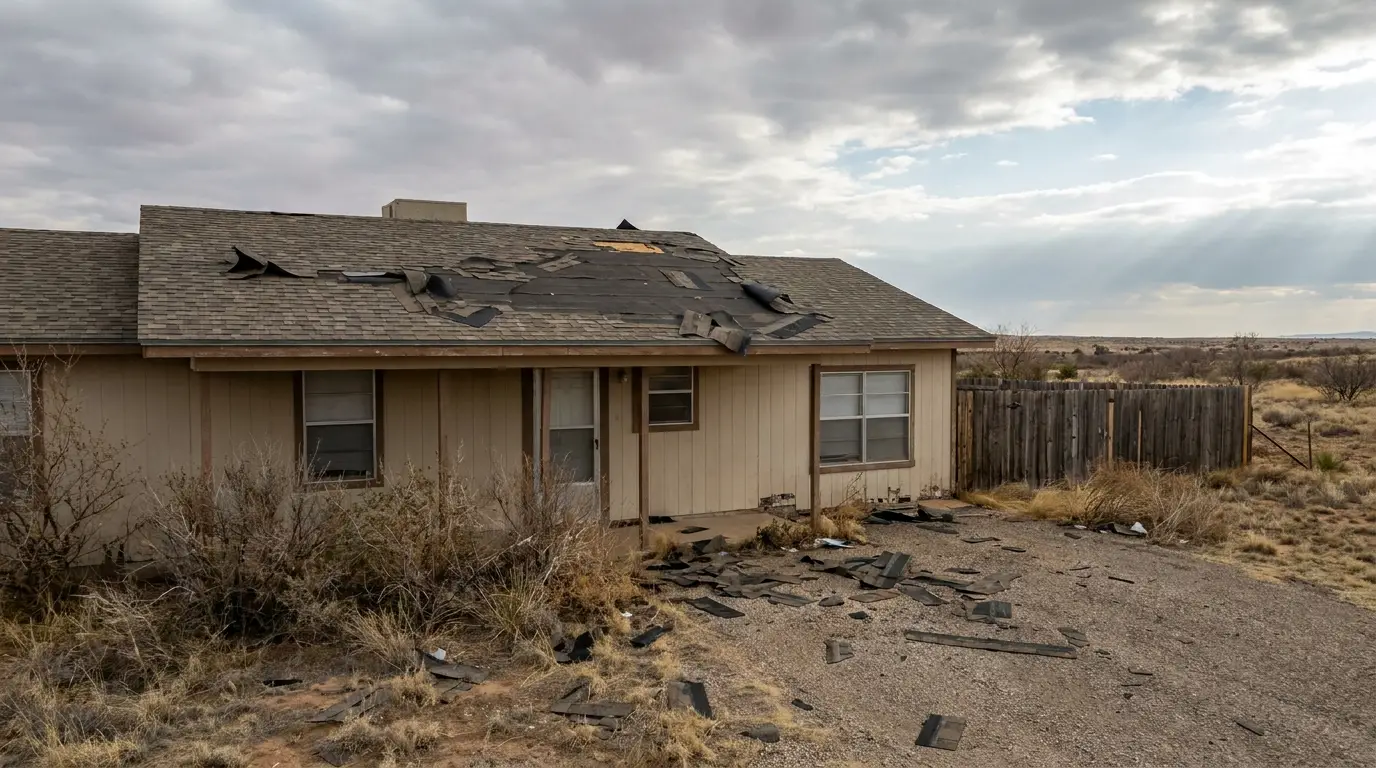
West Texas storms don’t always leave obvious holes. Wind and hail damage is often subtle from the ground, a lifted tab here, a hairline crease there, yet it still opens the door to leaks and premature roof failure. Here are the most common types of storm and wind damage our crews find on Lubbock homes after a blow:
- Missing or lifted shingles: high gusts peel tabs loose or rip them off entirely, exposing the underlayment and nails beneath.
- Creased or torn shingles from wind: a shingle that flaps and folds back leaves a permanent crease that cracks and lets water in later.
- Damaged flashing: wind and hail bend or loosen the metal around chimneys, vents, and valleys, a top source of hidden leaks.
- Debris impact punctures: flying limbs, fence boards, and hailstones can bruise or puncture shingles and dent soft metal.
- Interior leaks and water stains: brown ceiling rings, damp attic insulation, or drips signal water is already getting past the roof.
- Bent gutters and downspouts: dented, sagging, or detached gutters point to strong impact and can worsen roof-edge water damage.
Keep in mind that the damage you can see from the driveway is usually just part of the story. Wind and hail commonly loosen shingle seals and bruise the mat without leaving a visible hole, so a roof can look “fine” while its weather protection is compromised. That’s why a same-storm professional inspection matters, it catches the hidden problems before the next rain turns a small issue into a ceiling repair.
Emergency Steps Before Storm Damage Roof Repair
The first 24 to 48 hours after a storm set the tone for your whole recovery. Work through these steps in order to protect your family, your home, and your claim.
Stay Safe and Assess From the Ground
Your safety comes before your shingles. Never climb onto a wet, hail-slicked, or wind-damaged roof, falls send thousands of homeowners to the ER every year. Watch for downed power lines, and don’t enter rooms with sagging, water-heavy ceilings. Do your first survey from the ground with binoculars or a phone zoom, walking the perimeter to spot missing shingles, debris, and dented gutters.
Document Everything for Insurance
Photograph and video the damage as soon as it’s safe: roof, gutters, siding, windows, and any interior leaks. Capture the debris in your yard and the date and time. Save receipts for tarps, buckets, and emergency repairs; most policies reimburse reasonable mitigation costs. Good documentation is your strongest evidence when an adjuster questions the extent or cause of the damage.
Temporary Protection (Tarping)
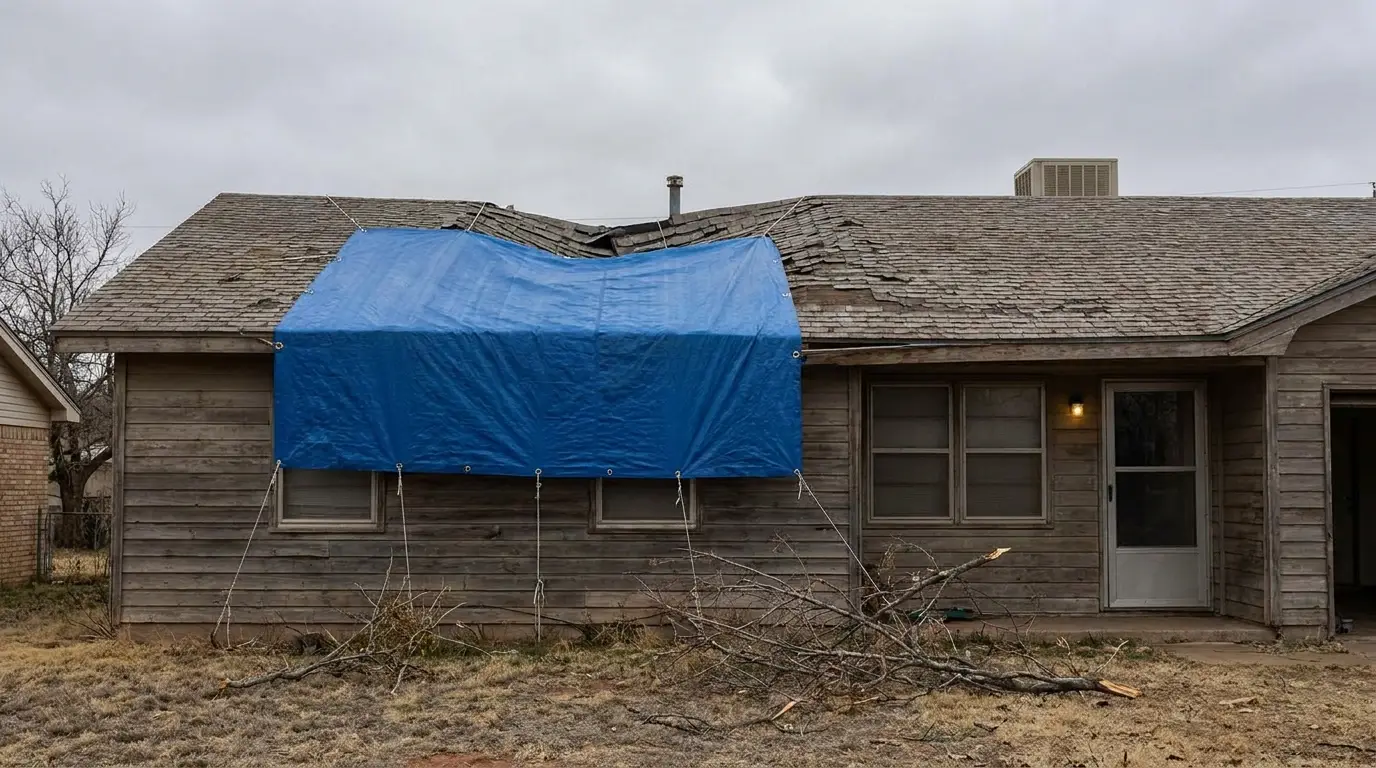
If water is actively entering, a temporary tarp buys you time and limits interior damage. Secure a heavy poly tarp over the affected area, anchoring it beyond the damage so wind can’t catch an edge. If the roof is steep, wet, or you’re unsure, call a roofer for an emergency tarp instead of risking a fall. Tarping is a stopgap, not a fix.
Call a Licensed Local Roofer
Once you’re safe and documented, bring in a licensed, insured Lubbock roofer for a full inspection and repair estimate. A local company knows West Texas wind and hail patterns, works directly with your insurer, and stands behind the work. Be wary of out-of-town crews who knock on doors right after a storm and pressure you to sign on the spot.
West Texas Wind and Storms
Lubbock roofs take a beating that homes in calmer climates never see. Out here on the High Plains, wind isn’t an occasional event, it’s a constant, and it makes every other kind of storm damage worse. Here’s what your roof is really up against.
Two public sources are worth bookmarking before you file: the National Weather Service in Lubbock keeps the local record of what actually hit and when, and the Texas Department of Insurance sets out how Texas storm claims, deductibles and appraisal work.
Sustained High-Plains Wind
Lubbock is one of the windiest cities in the country, with steady breezes that regularly climb into gale territory and gusts that top 60 mph during storms. That relentless pressure works shingle seals loose over time, lifts tabs, and finds any weak edge, so even a roof that survived one storm may fail in the next. Wind is the quiet, year-round wear factor on every West Texas roof.
Hail Driven by Wind
Our hail rarely falls straight down. Driven sideways by strong storm winds, it slams into shingles, flashing, and the wind-facing slopes of your roof with extra force, bruising the mat and knocking granules loose. Wind-driven hail also punishes vents, gutters, and soft metals that vertical hail might spare, which is why damage often clusters on the storm-facing side.
Fast, Severe Spring Storms
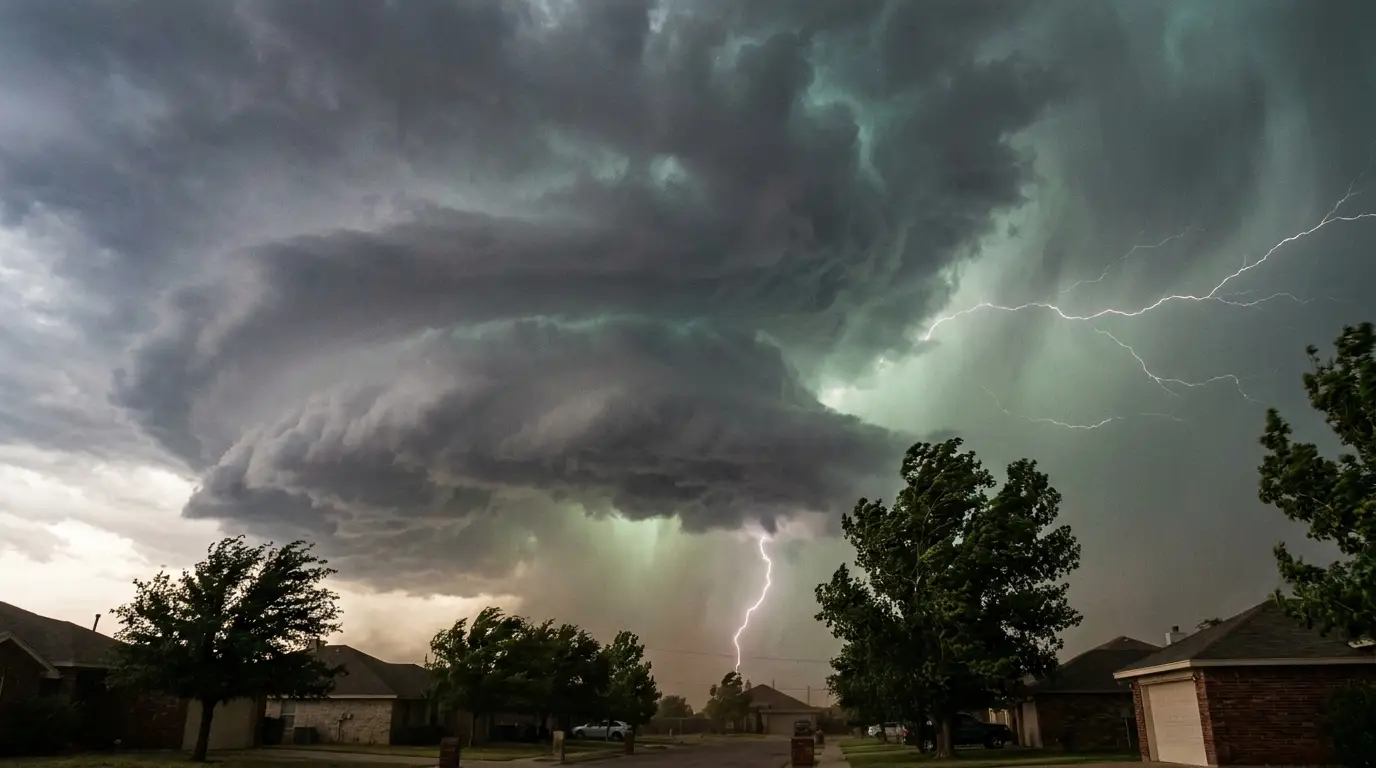
West Texas spring storms build fast and hit hard. A clear afternoon can turn into a wall of wind, hail, and blowing dust within an hour, giving you little time to prepare. These systems pack the trifecta, straight-line winds, hail, and flying debris, so a single storm can inflict several types of damage at once. That intensity is exactly why a prompt post-storm inspection is so important here.
Insurance and Repair vs. Replacement
Most Texas homeowner policies carry a separate wind and hail deductible, often set as a percentage of your dwelling coverage (commonly 1–2%) rather than a flat dollar amount, so know that number before you file. File promptly; insurers expect timely notice, and waiting can complicate a claim or let hidden damage spread. When only a few shingles are missing or creased and the roof is otherwise young and sound, a targeted repair is usually the smart, affordable call.
Full replacement makes sense when damage is widespread across multiple slopes, when the roof is already near the end of its life, or when repeated storms have compromised the underlayment and flashing. A licensed inspector can tell you which side of that line you’re on and document it for your adjuster. If you’re unsure where you stand, schedule a free storm inspection and get an honest, written assessment before you decide.
Final Word: Act Fast, Hire Local
Storm damage only gets more expensive the longer it sits, a loose shingle today becomes a soaked ceiling after the next rain. Move quickly: stay safe, document the damage, tarp active leaks, and get a professional eye on your roof before small problems spread. Most of all, hire local. Elite Roofing and Exterior lives and works in Lubbock, knows exactly what West Texas wind and hail do to a roof, and will still be here to back the work long after the storm chasers have left town. Call us at (806) 451-3393 or explore our roofing services to schedule your inspection and get your home protected again.
Frequently Asked Questions About Storm Damage Roof Repair in Lubbock
Quick answers to what Lubbock homeowners ask most about storm damage roof repair
File as soon as it’s safe, ideally within a few days of the storm. Most Texas policies expect prompt notice, and delays can weaken your claim or give the insurer room to argue the damage came from wear rather than the storm. Document everything with dated photos first, then contact your insurer. Getting a licensed local inspection on record early also helps establish the cause and timing of the damage before the next storm muddies the picture.
Do your first look from the ground: use binoculars or your phone’s zoom to scan for missing shingles, dented gutters, and debris. Never climb onto a wet, hail-slicked, or wind-damaged roof; falls are the leading post-storm injury. Much wind and hail damage is subtle and easy to miss from the yard anyway. A professional roofer knows exactly what to look for and can safely access the roof to find the hidden damage that leads to leaks.
Many Texas homeowner policies carry a separate deductible for wind and hail claims, often figured as a percentage of your home’s dwelling coverage, commonly 1 to 2 percent, rather than a flat dollar figure. On a $300,000 home, a 2% deductible would be $6,000 out of pocket before coverage kicks in. Check your declarations page so you know your number before you file, and weigh it against the estimated repair cost.
It depends on the extent and the roof’s age. If only a few shingles are missing or creased and the roof is otherwise young and sound, a targeted repair is usually the right, cost-effective choice. Replacement makes sense when damage spans multiple slopes, the roof is near the end of its lifespan, or repeated storms have compromised the underlayment and flashing. A licensed inspection gives you a clear, documented answer, and the evidence your insurance adjuster needs.
Be cautious of out-of-town crews who knock on your door right after a storm and pressure you to sign immediately. Storm chasers often collect the insurance money, do rushed work, and leave town, so any warranty is worthless. Choose a licensed, insured, established local company with a Lubbock address and real references. A local roofer stands behind the work, understands West Texas wind and hail, and will still be here if you need them next season.