If you’re planning a new patio or driveway in Lubbock, you’ve almost certainly landed on the same fork in the road every homeowner hits: poured concrete or interlocking pavers? Both are proven, both handle West Texas heat and hail, and both can look great in front of a Hub City home. But they behave very differently on cost, cracking, repairs, and long-term upkeep, and Lubbock’s expansive clay soil and brutal sun add wrinkles most national buying guides ignore.
This guide breaks down concrete vs pavers in Lubbock the honest way: real 2026 price ranges, how each holds up to our climate, and a clear framework so you can match the surface to your budget and priorities.
Here is concrete vs pavers for a Lubbock patio: cost, cracking, upkeep and looks compared, with a straight answer on which suits West Texas soil.
On this page, a complete guide to concrete vs pavers in Lubbock, TX:
Quick Answer: Concrete vs Pavers in Lubbock
For most Lubbock patios and driveways, poured concrete wins on cost and maintenance while pavers win on looks and repairability. Broom-finished concrete runs roughly $6–$12 per square foot installed and asks almost nothing of you for years. Interlocking pavers cost more, typically $14–$28 per square foot, but individual units pop out and reset when one cracks, sinks, or stains, and the design options are far richer.
Concrete’s weak spot is cracking; pavers’ weak spot is joint weeds and higher upfront cost. If budget and low upkeep lead your list, choose concrete. If curb appeal and easy spot repairs matter more, pay the premium for pavers.
Put simply: concrete is the value pick and pavers are the premium pick. On a tight budget with a low-maintenance mindset, poured or stamped concrete gives you a durable surface at the lowest price per foot. If you want a high-end look, more color and pattern choices, and the ability to fix a single damaged spot instead of the whole slab, pavers earn their keep. Either way, professional concrete services and proper base prep matter more than the material you pick.
Cost Compared
Price is where most Lubbock homeowners start, and the gap between concrete and pavers is real. Below are realistic 2026 installed ranges for the Lubbock market. Actual quotes swing with square footage, base prep, thickness, access, and finish detail, a plain patio sits at the low end, while a stamped driveway with control-joint work lands higher.
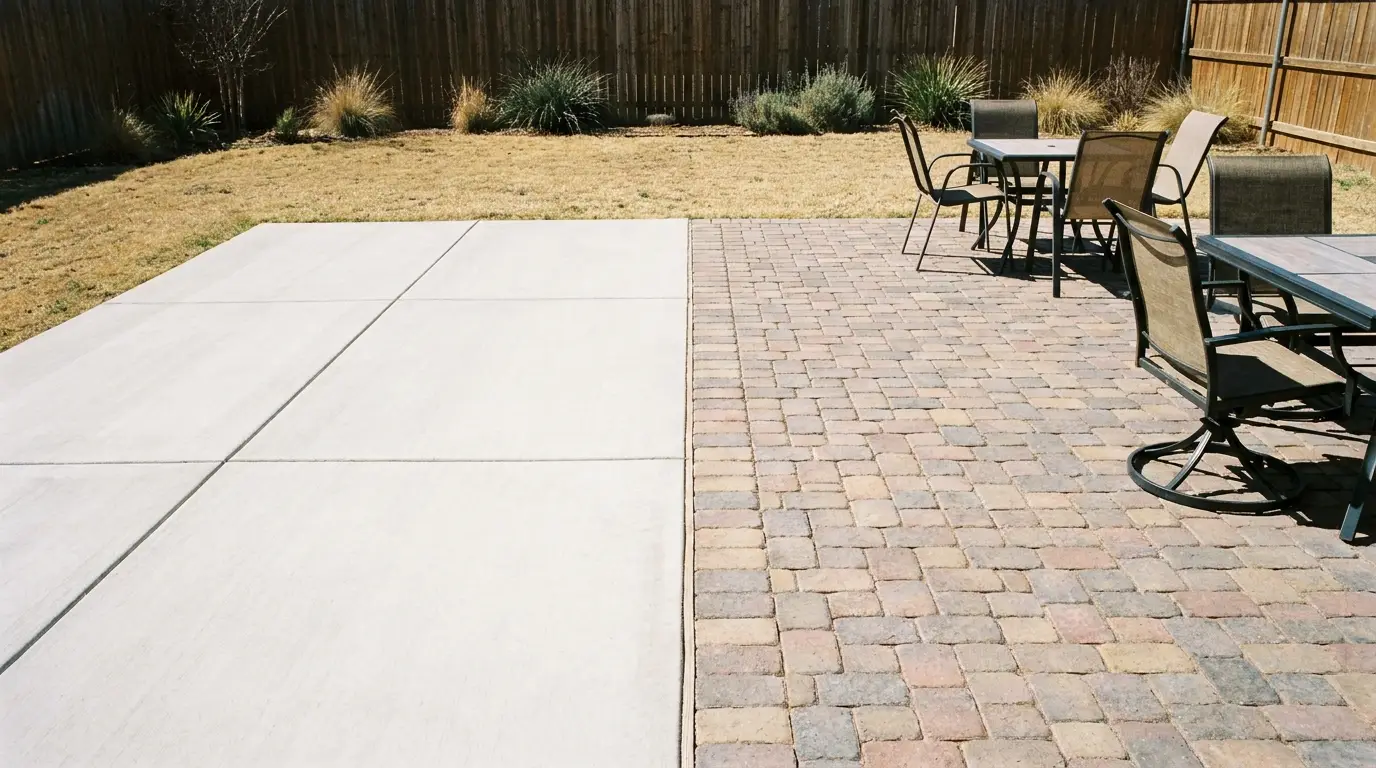
- Poured / broom-finish concrete: roughly $6–$12 per sq ft installed, the budget workhorse for driveways and simple patios.
- Stamped & colored concrete: about $12–$20 per sq ft: mimics stone, brick, or wood-plank at a mid-tier price.
- Interlocking pavers: around $14–$28 per sq ft installed, the premium option, driven by material and labor-heavy hand-setting.
- Repair cost, concrete: a cracked slab often means saw-cutting and re-pouring a whole section, costly and visible.
- Repair cost, pavers: lift and reset individual units for a fraction of the price, with no seam or color mismatch.
Don’t judge on sticker price alone. Concrete’s lower upfront number can flip over 20–30 years if a slab cracks badly and needs replacing, since patches rarely blend in. Pavers cost more day one but their repair math is friendlier, you fix a square foot, not a slab. Factor base prep, drainage, and how long you’ll own the home before deciding which number actually matters most to you.
Concrete vs Pavers: Head-to-Head Comparison
Cost is one lens, but four factors really separate concrete from pavers for a Lubbock home. Here’s how they stack up head to head.
Upfront Cost
Concrete is the clear budget winner. A poured driveway or patio costs less per square foot than pavers because it’s placed in one continuous pour rather than set piece by piece. Pavers carry both higher material costs and significantly more labor, since each unit is hand-laid over a compacted base. If first-day price is the deciding factor, concrete almost always comes out ahead.
Durability & Cracking
Both last decades, but they fail differently. Concrete is rigid, so ground movement or a missed control joint shows up as a crack you can’t un-see. Pavers are a flexible system, small units with sand-filled joints ride soil movement instead of fighting it, so they rarely crack across the surface. For crack resistance in shifting soil, pavers have the edge.
Maintenance & Repairs
Concrete needs little routine care, occasional cleaning and resealing, but repairs are ugly and expensive when they come. Pavers ask for a bit more attention (joint sand, occasional weeding) yet shine on repairs: pull the damaged unit, fix the base, reset it, done. Low daily upkeep favors concrete; painless spot repairs favor pavers.
Look & Design Options
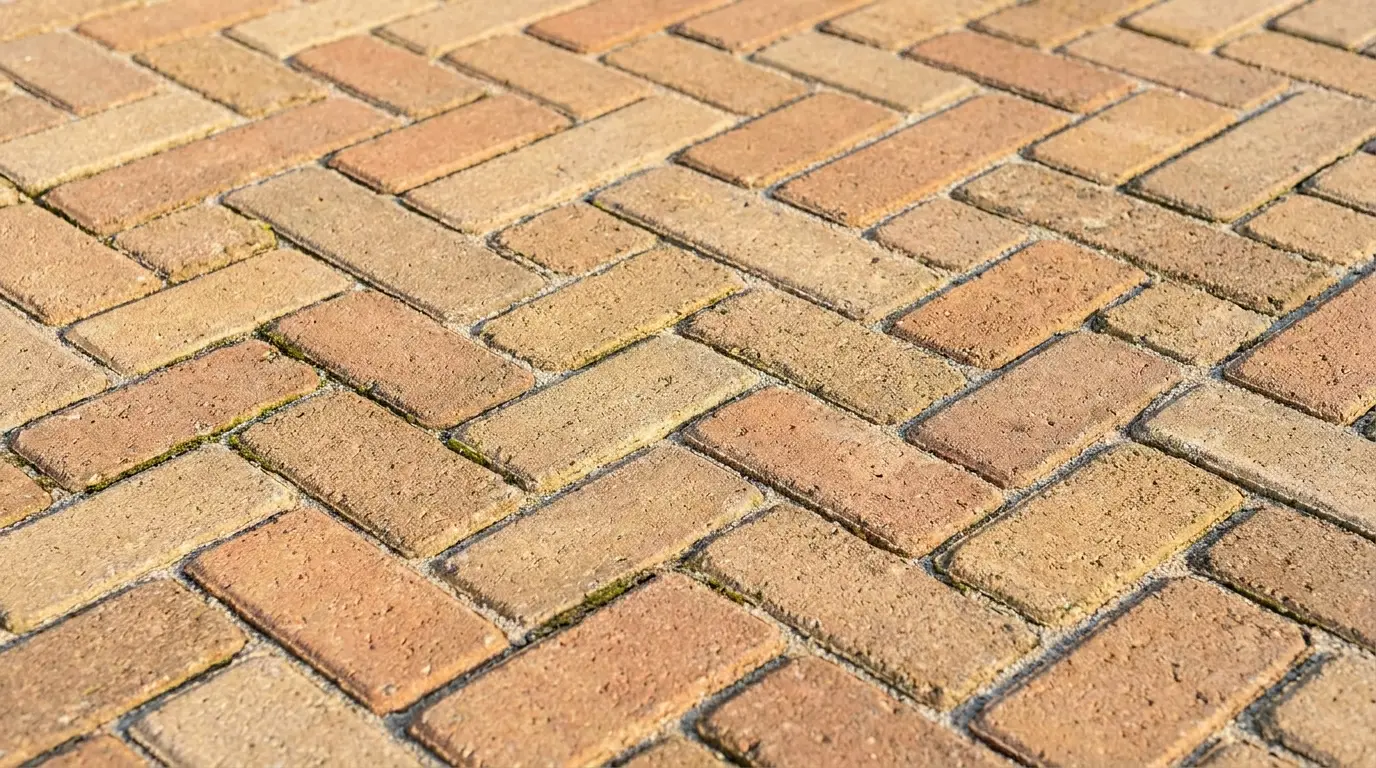
Pavers win on aesthetics. You get dozens of shapes, colors, patterns, and borders, plus the tumbled, old-world texture many homeowners love. Stamped concrete narrows the gap by imitating stone or brick, but color can fade and the mold pattern repeats. For genuine design range and a high-end finished look, pavers lead.
West Texas Considerations
National comparisons miss what actually matters here. Lubbock sits on the High Plains with expansive clay soil, punishing summer sun, and dramatic wet-dry swings, conditions that push concrete and pavers in different directions.
Both options live or die on what is under them. The Portland Cement Association publishes the guidance on subgrade preparation, slab thickness and jointing that governs how either surface behaves on expansive clay.
Expansive Clay Soil & Movement
Lubbock’s clay-heavy soil swells when it’s wet and shrinks when it’s dry, and that constant heave is hard on rigid surfaces. Concrete relies on properly spaced control joints and a solid base to steer where it cracks, skip those and you’ll see random fractures. Pavers flex with the ground because their sand joints absorb movement, making them more forgiving on our expansive soils.
Heat & Sun
West Texas UV is relentless, and it fades surface color over time. Stamped and colored concrete can wash out or discolor after years of direct sun, while quality pavers hold their color deeper into the unit, so wear and fading are far less obvious. Lighter finishes on either material also stay cooler underfoot on 100-degree Lubbock afternoons.
Weeds & Joint Sand
Pavers’ one real maintenance chore here is the joints. Wind-blown dust and seeds settle into paver seams, and weeds can sprout if the joint sand thins out. Polymeric sand and occasional re-sanding keep them locked and weed-free. Concrete has no joints to invade, which is a genuine convenience for hands-off homeowners in our dusty, windy climate.

Concrete vs Pavers: Which Should You Choose?
The right call comes down to what you value most. Choose concrete if budget and low maintenance top your list: a poured driveway or patio gives you the most durable square footage for the money, and once it’s cured and sealed you can mostly forget about it. Choose pavers if design flexibility and easy repairs matter more: you get a high-end look, real color and pattern choices, and the ability to fix one damaged unit instead of tearing out a slab.
There’s also a smart middle path: many Lubbock homeowners pour a concrete driveway for value, then splurge on pavers for a smaller, high-visibility patio or front walkway where looks count most.
Whatever you lean toward, the base and drainage matter as much as the surface, so lean on experienced local pros. Our full range of exterior services can help you weigh the options against your home’s soil, slope, and budget before a shovel hits the ground.
Final Word: Match the Surface to Your Priorities
There’s no universal winner in the concrete vs pavers debate: there’s only the right fit for your budget, your look, and your tolerance for upkeep. If you want the lowest cost and the least maintenance, concrete is your surface. If you’ll trade a higher upfront price for standout design and painless spot repairs, pavers deliver.
For plenty of Lubbock homes, a hybrid of both is the sweet spot. When you’re ready to price it out for your specific driveway or patio, our team can walk your property and lay out honest options. Explore our concrete work, request a free quote, or call us at (806) 451-3393.
Frequently Asked Questions About Concrete vs Pavers in Lubbock
Quick answers to what Lubbock homeowners ask most about concrete vs pavers
Concrete is cheaper upfront in nearly every case. Broom-finished poured concrete runs about $6–$12 per square foot installed in the Lubbock market, and even stamped concrete at $12–$20 usually lands below interlocking pavers at $14–$28. Pavers cost more because of pricier materials and labor-intensive hand-setting. Over the long run the gap can narrow if a concrete slab cracks and needs replacing, since paver repairs are far less expensive per square foot.
Pavers tend to handle Lubbock’s expansive clay soil better because they flex. Their small units and sand-filled joints ride ground movement instead of resisting it, so they rarely crack across the surface. Concrete is rigid and depends on well-placed control joints and a solid base to manage the swelling and shrinking our clay soil goes through. Both can last decades here, but pavers are more forgiving when the ground heaves and settles with wet-dry cycles.
Pavers are far easier to repair. If one cracks, sinks, or stains, a pro lifts that single unit, fixes the base underneath, and resets it, no seams or color mismatch. Concrete repairs are tougher: a cracked slab often means saw-cutting and re-pouring a whole section, and patches rarely blend with the original color. If low-hassle, low-cost repairs matter to you, pavers have a clear advantage over poured concrete.
Stamped concrete narrows the gap but doesn’t fully match pavers. It can convincingly mimic stone, brick, or wood-plank at a lower price, which many homeowners love. The trade-offs: the mold pattern repeats, surface color can fade under West Texas sun, and any crack shows across the stamped design. Pavers offer more genuine variety in shape, color, and texture, plus color that runs deeper into the unit, so they typically hold a high-end look longer.
Pavers need modest upkeep here, mostly at the joints. Lubbock’s wind-blown dust and seeds settle into paver seams, so weeds can appear if the joint sand thins out. Using polymeric sand and re-sanding occasionally keeps joints locked and weed-free. Beyond that, a rinse and periodic sealing keep them looking sharp. Concrete asks for even less, occasional cleaning and resealing, but repairs cost more when they eventually come.