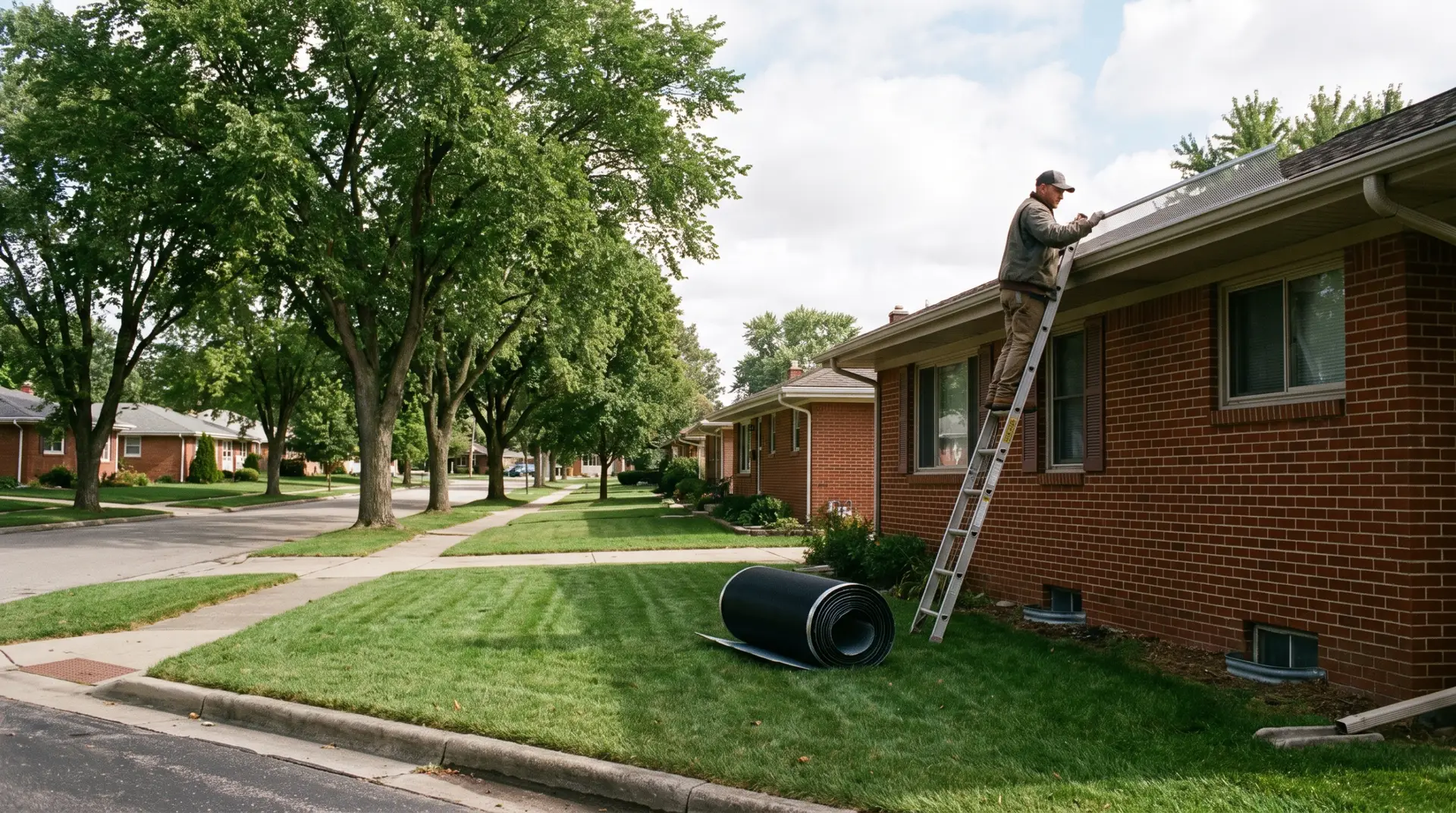
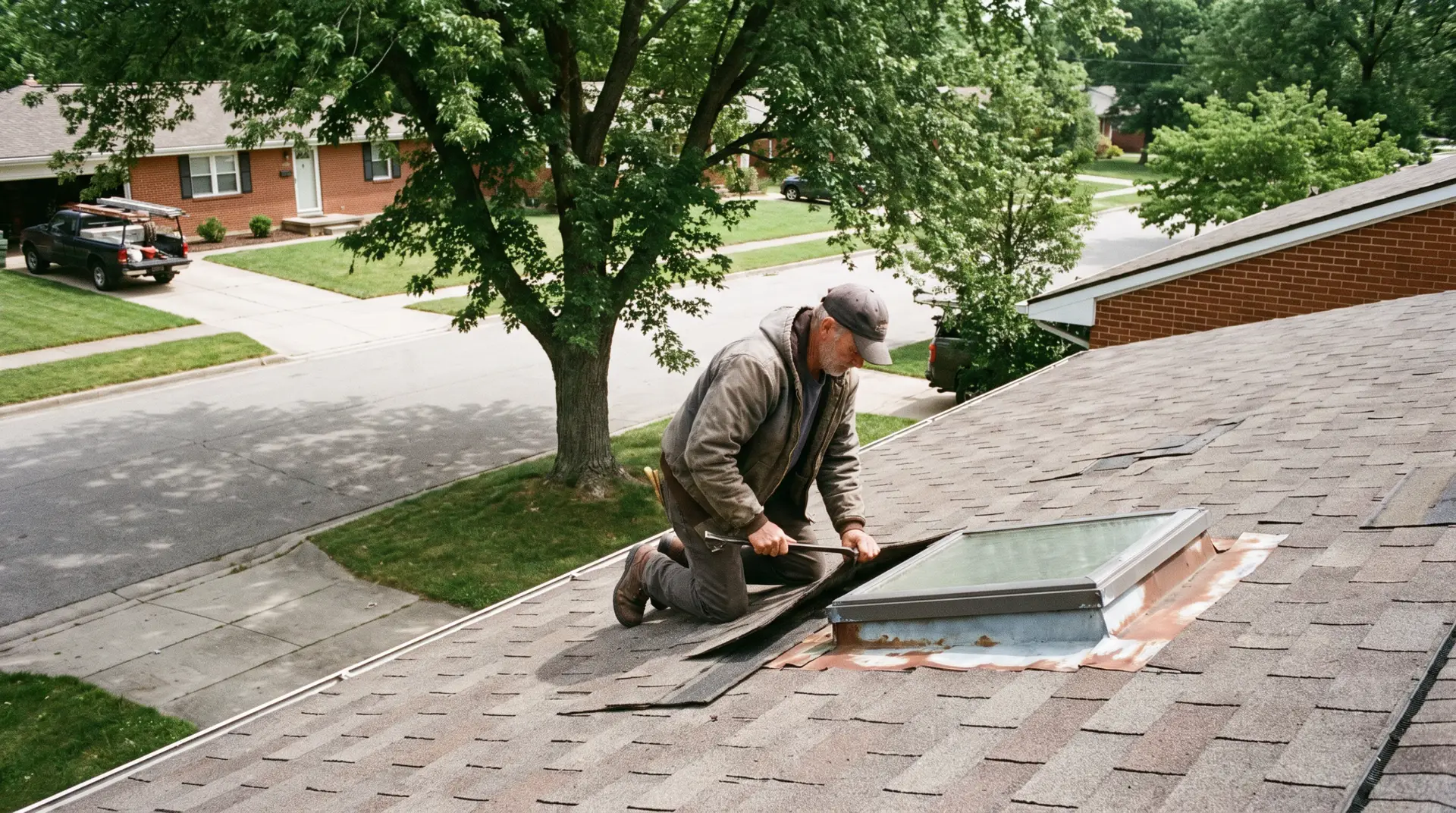
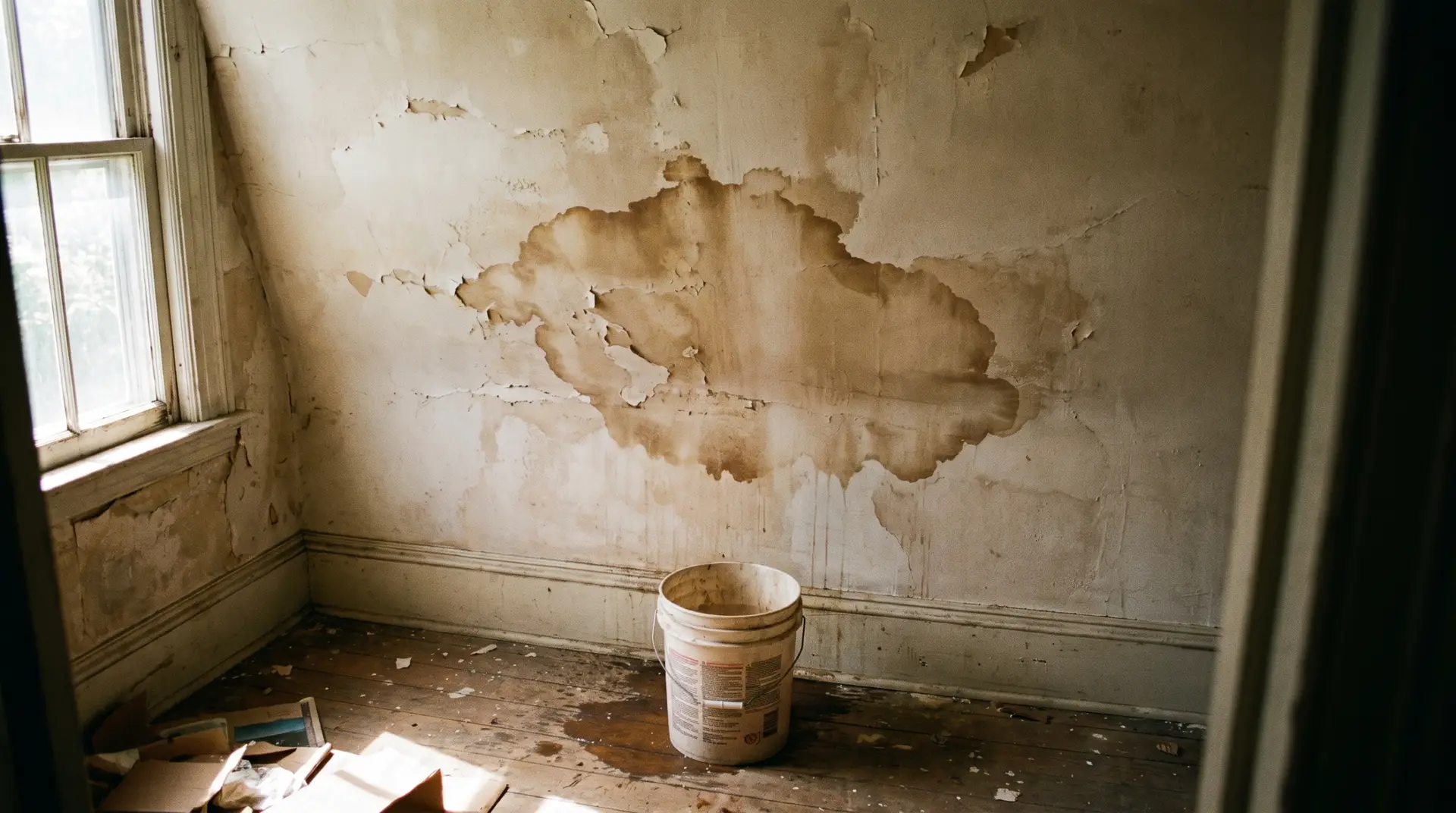
Roof leak repair is the job Lubbock homeowners put off the longest and regret the most. A brown ring shows up on the hallway ceiling in May, it stops growing when the rain stops, and by June it has faded enough that it drops off the list. Then the next storm comes through, the ring doubles, and the drywall, the insulation and the ceiling texture are all part of the bill instead of just a pipe boot.
Water almost never enters a roof directly above the stain you can see. It runs down a rafter, crosses a truss chord, follows a duct line and drops through the first seam it finds, which can be fifteen feet from the actual hole. That is why finding the leak is most of the work and patching it is the easy part. This guide covers where leaks start on West Texas roofs, how to trace one properly, what repairs cost around Lubbock, and when a repair stops being the right call.
On this page, a complete guide to roof leak repair in Lubbock, TX:
- Quick Answer: What Roof Leak Repair Costs and How Fast to Act
- Where Lubbock Roof Leaks Actually Start
- How to Trace a Leak From the Ceiling Stain to the Source
- West Texas Weather and Roof Leak Repair
- Repair or Replace: Running the Numbers Honestly
- Final Word: Small Leaks Get Expensive Quietly
- Frequently Asked Questions About Roof Leak Repair
Quick Answer: What Roof Leak Repair Costs and How Fast to Act
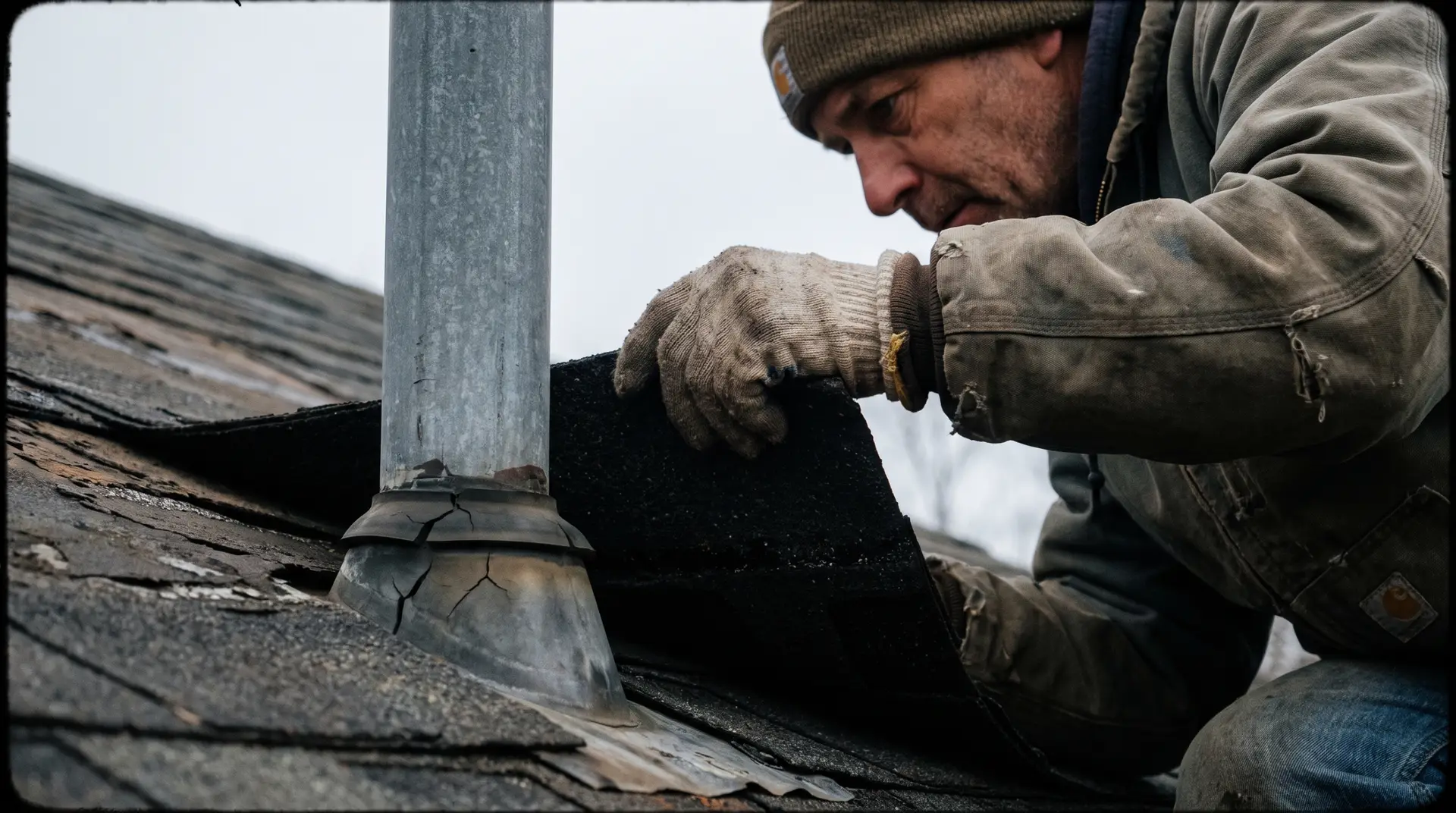
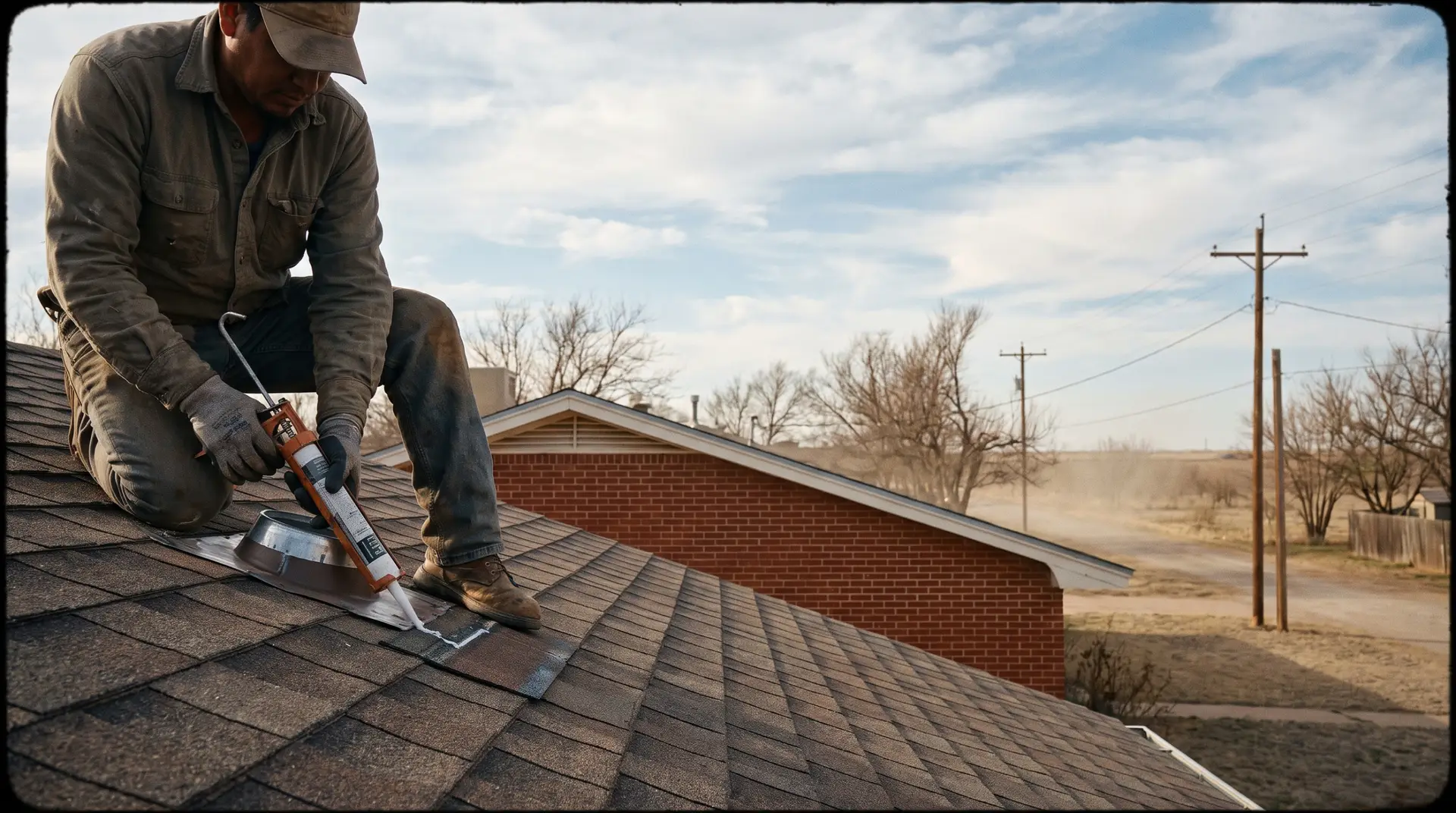
Most single-point roof leak repair in Lubbock runs $350 to $1,200. A cracked pipe boot, which is the single most common leak we find here, is usually $250–$500 replaced. Step flashing or wall-intersection work runs $600–$1,500. If the deck is soft and sheathing has to come out, add roughly $100–$180 per sheet of plywood plus the shingle work over it.
Speed matters more than the dollar figure. Sheetrock holds water for a while and then lets go, and wet blown-in insulation loses most of its R-value permanently. Once water sits on decking for more than about 48 hours, you are looking at delamination rather than drying. Get a tarp or a temporary patch on within a day or two, then schedule the permanent fix. If your home is over 18 to 20 years old and you are chasing the third leak in two seasons, price a replacement alongside the repair before you spend more money patching.
Roof leak repair in Lubbock typically costs $350 to $1,200 for a single failure point, with cracked pipe boots the most common culprit at $250 to $500. Act within 48 hours to keep decking, insulation and drywall out of the repair scope.
Where Lubbock Roof Leaks Actually Start
Shingles themselves leak far less often than homeowners assume. A field of asphalt shingles is a shedding surface with plenty of overlap, and unless hail has bruised it or wind has creased tabs, water rolls right off. Leaks start at penetrations and transitions, the places where something interrupts that shedding surface and a piece of metal, rubber or sealant has to do the work instead.
On Lubbock roofs the failure order is fairly predictable, because our sun and our wind attack the same materials in the same sequence every year. Rubber goes brittle, sealant shrinks and cracks, exposed fasteners back out, and metal edges lift. Here are the six spots we check first on almost every leak call in town.
- Plumbing vent pipe boots: The neoprene collar around every bathroom and kitchen vent. West Texas UV cracks these in 8 to 12 years, well before the shingles wear out, and the crack always opens on the south-facing side. This is the number one leak source on Lubbock homes, and it is also the cheapest to fix.
- Step flashing at walls and dormers: Where the roof meets a vertical wall, individual metal pieces should be woven into each shingle course. When a previous crew ran one continuous strip of flashing and caulked it instead, the caulk fails in about five years and water tracks straight down behind the siding or brick.
- Valleys: The channel where two roof planes meet carries more water than anything else on the roof. Debris packs in, holds moisture, and nails placed too close to the center line let water wick underneath. Valleys on north slopes stay damp longest and fail first.
- Evaporative cooler and rooftop unit curbs: Plenty of Lubbock homes still run a roof-mounted swamp cooler. The curb flashing, the water line penetration and the drain all sit right there, and a cooler that leaks in summer will keep leaking in a rainstorm long after it is shut down for the year.
- Chimney counterflashing: Brick chimneys need flashing let into a mortar joint and sealed. Around here, mortar joints weather out, the counterflashing loosens, and the cricket on the uphill side collects debris. A chimney leak often looks like a wall leak inside the house.
- Exposed fasteners and nail pops: Every place a nail head sits on the surface is a spot the sealant will eventually give up. On roofs where decking has moved with the seasons, nails back out and lift the shingle above them, which lets wind-driven rain get underneath.
Ridge vents and turbines deserve a mention too, though they usually leak for a different reason. Water rarely enters a properly installed vent, but a vent that was set with too few nails or bedded in old sealant will let horizontal rain in during a 50 mph event. If your ceiling stain sits near the ridge and only appears during wind-driven storms rather than steady rain, start looking at the vents rather than the field. The same goes for gable vents and soffit screens, which can push a surprising amount of water into an attic during a sideways storm without any roof failure at all.
How to Trace a Leak From the Ceiling Stain to the Source
Start in the attic, not on the roof. Take a bright flashlight up on a dry afternoon and find the stain location from underneath, then look uphill from that point along the rafters and the decking. Water leaves a trail: dark streaks on wood, rusted nail shanks, matted or discolored insulation, and a faint white mineral crust where hard water has evaporated repeatedly. Follow those signs up the slope until they stop, and that is the entry area.
Daylight is the other attic tool. On a sunny day with the attic lights off, small pinholes at nail penetrations and gaps at flashing edges show up as bright dots. Mark anything you find with a nail pushed through from below or a chalk circle, so you can locate the same spot from the top side. Photograph everything with your phone, because insurance adjusters and roofers both want to see what the attic looked like before the repair. Note the date on each photo as well, since a documented timeline helps enormously if the damage traces back to a specific storm.
The confirmation step is a controlled water test, and it takes two people. One person on the ground with a garden hose runs water on the roof in sections, starting low and working uphill, holding each section for at least ten minutes. The other person watches from inside the attic. Do not spray the whole roof at once, because then you learn only that it leaks, which you already knew. If the stain appears while soaking the area around a vent pipe, you have your answer. When you are chasing damage after a big storm rather than a slow leak, our guide to storm and wind damage roof repair in Lubbock covers the documentation side of the process.
West Texas Weather and Roof Leak Repair
Roofs in Lubbock fail differently than roofs in wetter, calmer parts of Texas. We do not get long soaking rains that expose slow seepage. We get hard, fast, wind-driven storms separated by months of brutal sun, and that pattern breaks specific materials in a specific order. Understanding it tells you where to look and how urgently to move. These are the three local conditions behind most roof leak repair calls we run on the South Plains.
Wind-Driven Rain at 50 to 70 MPH
Rain that arrives sideways behaves nothing like rain that falls straight down. At 50 mph and up, water gets driven up under shingle tabs, behind fascia metal and past vent louvers that would never leak in a calm shower. That is why a roof can handle three inches of gentle rain with no trouble and then leak during a twenty-minute squall. If your leak only shows up during storms with hard wind out of the southwest, the entry point is almost certainly a lap or an edge rather than a hole. Testing that kind of leak with a garden hose on a calm day often turns up nothing, which fools plenty of homeowners into thinking the problem fixed itself.
UV That Destroys Rubber and Sealant Early
Lubbock sits high and dry with intense sun most of the year, and ultraviolet exposure ages rubber and sealants far faster than the shingles they sit next to. Pipe boot collars crack years before the roof is worn out. Caulk at flashing joints shrinks, pulls away and lets water behind it. Any repair that depends on a bead of sealant as the primary defense will fail here on a five to seven year clock, which is why proper metal work beats caulk every time.
Hail Bruises That Leak Months Later
Hail from March through June often does not open an immediate hole. It fractures the fiberglass mat under the surface and knocks granules loose, leaving a bruise that feels soft under a thumb. That spot keeps shedding water for a while, then the exposed asphalt oxidizes through a summer of sun and starts letting water pass in the fall. A leak in October is regularly the result of a storm in April, which matters a great deal for insurance timing. Our guide to the signs you need a new roof in Lubbock covers how to spot bruising before it turns into a leak.
Repair or Replace: Running the Numbers Honestly
A single failure point on a roof with life left in it is a repair, full stop. Replace the boot, rebuild the flashing, fix the valley, and move on. The calculation changes when the leaks start coming from different places, because that usually means the materials have reached the end of their service life rather than one component failing early. Three separate leaks in two seasons on a 20-year-old roof is a replacement conversation, not a fourth repair.
Timing is the other half of the decision, and our climate is unusually seasonal about it. The National Weather Service office in Lubbock tracks the local pattern, and the short version is that our heaviest rain and our severe storms both cluster from late spring into early fall. Lubbock averages roughly 19 inches of precipitation a year and a good share of it arrives in a handful of intense events. That means a small leak found in February has months of dry weather to be fixed properly, while the same leak found in May is a race against the next line of storms coming off the caprock.
On cost, weigh the repair against the remaining life. Spending $900 on a roof with twelve good years left is easy math. Spending $900 on a roof with two years left is buying time you could put toward the replacement instead. Our post on roof repair versus replacement in Lubbock walks through the age, damage-percentage and insurance factors in detail.
Final Word: Small Leaks Get Expensive Quietly
The homeowners who spend the least on roof work are the ones who call about a stain the week they see it. A cracked boot caught early is a few hundred dollars and an hour of labor. That same boot ignored through one Lubbock summer becomes wet insulation, soft decking, a stained ceiling and sometimes mold in the attic, and now the number has a comma in it. Nothing about a roof leak gets cheaper by waiting, and the interior work almost always costs more than the roof work did.
Get up in the attic twice a year with a flashlight, once in the fall after storm season and once in early spring. Look for daylight, dark streaks and rusted nails. Check your pipe boots from the ground with binoculars if the roof is steep, since cracked collars are visible from the driveway on most one-story homes. When you find something, or when you would rather have somebody who does this daily take a look, Elite Roofing & Exterior handles roof repair across Lubbock and the surrounding towns, from Wolfforth and Shallowater to Idalou and Ransom Canyon.
Frequently Asked Questions About Roof Leak Repair
Common questions from Lubbock homeowners about finding leaks, repair costs, insurance and timing
From inside, put a bucket under the drip and poke a small hole in the center of any bulging drywall so the water drains in one controlled spot instead of collapsing the ceiling. From outside, a tarp run over the ridge and weighted with sandbags or lumber will shed water for a few weeks. Do not use roofing cement as a permanent answer on a wet surface, since it will not bond and it makes the real repair messier.
Texas policies generally cover sudden damage from a covered event such as hail or wind, and generally exclude damage from age, wear or deferred maintenance. A boot that cracked from ten years of sun is maintenance. A boot torn off by a 70 mph gust is usually a claim. Repair costs also frequently land below the deductible on a wind and hail policy, so many single-point repairs are paid out of pocket even when the cause qualifies.
Very often, yes. Most leaks start at penetrations and transitions rather than in the shingle field, and none of those are easy to see from the driveway. Pipe boots, valleys, chimney flashing and wall intersections all sit above eye level or behind a slope. Hail bruising is also nearly invisible from the ground because the damage is in the mat under the surface rather than on top of it.
Most single-point repairs are a half day once the crew is on site, including tearing back the surrounding shingles, replacing the failed component, and weaving new shingles back in. Diagnosis can take longer than the repair itself, particularly on a leak that only appears in wind-driven rain. If decking has to be replaced, add a few hours. Scheduling is usually the real delay, since every roofer in Lubbock is booked after a storm.
It depends on what else is happening. One isolated failure on an otherwise sound 20-year roof is worth fixing, especially if you want to get through one more season before budgeting a replacement. Multiple leaks, widespread granule loss and curling edges together point the other way. Get an honest inspection with photos, and ask the roofer to quote both the repair and the replacement so you can compare the two against the remaining service life.