Choosing fence stain colors in West Texas is a durability decision disguised as a decorating decision, and most homeowners find that out the hard way about two summers in. The color chip you pick at the store carries pigment, and pigment is what stands between your cedar pickets and 300 days of hard South Plains sun.
This guide covers which colors actually hold here, why some fade in 18 months while others still look right at year four, and how to match a stain to the brick on a Lubbock house without ending up with a fence that fights the whole front elevation. We will also cover the two colors people regret most often, and why a west-facing fence line needs a different answer than a north-facing one.
On this page, a complete guide to fence stain colors in Lubbock, TX:
- Quick Answer: The Best Fence Stain Colors for West Texas
- Six Fence Stain Colors That Work on Lubbock Fences
- Opacity Matters More Than the Color Chip
- What West Texas Does to a Stained Fence
- Matching Fence Stain Colors to Your Brick and Trim
- Final Word: Picking Fence Stain Colors You Will Still Like
- Frequently Asked Questions About Fence Stain Colors
Quick Answer: The Best Fence Stain Colors for West Texas
The fence stain colors that hold up best in Lubbock are the mid-tone browns: cedar tone, chestnut, and warm walnut. They carry enough pigment to block ultraviolet light without absorbing the heat a near-black stain does, and they age gracefully rather than turning patchy. Expect 3 to 4 years between coats from a semi-transparent product in these tones on a well-prepped cedar fence.
Redwood and other red-based colors look excellent for the first year and fade fastest, since red pigments break down under ultraviolet exposure sooner than earth-tone pigments. Plan on 2 to 3 years. Driftwood gray is the sleeper pick for modern builds and holds well because it is already close to the color weathered cedar turns anyway. Clear and lightly tinted sealers are the ones to skip here. With almost no pigment, they give you 12 to 18 months before the fence starts going silver again.
Mid-tone browns like cedar tone, chestnut, and walnut are the most reliable fence stain colors in West Texas, lasting three to four years between coats. Reds fade fastest at two to three years, and clear sealers give up in about a year of Lubbock sun.
Six Fence Stain Colors That Work on Lubbock Fences
Almost every manufacturer sells the same handful of families under different names, so ignore the marketing and look at the tone. What follows is how each family behaves on cedar and treated pine after a few West Texas summers, based on what we see when we come back to recoat.
One note before the list. Every one of these looks different on your fence than on the sample card, because the wood underneath shows through on anything short of a solid stain. Buy a quart, do a two-foot section on the actual fence, and look at it in afternoon light before you commit to 200 linear feet.
Dry time changes the color too. Most stains look considerably darker and richer while wet and lighten as they cure, so judge a test patch the next morning rather than an hour after you brush it on.
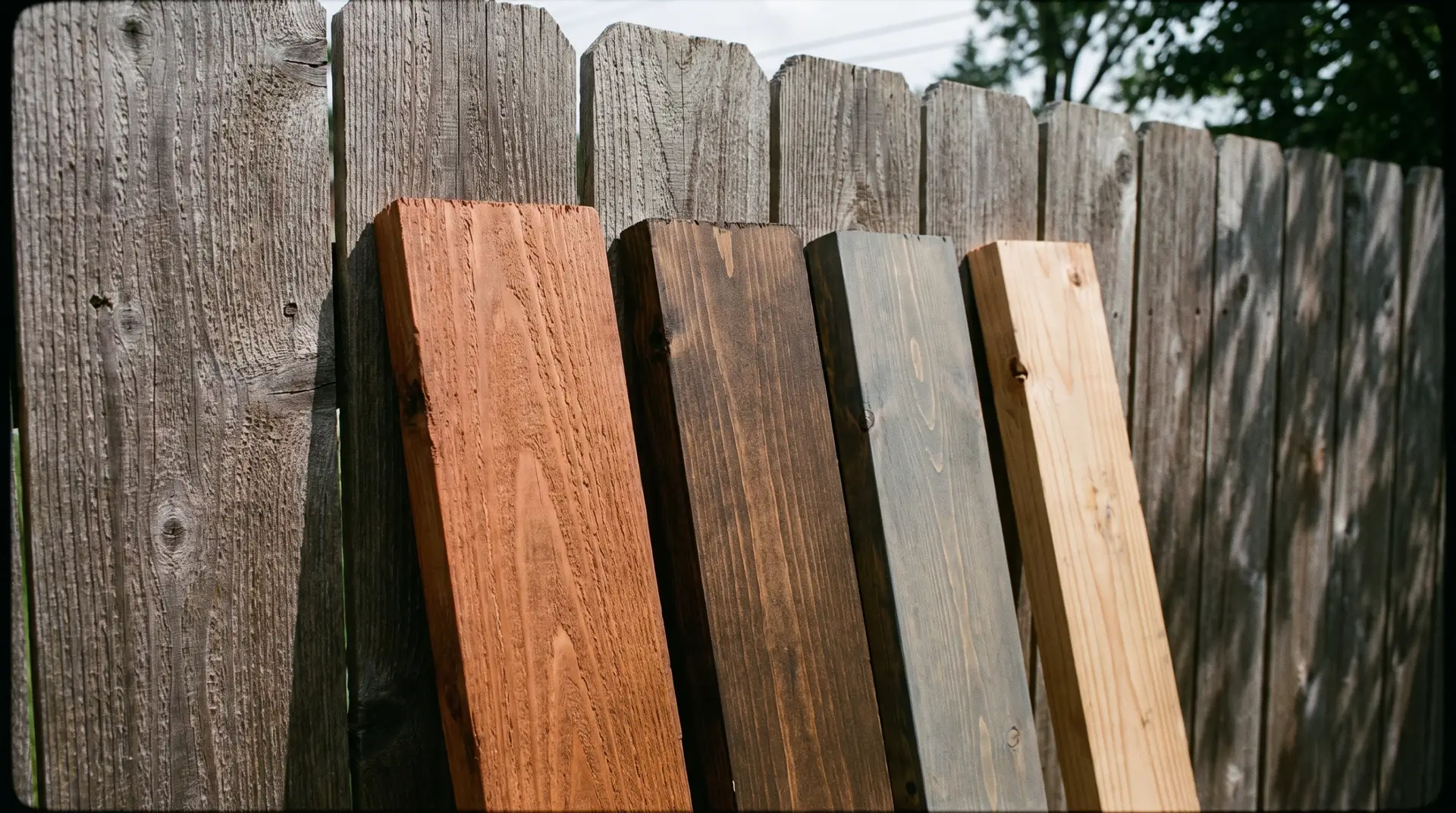
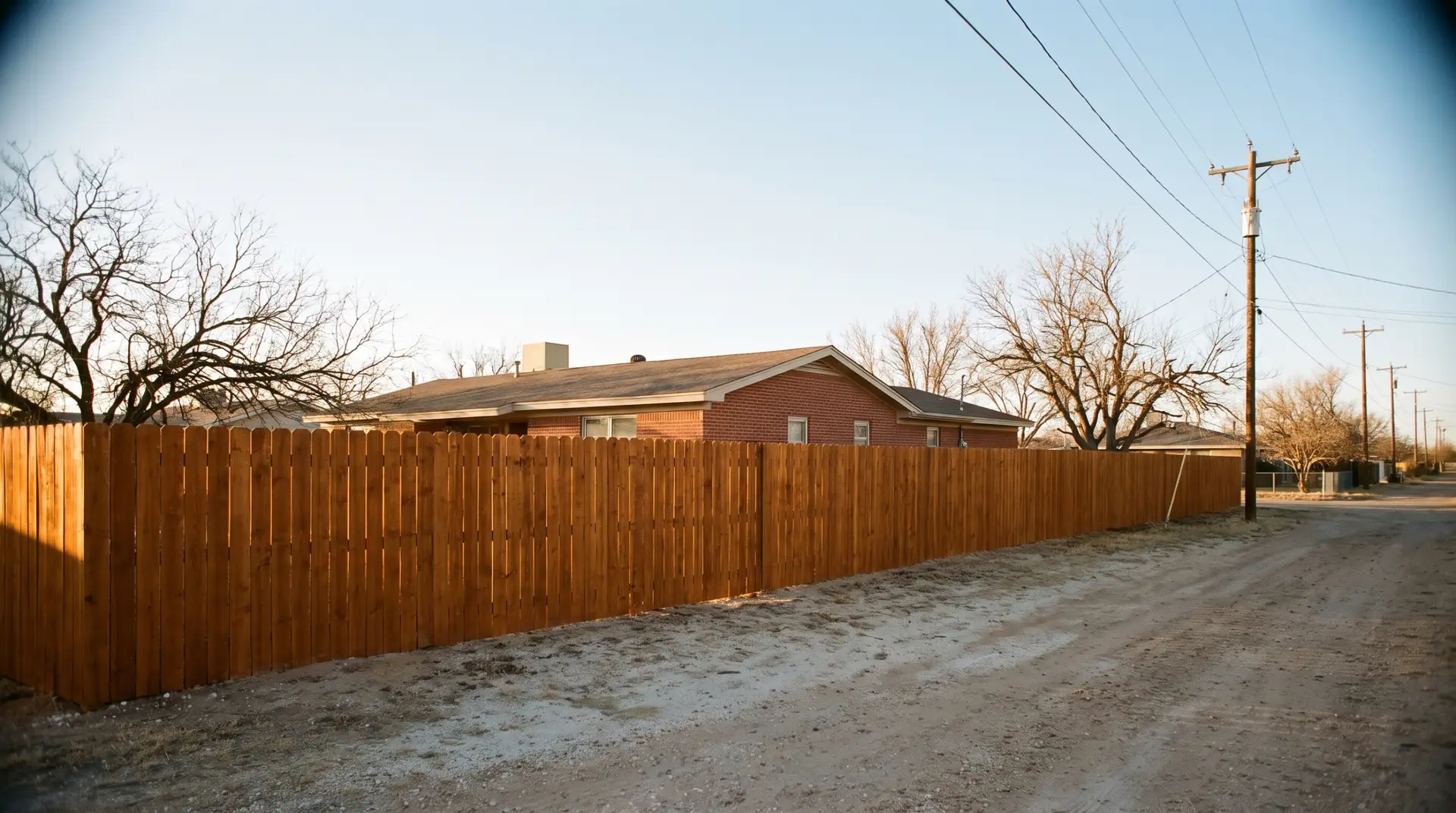
- Cedar tone: The safest choice on the South Plains and the one we apply most. It reads as slightly enriched natural cedar, hides the color variation between pickets, and fades evenly instead of blotching. Works with red brick, tan brick, and painted trim in almost any color, which is why it shows up on so many fences from Tech Terrace out to Wolfforth.
- Redwood: The warmest and most saturated of the popular fence stain colors, and genuinely striking on new cedar. The catch is that red pigment is the first to break down under our ultraviolet load, so a redwood fence usually needs attention a year sooner than a brown one. Good pick for a fence that gets afternoon shade, harder to justify on a wide-open west line.
- Chestnut or medium brown: A step darker and less orange than cedar tone, with more pigment doing the protective work. This is the color that tends to look best against the buff and tan brick on newer builds around Frenship and south Lubbock. It also does a good job of evening out treated pine, which takes stain unevenly compared to cedar.
- Walnut or dark brown: High pigment, long life, and a rich look that makes a backyard feel finished. The trade is heat. A dark fence line running east and west can climb noticeably hotter than a mid-tone one on a July afternoon, which drives moisture out of the boards faster and can raise the grain over time. Excellent on shaded or north-facing runs.
- Driftwood or weathered gray: The modern choice, and smarter than it looks. Cedar wants to turn silver-gray on its own, so a gray stain works with that process rather than against it, and it hides dust film between cleanings better than any other color. Pairs well with white or black trim and dark window frames on newer construction.
- Clear or natural sealers: Included here so you can skip them with confidence. They protect against water but carry almost no ultraviolet blocker, which in our sun means 12 to 18 months before the wood starts graying underneath. If you truly want the natural look, a lightly tinted semi-transparent in a natural tone gets you much closer to that appearance and lasts twice as long, which is what most people actually wanted from the clear product in the first place.
New fences need patience. Treated pine should weather 3 to 6 months before it takes stain properly, since the mill treatment leaves the boards too wet to absorb anything. Cedar can usually be stained within a few weeks after a good cleaning. Staining pine too early is the most common reason a fence ends up blotchy, and no color choice fixes a moisture problem underneath. A cheap moisture meter settles the question in about ten seconds, and anything over roughly 15 percent means wait.
Opacity Matters More Than the Color Chip
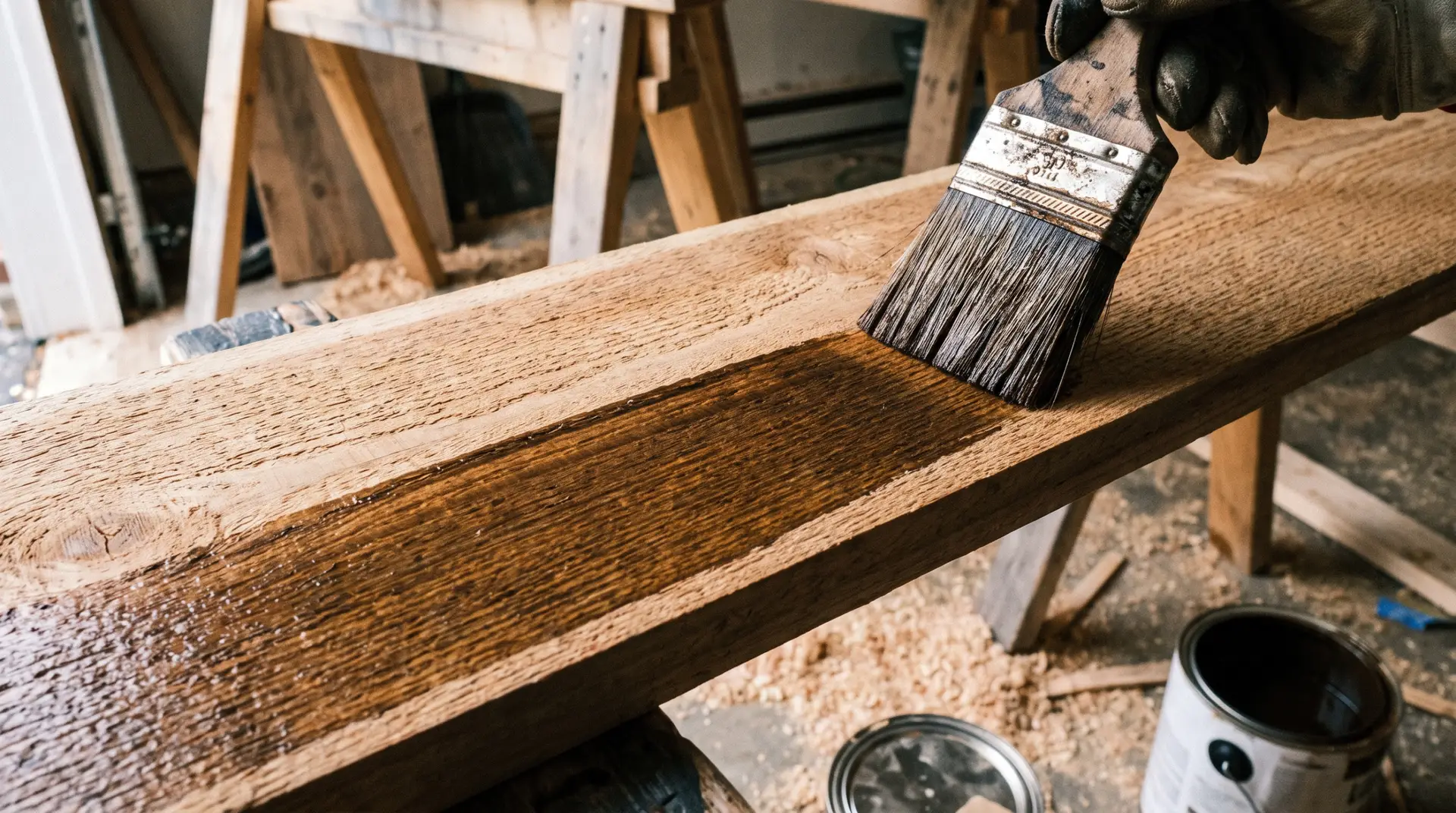
Before you argue with your spouse about brown versus gray, settle the opacity question, because it drives lifespan more than the hue does. Stains come in four levels: clear, semi-transparent, semi-solid, and solid. Each step up adds pigment, and pigment is what physically blocks ultraviolet light from reaching the wood fibers.
Semi-transparent is the workhorse for cedar fences in Lubbock. It lets the grain show, penetrates rather than filming on the surface, and gives you three or four years in most exposures. Because it soaks in instead of forming a skin, it fades rather than peeling, which means the next recoat is a wash-and-apply job instead of a stripping job.
Semi-solid and solid stains carry considerably more pigment and can run five years or longer, but they hide the grain and behave more like paint. Solid stain on a fence that already has failing product on it can trap moisture and start peeling in sheets, which turns your next maintenance cycle into a much bigger project. On older pine fences with mismatched board colors, a semi-solid is often the honest answer, because it evens everything out. The trade you are making is that you give up the wood grain permanently, since going back to a transparent finish later means stripping the whole fence.
Oil-based and water-based products both work here. Oil penetrates deeper and tends to look richer on cedar, while modern water-based stains hold color longer against ultraviolet fade and clean up easier. Our comparison of fence staining versus painting versus sealing in West Texas goes deeper on that choice if you are still weighing it.
What West Texas Does to a Stained Fence
The same can of stain performs differently in Lubbock than it does in Fort Worth, and the reasons are specific. We sit high, dry, and exposed, with sun that works on wood all year and wind that keeps a film of grit on every surface. Three conditions do most of the damage to fence stain colors here, and each one should influence what you buy and where you spend the extra effort. None of them are reasons to avoid staining. They are reasons to expect a shorter cycle here than the label promises, since those numbers are written for average national conditions rather than for a fence line on the caprock.
Ultraviolet Load on West and South Fence Lines
Elevation and clear skies push our summer ultraviolet index into the double digits for weeks. Ultraviolet light breaks down lignin, the natural glue holding wood fibers together, which is why unprotected cedar goes silver and fuzzy. A fence run that faces west takes several hours of the harshest daily exposure, and it will always need recoating before the north run does. On a wraparound fence, plan on doing the west and south sections a year ahead of the rest, or just accept a slightly uneven look and do the whole thing on the shorter cycle.
Blowing Dust and a Chalky Surface Film
Every spring dust event leaves fine silt on the fence, and that film dulls fence stain colors within weeks of application. Homeowners often think the stain has faded when the finish underneath is fine and the surface just needs washing. A garden hose and a soft brush once or twice a year restores a surprising amount of color. This is also why gray and mid-brown tones stay looking good longer here than deep reds, which show a dust film more obviously against a saturated background.
Hard Water and Sprinkler Overspray
Lubbock water carries enough calcium and other minerals to leave visible white deposits on anything it hits repeatedly. A sprinkler head throwing water on the bottom two feet of a fence every morning creates a chalky band that no stain color hides, and the constant wetting also shortens the finish life in that strip. Adjust the heads before you stain, not after. This one detail causes more callbacks about uneven color than any product defect we see.
Matching Fence Stain Colors to Your Brick and Trim
Lubbock housing stock splits roughly into two color families, and the right stain follows the house. Older neighborhoods around Tech Terrace, Maxey Park, and the 50th Street corridor lean toward red and orange brick from the sixties and seventies. Red-based fence stain colors fight that brick and make the whole yard feel busy, so mid-brown or driftwood gray usually reads better.
Newer construction around Frenship, south Lubbock, and out toward Wolfforth uses more tan, buff, and mixed-tone brick with dark trim. Chestnut, walnut, and gray all sit comfortably against those, and a warmer cedar tone works well if the trim is white. The general rule is to move away from the brick rather than trying to match it, since a near-match that misses by a shade looks like a mistake while a clear contrast looks intentional.
If your fence is visible from the street in a newer addition, check the deed restrictions before you buy. Some Lubbock area subdivisions specify allowable finishes or require a natural tone on street-facing fences. It takes one phone call and saves an expensive redo, and it beats explaining a finished 200-foot fence to a board after the fact. For the technical side of how finishes actually protect wood outdoors, the USDA Forest Products Laboratory publishes the underlying research on wood weathering and finish performance, and it is the clearest non-commercial explanation of why pigment load matters so much.
Final Word: Picking Fence Stain Colors You Will Still Like
Pick the opacity first, then the tone, then test it on the actual fence. A semi-transparent mid-brown is the default answer for most Lubbock properties for good reason: it holds three to four years, it hides picket-to-picket variation, it goes with nearly every brick in town, and the recoat is a simple job rather than a strip-and-start-over project.
Go darker if your fence is shaded or you want maximum life and do not mind losing the grain. Go gray if the house is modern and the trim is dark. Go red only if you love it enough to redo it a year sooner than your neighbor.
Whatever you choose, prep decides half the outcome. A fence that was washed, brightened, and allowed to dry takes stain evenly and holds it. A fence that got a quick rinse and a same-day coat will look blotchy inside a year, no matter how good the product was.
Our guides to fence staining cost in Lubbock and how often to stain a fence here cover the budget and the timing side. When you are ready to see samples brushed onto your own cedar in your own afternoon light, Elite Roofing & Exterior handles fence staining across Lubbock and the surrounding South Plains, prep work included.
Frequently Asked Questions About Fence Stain Colors
What Lubbock homeowners ask before picking a stain
Mid-tone and dark browns hold longest, typically three to four years for a semi-transparent product and five or more for a semi-solid. Gray tones do nearly as well and hide dust film better. Reds fade first because red pigment breaks down under ultraviolet exposure sooner than earth tones. Whatever family you choose, the pigment load matters more than the specific shade, so a darker version of any color will outlast a lighter one in the same product line.
A dark fence does run hotter than a mid-tone one in direct sun, and over years that extra heat cycling can raise the grain and encourage cupping on thinner pickets. It is not a reason to avoid dark colors outright. It is a reason to favor them on shaded and north-facing runs, and to make sure the boards were dry before staining. On a fully exposed west-facing run in Lubbock, a mid-brown is the safer long-term call.
Yes, but going lighter or cooler over an existing warm color usually requires a stripping and brightening step first, not just a wash. Otherwise the red underneath bleeds through and you get a muddy result. The easier path is stepping up in opacity, since a semi-solid gray covers a faded redwood without stripping. Test a section either way, because a two-foot sample tells you in one afternoon what a whole fence would tell you too late.
Quite a bit. In Lubbock, a clear or lightly tinted sealer is done in twelve to eighteen months, a semi-transparent red runs two to three years, and a semi-transparent brown or gray typically goes three to four. Semi-solid and solid stains stretch to five years or more. Exposure matters just as much, so a shaded north fence in any of those colors will outlast a west-facing run by roughly a year.
Not required, but worth doing when the fence is shared. Wood that is finished on one side and bare on the other takes on and releases moisture unevenly, which encourages cupping and shortens the life of the boards. Most staining crews price both sides together at a lower rate than coming back later. Talk to the neighbor first, since some prefer their side left natural and that is their call on a shared line.