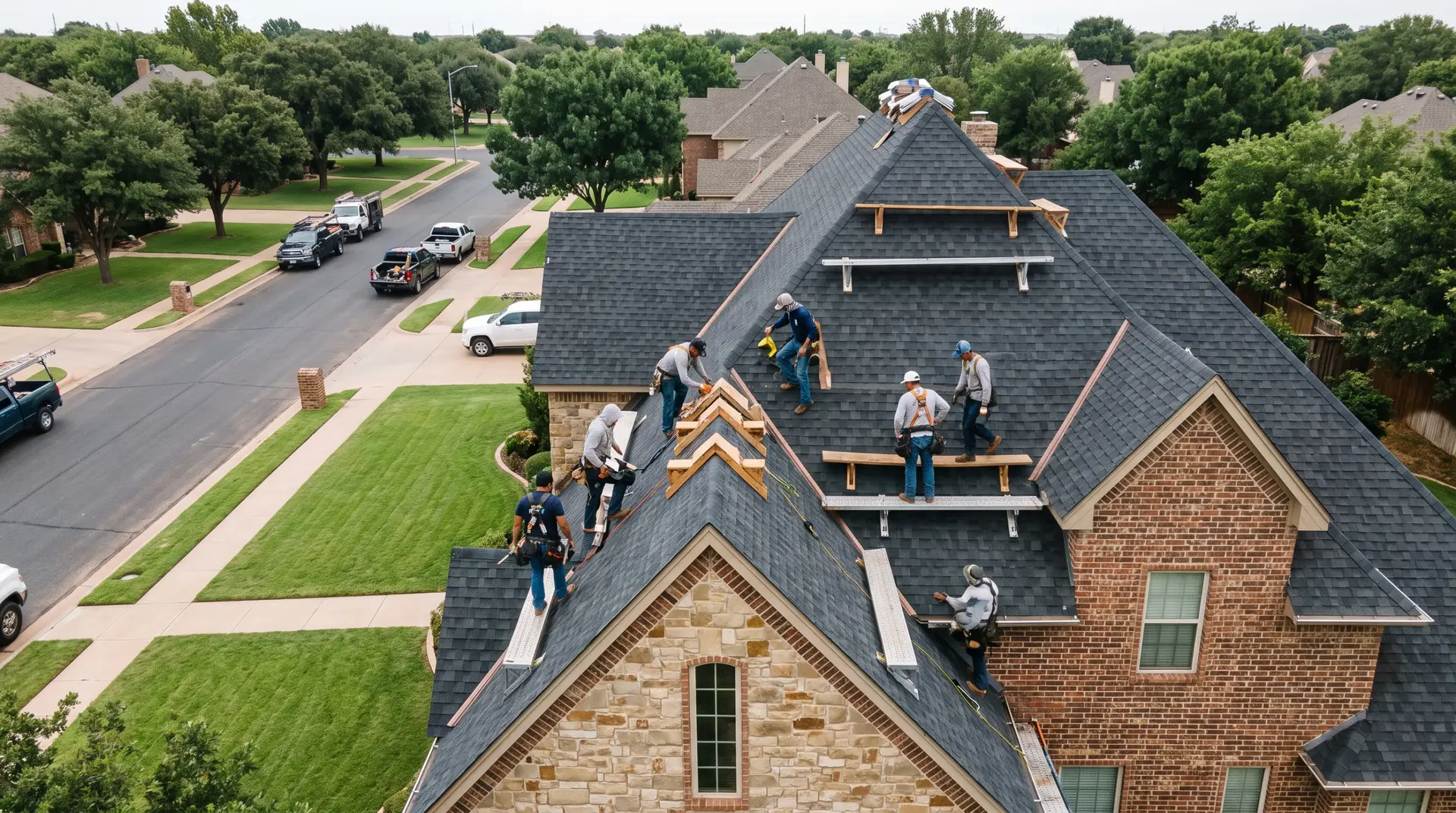
The best time of year to replace a roof in Lubbock is late August through November, once hail season is behind us and before the first hard freeze changes how shingles behave. That window gives you settled weather, crews that are out of the summer scramble, and daytime temperatures warm enough for shingle sealant strips to bond the way the manufacturer intended.
That said, the calendar is only half the decision. A roof that is actively leaking gets replaced in February, and a hail claim approved in May gets scheduled in May. This guide walks through each season on the South Plains, what changes about the install, what it does to your price and your wait, and when it makes sense to ignore the ideal window entirely.
On this page, a complete guide to best time of year to replace a roof in Lubbock, TX:
- Quick Answer: The Best Time of Year to Replace a Roof in Lubbock
- The Lubbock Roofing Calendar, Season by Season
- What Spring Actually Costs You
- West Texas Weather and What It Does to a New Roof
- When Fall Is Not the Best Time of Year to Replace a Roof
- Final Word: Timing Your Replacement Without Overthinking It
- FAQs About the Best Time of Year to Replace a Roof
Quick Answer: The Best Time of Year to Replace a Roof in Lubbock
Late August through November is the sweet spot. Hail season has passed, the spring backlog has cleared, afternoon highs still sit in the 60s to 80s, and you are ahead of the first freeze. Jobs in that window get finished in one or two days with fewer weather stops than any other stretch of the year.
March through June is the busiest and least predictable. That is hail season and 60-plus mph wind season, so crews are booked out and tear-offs get interrupted. December through February is workable but slower, and asphalt shingles need hand-sealing when the deck stays under roughly 50 degrees.
Two exceptions override all of it. An active leak gets fixed now, whatever the month, and an approved insurance claim gets scheduled while the claim is open. The best time of year to replace a roof stops mattering the moment water is coming through your ceiling.
Late August through November is the best time of year to replace a roof in Lubbock: no hail risk, shorter crew backlogs, and temperatures warm enough for shingles to seal properly. Spring is crowded and storm-interrupted, and winter installs need cold-weather sealing steps.
The Lubbock Roofing Calendar, Season by Season
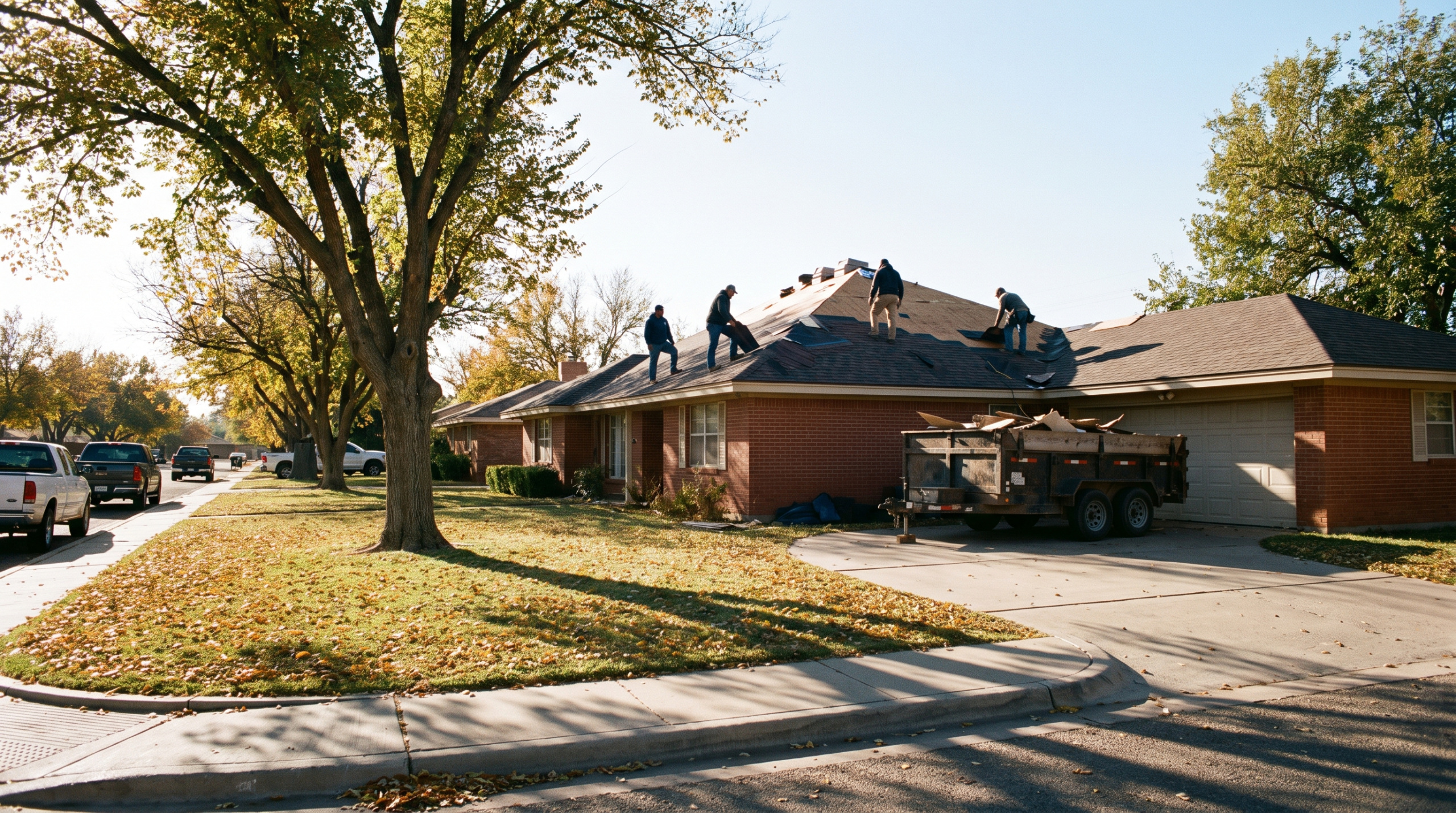
Roofing on the High Plains runs on a rhythm most homeowners never see. Supply houses stock up in February. Phones ring off the wall the morning after a hail event in April. By July every reputable crew in town is running a backlog built from spring storms, and by late September that backlog has finally cleared out.
Knowing where you are in that cycle tells you what your wait will be, how much attention your job gets, and whether the crew on your roof works here year round or showed up after the last storm. Material lead times move with it too. After a bad hail spring, specific shingle colors can run short at the supply house for weeks, which is one more reason the quiet end of the year is easier. Here is how the year actually breaks down when you are deciding on the best time of year to replace a roof on your own house.
- January and February: The quietest stretch. Crews have open dates and you may get a slightly better price on labor. The tradeoffs are real: short daylight, freeze-thaw swings, and shingles that need hand-sealing because sealant strips will not activate on a cold deck. Emergency and insurance work still happens all winter, and a good crew handles it correctly with hand-sealing and shortened work windows.
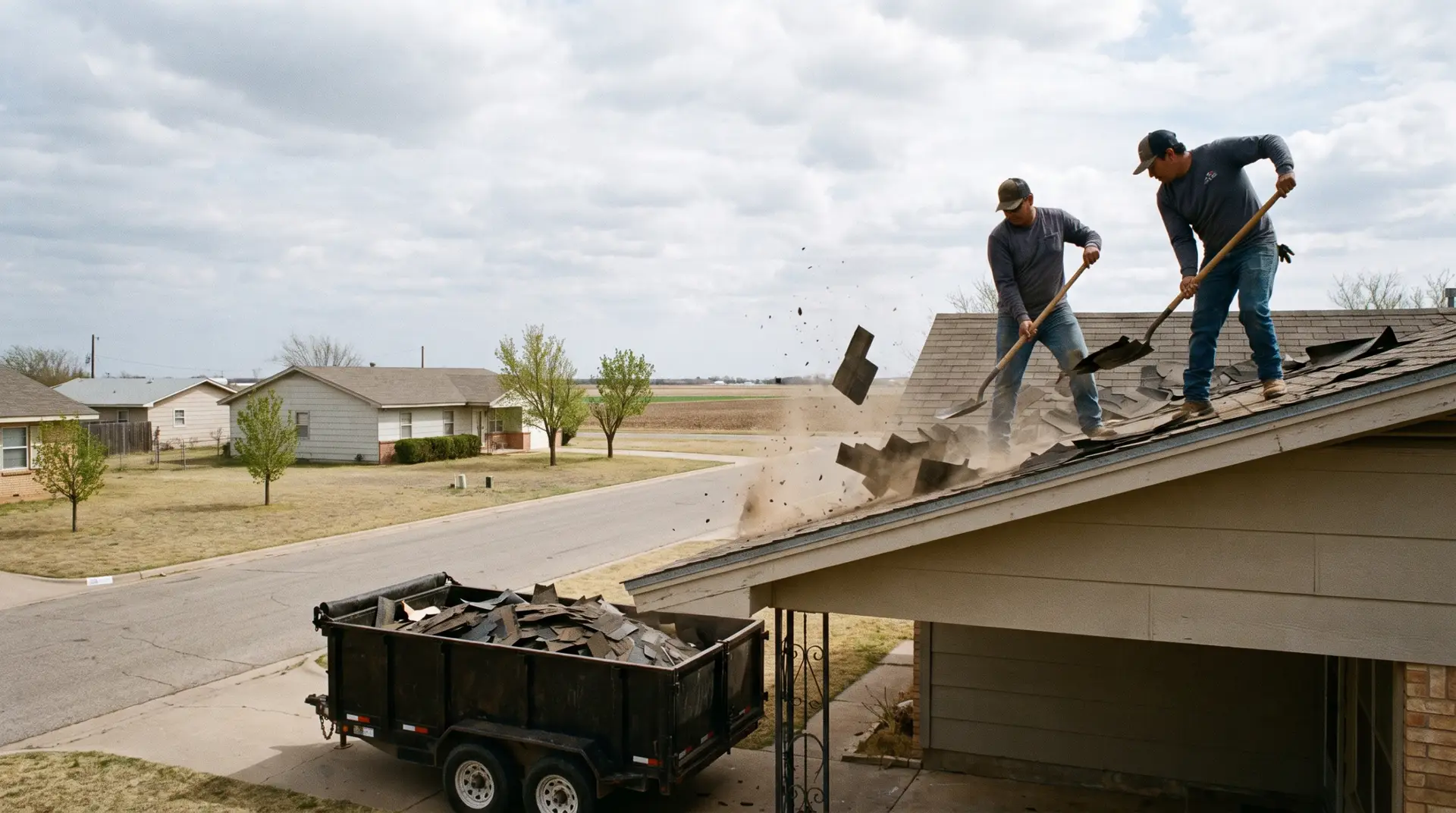
- March through June: Hail season. This is when roofs get damaged and when everyone calls at once. Expect longer waits, storm-chasing companies knocking on doors, and jobs interrupted by 60 mph wind days. If you are filing a claim, this is when it happens, and scheduling follows the adjuster rather than the calendar. Nothing about spring is impossible, but nothing about it is predictable either.
- July and August: Hot and steady. Shingles seal fast, sometimes too fast, and crews start early to beat afternoon heat. Attic temperatures make interior work miserable and asphalt gets soft enough to scuff under foot traffic. Workable, but crews are still digging out of the spring backlog through most of July, and afternoon thunderstorms can cut a day short with the deck half covered.
- September and October: The best stretch of the year. Mild highs, low storm risk, long enough days, and crews that finally have room on the board. Sealant strips bond within days instead of weeks, and the roof gets a full season to settle before the first hard freeze. If you have any choice in the matter, book here.
- November: Still very good, especially the first three weeks. Days are shorter so a big job may run into a second day, but temperatures usually stay in the range shingles want. The end of November is also when everyone tries to finish before the holidays, so the board fills up faster than people expect. A cold front can drop the working temperature 30 degrees in an afternoon, so crews watch the forecast closely.
- December: Doable with the right precautions. Cold decks, short days, and holiday scheduling all slow things down. This is the month where a contractor who cuts corners on hand-sealing leaves you with tabs lifting in the first March windstorm. If you are replacing in December, put the cold-weather procedure in the contract in writing.
One caution about chasing the ideal month. Waiting eight months for perfect weather while a marginal roof keeps letting water into the decking usually costs more than the season ever saves you. Rotten sheathing, wet insulation, and stained drywall are all more expensive than the difference between a September install and a January one. Judge the condition of the roof first, then pick the month around it.
What Spring Actually Costs You
Spring feels like the natural time to take care of a roof. The weather is warming, tax refunds land, and everybody is thinking about the house. On the South Plains it is the hardest season to get a clean install, for three practical reasons.
The first is the backlog. One serious hail event across south Lubbock can generate more work in a week than a crew handles in two months. Your job goes in a queue behind claims that came in before yours, and the honest lead time between April and June is often several weeks. The second is interruption. Tear-off requires a dry, calm morning. With 60 mph gusts and pop-up storms, a two-day job turns into a job spread over a week with tarps in between.
The third is the out-of-town crews. After every big storm, unfamiliar trucks work the neighborhoods around 82nd Street and Wolfforth with door hangers and quick quotes. Some are legitimate. Many are gone by August, along with the workmanship warranty. If you are deciding between fixing and replacing at all, our guide on roof repair versus replacement in Lubbock is a better starting point than a stranger’s clipboard.
Spring does have one advantage worth naming. If your roof is damaged in an April storm and the claim is approved, replacing right away means the insurance money and the work line up, and you are covered before the next round of storms. That is a good reason to move in spring. Wanting a nicer install week is not. The homeowners who get hurt are the ones who sign in the driveway the day after a storm without checking whether the company will still exist in the fall.
West Texas Weather and What It Does to a New Roof
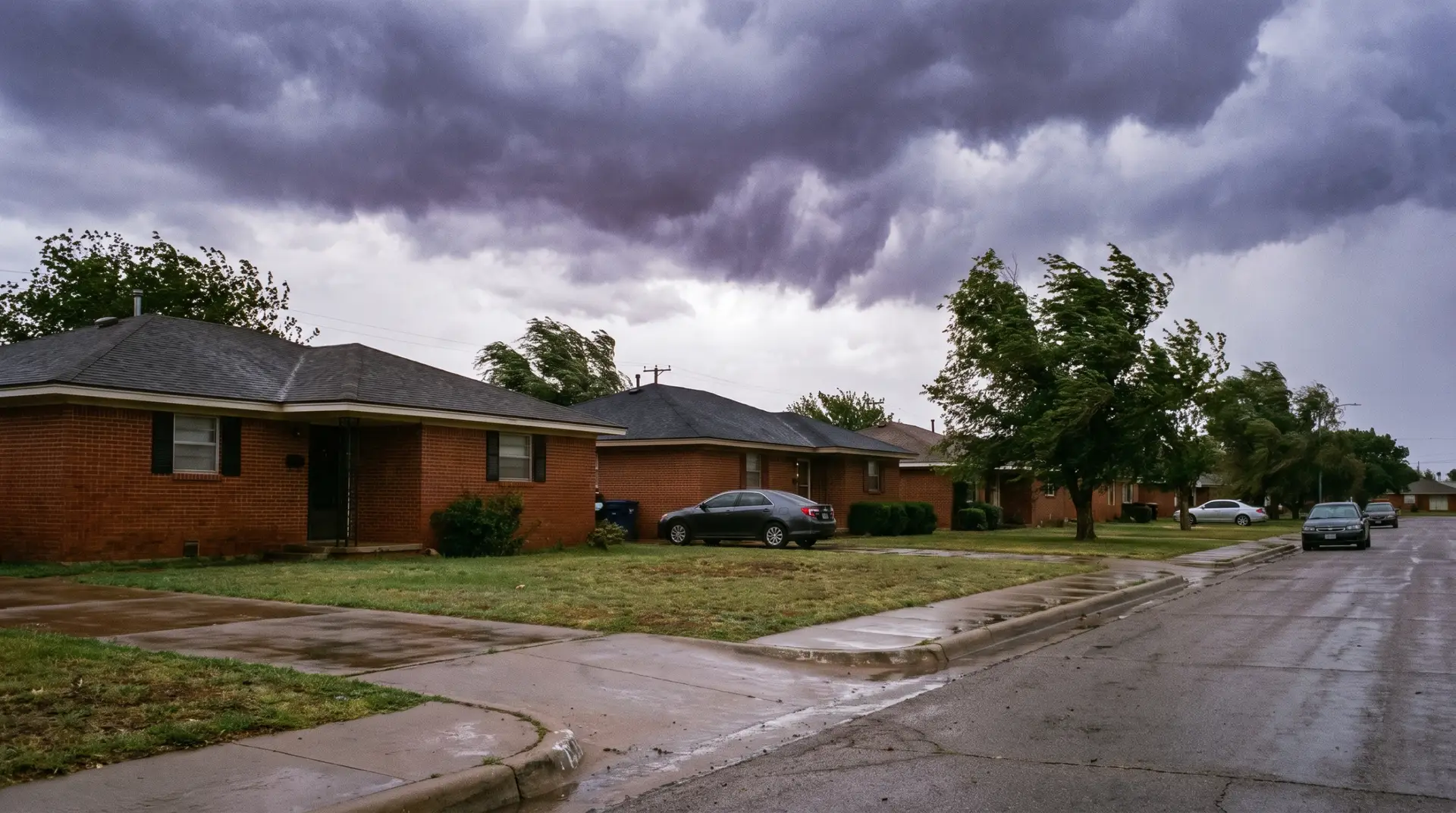
Three local conditions decide whether a new roof starts its life sealed and tight or starts it already compromised: deck temperature, wind during install, and the freeze-thaw swings that follow. Lubbock can run 75 degrees at 3 p.m. and 28 degrees by sunrise in the same 24 hours, and that swing is exactly what a fresh shingle field has to survive.
Temperature and Sealant Strips
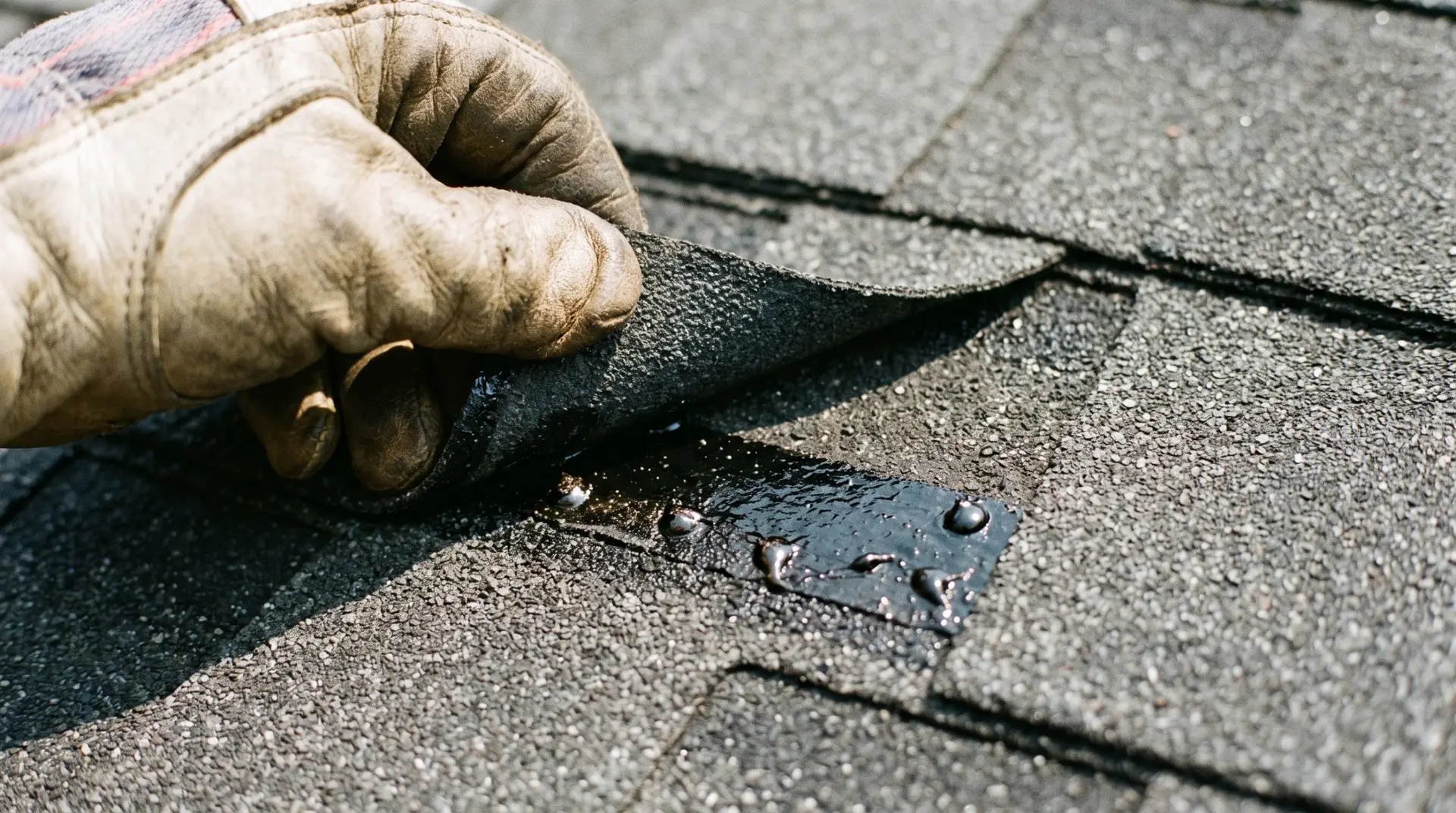
Asphalt shingles have a factory strip of thermal adhesive that bonds each course to the one below it once sun and warmth activate it. That is what keeps the roof together in a windstorm. Below roughly 50 degrees the strip stays hard and does nothing, and it may not bond at all until the following spring. In cold months the correct practice is hand-sealing each course with roofing cement at the manufacturer’s specified spots, which adds labor and takes discipline. A December install done right is fine. A December install where nobody hand-sealed is a roof waiting to peel at the first spring gust.
Wind During the Install
Nobody should be tearing off a roof in a 40 mph wind. Loose felt turns into a sail, debris scatters into three neighbors’ yards, and an open deck ahead of a storm cell is a genuine risk to your house. Spring is when this comes up most, but a strong dryline pushes through in fall too. A crew that watches the forecast and moves your date is doing you a favor, not stalling. Ask up front how your contractor handles a weather call and what happens to your deposit and your slot on the schedule when a day gets scrubbed.
Freeze-Thaw and Expansive Soil
Winter here swings hard between afternoon thaw and overnight freeze, sometimes a dozen times in a season. Every cycle works at flashing seams, caulk joints, and pipe boots. The clay and caliche soils under most of the county move as they wet and dry, and that movement shows up as small structural shifts that open gaps at chimneys and wall junctions. Fall installs get a full winter of settling with fresh flashing and new sealant, which is one more reason the September through November window is the one we recommend.
When Fall Is Not the Best Time of Year to Replace a Roof
The calendar loses every argument against water. If you have an active leak, staining on a ceiling, or a section of shingles that blew off in a storm, replacement or repair happens on the next available date. Waiting for pleasant weather while the deck stays wet is how a $14,000 roof turns into a roof plus decking plus insulation plus drywall.
Insurance timing is the other override. If a hailstorm damaged your roof in May, your claim runs on the carrier’s clock, not the season. Texas policies generally require prompt notice of a loss, and many carriers apply a filing deadline measured from the date of damage, so read your policy language rather than assuming you have unlimited time. The Texas Department of Insurance storm resources explain how the claim process is supposed to work and what your rights are as a policyholder.
There is also a legitimate case for a January or February install. Crews have open dates, you get more attention, and a competent contractor knows the cold-weather steps cold. If your roof is failing and the alternative is limping through a High Plains spring with a compromised roof, the winter job is the better call. Just confirm in writing that shingles will be hand-sealed and that work stops below the manufacturer’s minimum application temperature.
Final Word: Timing Your Replacement Without Overthinking It
If your roof is aging but sound, aim for a late August through November install and get on the schedule by midsummer. That is the best time of year to replace a roof in Lubbock, and booking early is how you actually land in it rather than watching your date slide into December.
If your roof is leaking, damaged, or the subject of an open claim, take the first solid date you can get and make sure the crew handles cold-weather sealing if the calendar has turned. Season is a preference. Water in your attic is a problem, and every week you wait adds decking and insulation to the scope. Homeowners still gathering numbers should look at our Lubbock roof replacement cost breakdown before calling anyone.
Elite Roofing & Exterior schedules across Lubbock, Wolfforth, Shallowater, Idalou, and the surrounding towns year round, and we will tell you honestly if your roof can wait for a better month or needs attention this week. No pressure either way, and no scare tactics about a roof that has years left in it. Start with our roof replacement services page, or have us walk the roof and give you a real timeline.
FAQs About the Best Time of Year to Replace a Roof
Timing questions Lubbock homeowners ask us every season
Sometimes, modestly. Crews have open dates in January and February, so labor scheduling is easier and some companies price a little softer to keep people working. The savings are usually smaller than homeowners expect, often a few percent rather than a major discount, because material costs do not drop with the temperature. Winter also adds hand-sealing labor on asphalt shingles and shorter working days. If the price gap is small, the fall window is still the better value. Ask any winter bid to spell out the cold-weather sealing steps so you are comparing the same scope.
Most single-story homes are a one-day tear-off and install, with material staged the day before and cleanup finishing the following morning. Two-story homes, steep pitches, and complicated rooflines with multiple valleys typically run two to three days. Weather is the variable that matters. A high wind day or a passing storm stops work entirely, and rotten decking discovered during tear-off can add several hours. Fall jobs finish closest to the estimate because fewer days get scrubbed and there is enough daylight to finish cleanup the same evening.
They can, but the crew has to change how they work. Below roughly 50 degrees the factory sealant strip will not activate, so each course needs hand-sealing with roofing cement at the manufacturer’s specified points. Shingles also get brittle and can crack when bent over a ridge, so bundles are often kept warm until they go up. Most manufacturers publish a minimum application temperature. Ask your contractor to name it and put the cold-weather steps in the contract.
Usually yes, if your roof is sound enough to make it through spring. Replacing in February and taking a direct hit in April means going through the whole process again, this time with a claim on a brand new roof. Waiting until late August removes that risk. If your roof is already leaking or missing shingles, do not wait. Consider impact-resistant shingles either way, since they hold up far better to repeat hail and usually earn an insurance discount in Texas.
Call in June or July for a September or October date. That is the most requested stretch of the year and it fills first, especially after an active hail season pushes work into the fall. Booking early costs nothing and usually just means a signed agreement and a scheduled inspection. If you are calling in September hoping for an October date, you can often still get in, but you lose the ability to pick your week, and material color choices narrow.