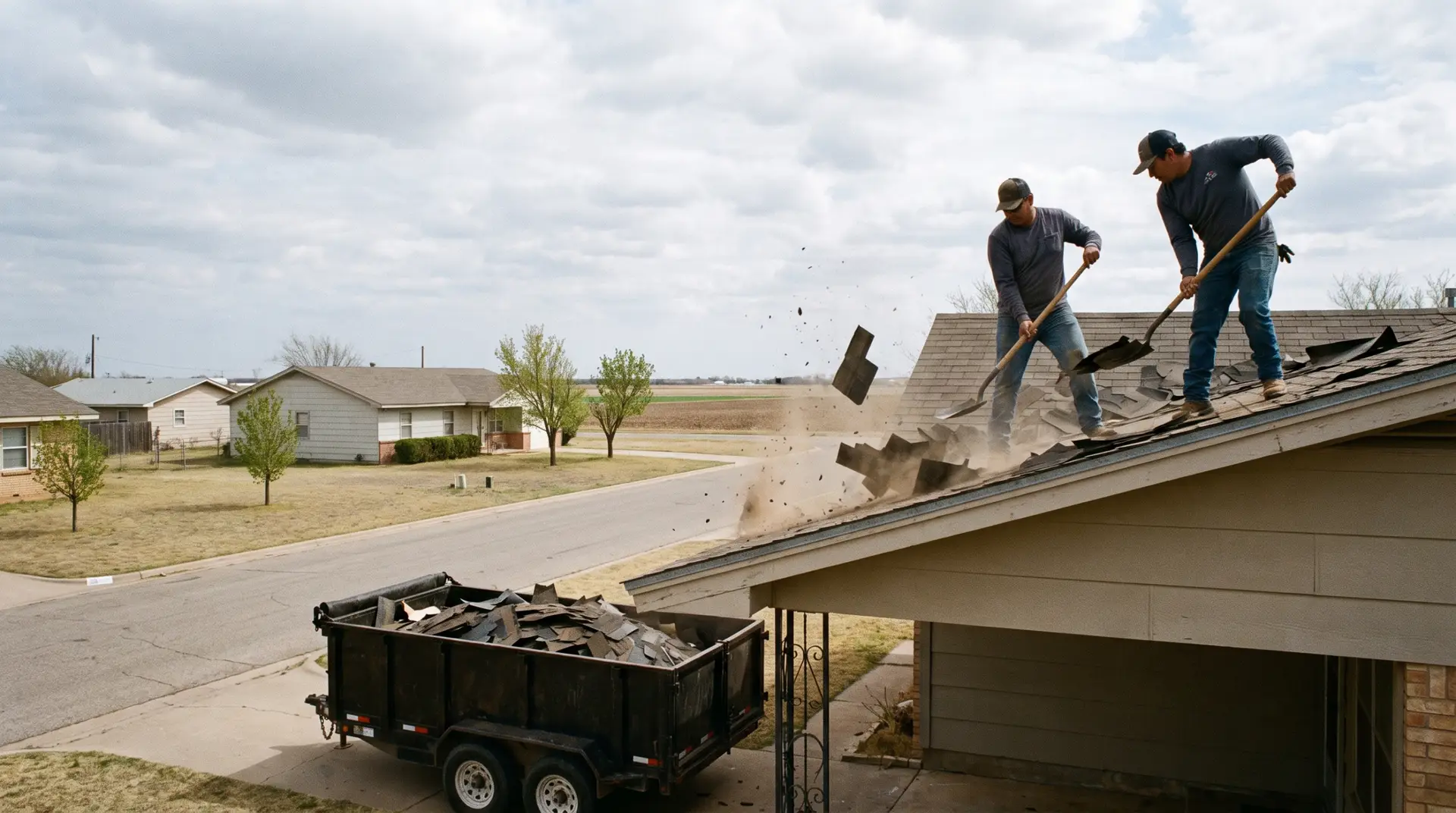
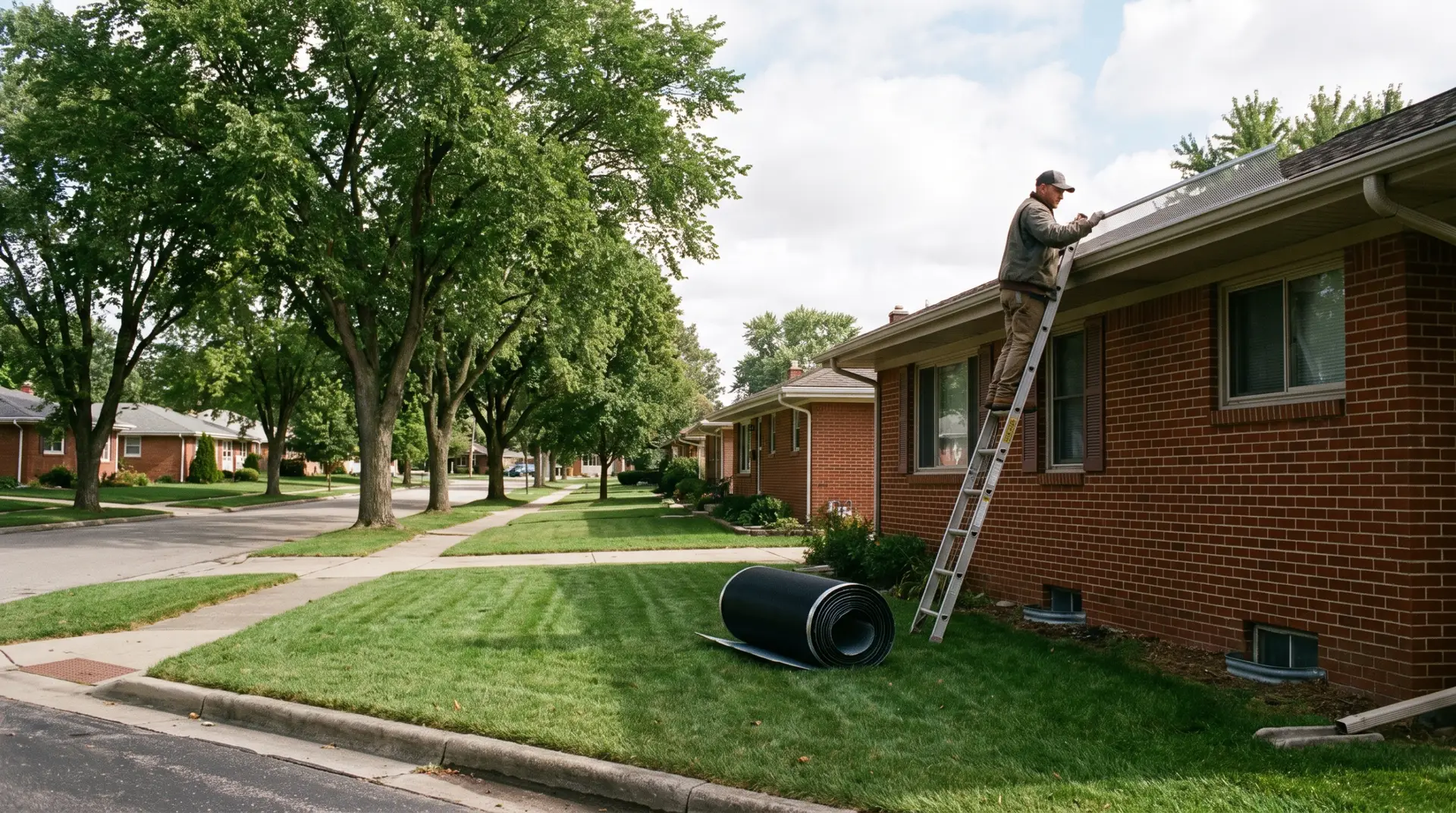
Lakeridge roofing work is a different job from roofing a starter home in Frenship or a 1940s cottage near Texas Tech, and pricing it off a per-square average is how homeowners in this part of Lubbock end up with a bid that bears no relation to the final invoice.
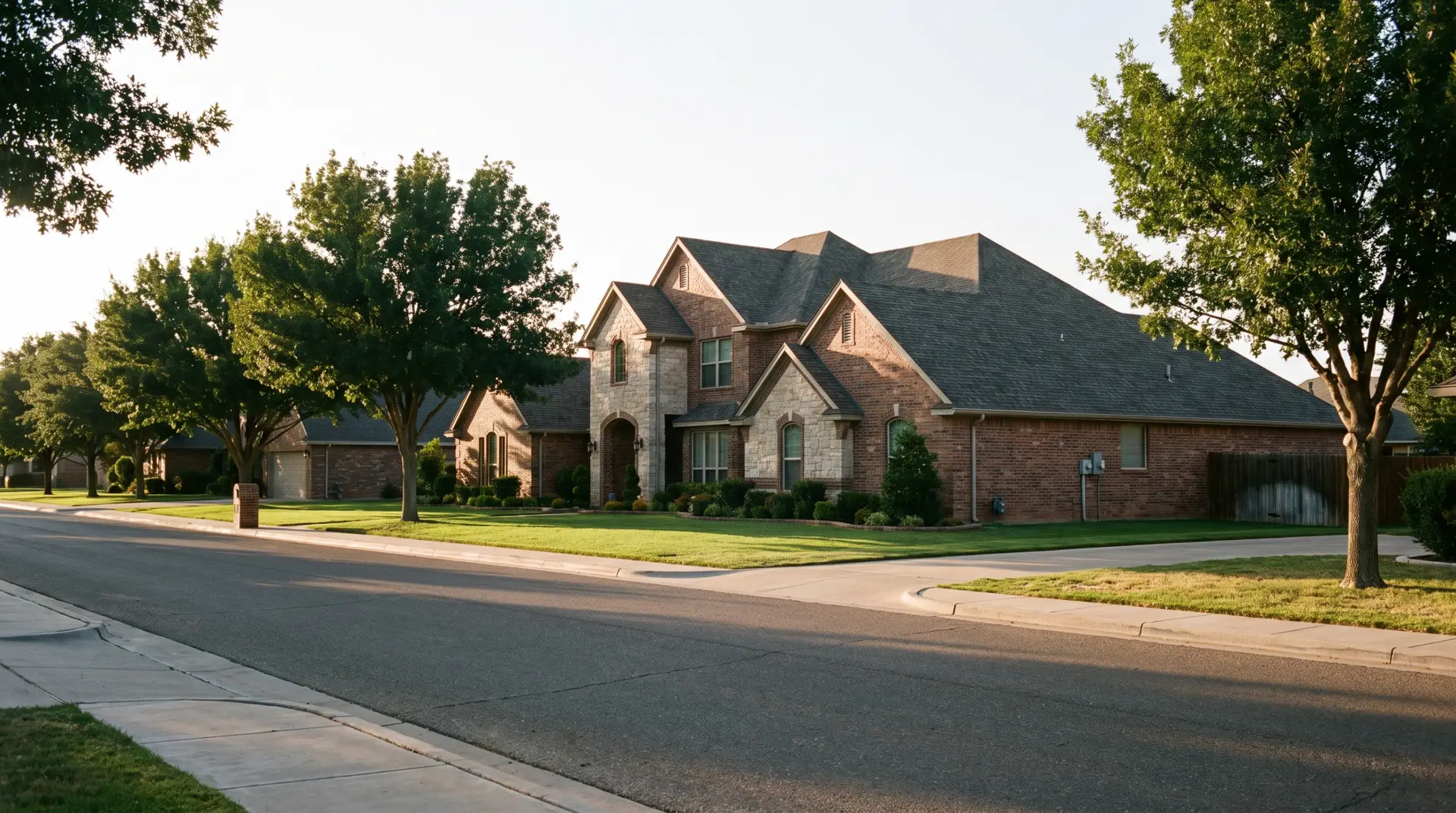
The housing stock around the Lakeridge Country Club is largely 1970s through 1990s construction, and it is bigger and more complicated than most of the city. Larger footprints, steeper pitches, multiple gables meeting at awkward angles, two-story sections, dormers, and a lot more valley footage per square of roof.
Add mature pecans and elms dropping onto those valleys, and you have an area where the details matter more than the material choice. This guide covers what drives cost here, what the common failure points are, and what to look for in a contractor.
On this page, a complete guide to lakeridge roofing in Lubbock, TX:
Quick Answer: What Lakeridge Roofing Costs
Most Lakeridge roofing replacements run $14,000 to $30,000 for asphalt shingles, well above the $7,000 to $8,500 a typical Lubbock single-story home costs. The difference is size and complexity rather than a premium for the postcode.
Homes here commonly carry 30 to 50 roofing squares against the city-wide average of around 20, and the roof lines are more cut up. Expect $5 to $8 per square foot installed for architectural shingles once complexity is accounted for.
Standing-seam metal on a Lakeridge home typically lands $35,000 to $60,000, because the same complexity that adds labor to a shingle job adds considerably more to a metal one.
Repairs are a different picture. Because the failures here concentrate in valleys, flashing and around penetrations, targeted repair work is frequently the right answer on a roof that still has years left in the field.
A Lakeridge roof replacement generally runs $14,000 to $30,000 in asphalt, against $7,000 to $8,500 for an average Lubbock home. Larger roof areas, steeper pitches and far more valley footage drive the difference, and those valleys are also where most leaks start.
What Makes Lakeridge Roofing More Complex
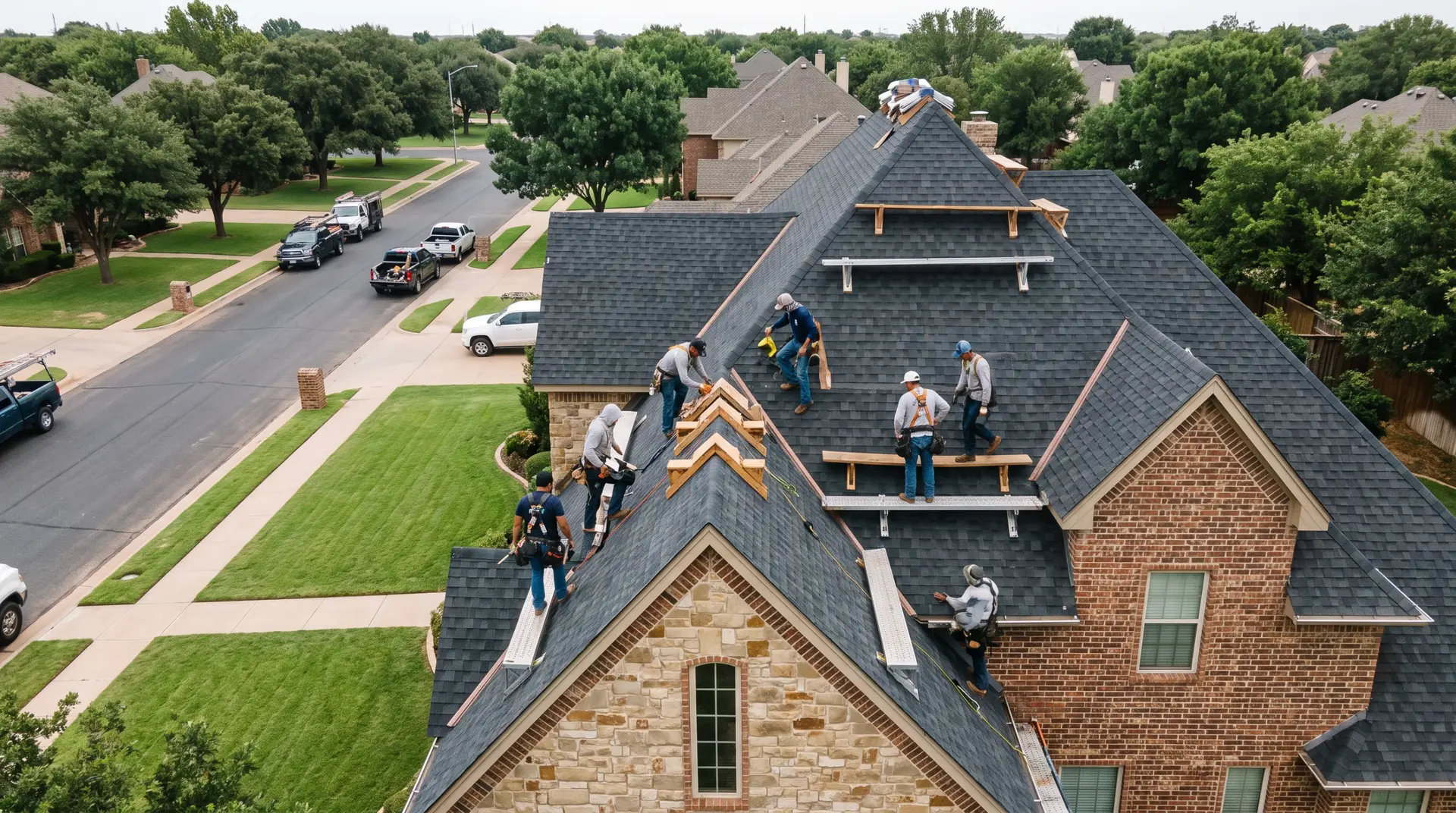
Complexity is the word contractors use and rarely explain. On these homes it means specific, countable things that each add labor hours, and understanding them lets you read a bid properly rather than assuming you are being overcharged.
Walk your own roof line from the street and count the gables, the valleys and the changes in plane. A simple hip roof on a rectangle is one job. A roof with six gables, four valleys, a dormer and a second-story section that ties into a single-story run is a substantially different one.
Steeper pitch is the other multiplier. Above a certain slope crews cannot walk the roof freely and have to work off staging and roof jacks, which slows everything down and raises the labor rate.
Both factors compound. A steep, cut-up roof is not twice the work of a simple one of the same area, it can be considerably more.
There is a practical upside to all of this. Because Lakeridge roofing problems concentrate in a handful of predictable places rather than across the whole roof, targeted repairs often buy years of life on a roof whose field is still sound. A leak here is much more likely to be a detail failure than a worn-out roof, which is a cheaper conversation than most homeowners expect.
- Valley footage: The defining feature of Lakeridge roofing. Every valley is a seam that concentrates water and needs correct metal or woven detailing. More valleys means more labor and more places for a leak to start.
- Roof pitch: Many homes here run 8:12 or steeper. Above roughly 7:12 crews need roof jacks and staging, which adds time and cost and rules out some less experienced outfits entirely.
- Two-story tie-ins: Where a second story meets a lower roof, the step flashing and kick-out detail at the bottom of that wall is the most common leak point we find in this neighbourhood.
- Mature tree cover: Pecans and elms drop leaves and limbs into valleys and gutters, holding moisture against the roof surface and accelerating granule loss along the exact lines that matter most.
- Original wood shake conversions: Some homes here were shake originally and were converted to composition. Those roofs sometimes have spaced decking or an added layer of sheathing, both of which change how the job is priced.
- Skylights and penetrations: Larger homes from this era frequently have skylights, multiple plumbing vents, and sometimes a chimney or two. Each is a flashing detail that has to be renewed rather than reused.
Be careful with a bid that prices your roof off square footage alone without anyone having walked it. On a Lakeridge home the difference between an accurate quote and a guess is several thousand dollars, and the contractor who has not counted your valleys will find them mid-job as a change order.
A measured roof report or a satellite takeoff is a reasonable minimum before any number is put in writing.
Where Lakeridge Roofs Actually Fail
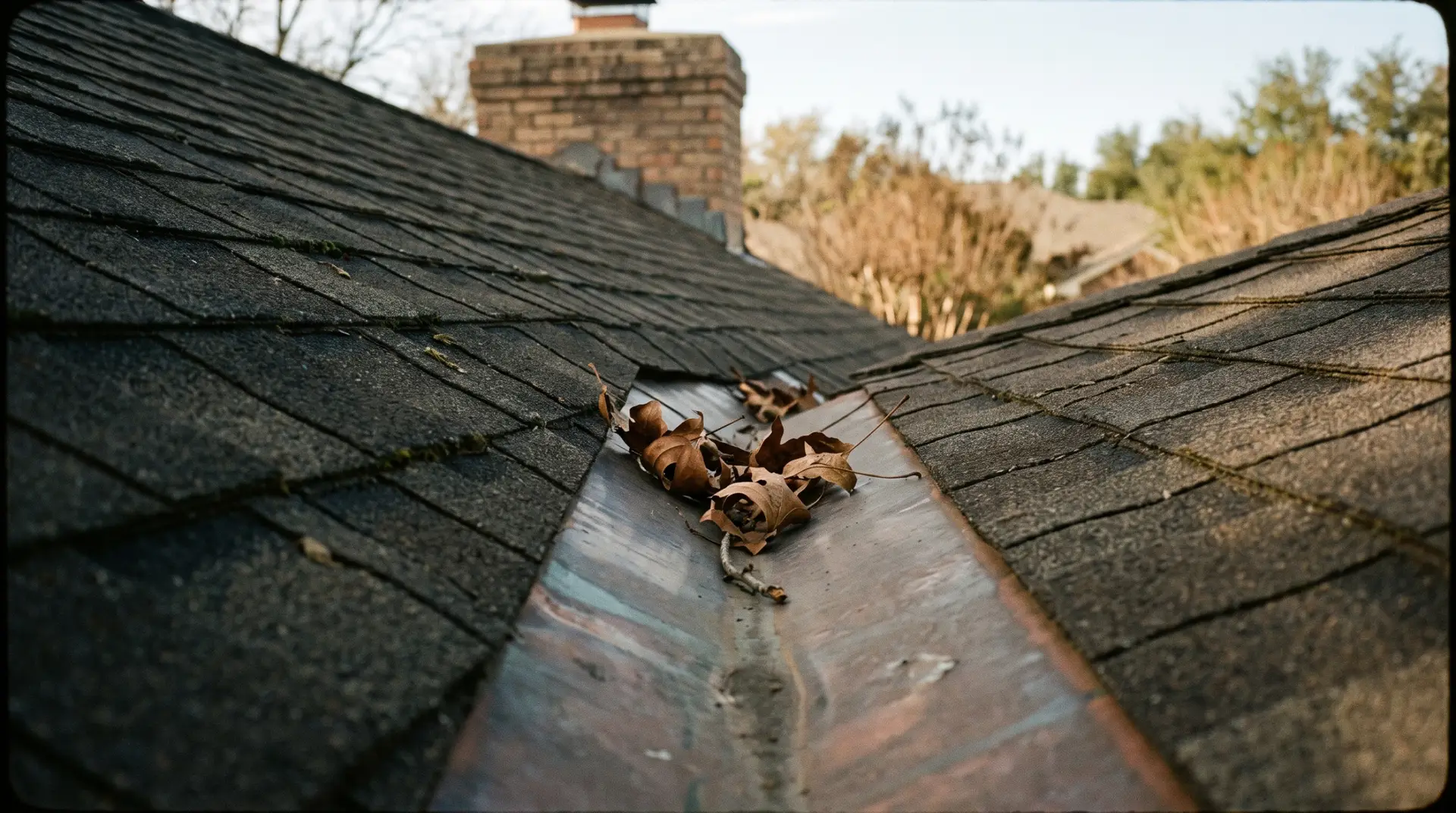
Valleys are first, and by a wide margin. A valley carries the runoff of two roof planes down one line, so it moves far more water than any other part of the roof and it moves it fast during our thunderstorms. Where tree debris collects in a valley, water backs up behind it and finds its way under the shingle course. Most of the interior stains we are called to look at in this neighbourhood trace back to a valley rather than to the field of the roof.
Second is the wall tie-in on two-story sections. Step flashing has to lace into each shingle course, and at the bottom of that run a kick-out flashing has to divert water into the gutter rather than behind the siding or brick. Kick-outs are omitted constantly, and the damage shows up years later as rot inside a wall rather than as a ceiling stain, which makes it both expensive and slow to discover.
Third is granule loss on the south and west planes. Our UV load at 3,200 feet is hard on asphalt, and the larger, more exposed roof planes on these homes take it fully. You will often find one slope aged noticeably further than the rest of the roof.
Fourth is hail, which does not discriminate by neighbourhood but does interact with everything above. The South Plains sits in an active hail corridor, and the Insurance Institute for Business & Home Safety publishes the impact research behind shingle ratings, which is worth reading before choosing a product for a roof this size.
Fifth, and easily overlooked, is ventilation. Larger attics with complex roof lines are harder to ventilate evenly, and dead pockets of hot air shorten shingle life from underneath. Our guide to impact-resistant shingles covers the material side of protecting a roof like this.
Lakeridge Conditions That Shape the Job
Three things about this part of Lubbock change how a roof should be specified and installed. None of them are exotic, but ignoring any one of them is how a roof on a large home fails early in a way the homeowner never sees coming. They also explain why two houses a street apart, both built in the same decade, can be on very different maintenance schedules depending on how much tree cover sits over them.
Tree cover over complex roof lines
Mature pecans and elms are a large part of why people like this neighbourhood, and they are hard on roofs. Leaves and small limbs land in valleys and behind chimneys, where they sit and hold moisture against the shingle surface long after everything else has dried in our arid air. That prolonged damp accelerates granule loss and can rot decking along a valley line while the rest of the roof is fine. Keeping valleys and gutters clear matters far more here than on an open lot in a newer subdivision, and it is the single cheapest thing a Lakeridge homeowner can do for their roof.
Large roof areas and wind uplift
Bigger roofs catch more wind, and our spring gust fronts routinely run 50 to 60 mph. Uplift concentrates at rakes, ridges and corners, and on a complex roof there are simply more of those edges. Proper starter courses, correct nailing patterns and adequate ridge detailing are what hold a roof like this together in April. A crew working fast on a big roof is exactly where nailing discipline slips, and high-nailed shingles look identical to correct ones until the first real wind event.
Hail exposure on a high-value roof
The cost of a hail event scales with the roof, and on a 40-square Lakeridge roof it is a very large number. That changes the maths on impact-resistant shingles considerably: the premium is charged per square, but so is the loss avoided. Many Texas carriers also discount premiums for Class 4 products, and on a roof this size that discount compounds into real money over a decade.
Choosing a Contractor for Lakeridge Roofing
Ask specifically about steep-slope experience. A crew that works mainly on single-story 4:12 roofs in newer subdivisions is not necessarily equipped for an 8:12 with four valleys and a two-story tie-in. Ask what they will use to work the roof safely and how they price pitch, and listen for a specific answer rather than a reassurance.
Ask how they detail valleys. There is more than one correct method, and a contractor who can explain which they use on your roof and why is telling you they have thought about your particular job. One who has no view on it is quoting from a spreadsheet.
Ask about kick-out flashing by name. It is a small piece of metal, it is genuinely important on two-story tie-ins, and whether a contractor mentions it unprompted is one of the most reliable quick tests of whether they detail properly.
Get the decking position in writing. On homes converted from wood shake there may be spaced decking or an added sheathing layer, and finding that on tear-off day without an agreed per-sheet rate is how budgets move. Our guide to choosing a roofing contractor in Lubbock covers the licensing and insurance checks that apply to any job.
Finally, be cautious about out-of-town crews arriving after a storm. They appear across Lubbock every hail season, and a complex, high-value roof is the worst possible place to take a chance on a contractor who will not be here next year to honour a workmanship warranty.
Ask for references from this neighbourhood specifically. Lakeridge roofing has enough quirks that a contractor who has worked several of these homes will recognise your roof type immediately, and being able to point at two or three nearby jobs is a reasonable thing to expect from anyone who works here regularly.
Final Word: Protecting a Lakeridge Roof
The roofs in this neighbourhood are larger and more complicated than the Lubbock average, which means both that they cost more to replace and that they reward maintenance more. Keeping valleys clear and having flashing checked every few years genuinely extends the life of an expensive roof.
When replacement does come, spend the money on details rather than only on the shingle. Correct valley metal, new flashing at every tie-in, kick-outs where they belong and properly balanced ventilation will do more for how long that roof lasts than moving up one product tier.
Given the hail exposure and the size of these roofs, impact-resistant shingles are worth pricing seriously here even though they are not always the right call on a smaller home. Run the premium against the insurance discount over ten years before dismissing it.
Budget for it in advance if you can. A Lakeridge roofing replacement is a larger number than most Lubbock homeowners plan for, and knowing roughly where your roof is in its life means the decision happens on your schedule rather than in the week after a storm.
If you want someone to walk a Lakeridge roof properly, count what is actually up there and give you a number that will not move, we inspect and replace roofs across Lubbock at no charge for the assessment. You can read more on our roofing services page, our roof replacement cost guide covers pricing city-wide, and our hail damage claim guide covers what to do after a storm.
Frequently Asked Questions About Lakeridge Roofing
What homeowners in this part of Lubbock ask us most about their roofs
Mostly size and complexity rather than location. Homes here commonly carry 30 to 50 roofing squares against a city-wide average nearer 20, and the roof lines have more gables, valleys and changes of plane. Many also run 8:12 or steeper, which means crews work off roof jacks and staging instead of walking the slope freely. Each of those factors adds labor hours, and together they typically put a replacement in the $14,000 to $30,000 range for asphalt shingles.
Valleys first, by a clear margin, because they carry the runoff of two roof planes down a single line and collect tree debris that holds water against the surface. Second is the step and kick-out flashing where a two-story wall meets a lower roof, which is frequently detailed poorly or missing the kick-out entirely. That second one is particularly costly because the water goes into the wall rather than showing on a ceiling, so it stays hidden for years.
On a roof this size, usually yes. Class 4 shingles cost roughly a dollar more per square foot, but the loss they help avoid also scales with the roof, and a hail replacement on 40 squares is a very large number. Many Texas carriers discount premiums for impact-rated products, and on a large roof that annual discount compounds meaningfully over a decade. Ask your carrier what discount applies before deciding, since it varies considerably.
Every couple of years under normal conditions, and after any significant hail or wind event regardless of schedule. Because of the mature tree cover here, we would also suggest clearing valleys and gutters at least twice a year, in late spring after the elms drop and again in the fall. Debris sitting in a valley is the most common preventable cause of premature failure on these roofs, and clearing it costs almost nothing.
Sometimes, and on a large roof it can be worth considering. If damage is confined to one slope or one section, replacing that plane is feasible, particularly where a natural break such as a ridge or valley provides a clean stopping point. The complication is matching, since a new shingle will not match one that has been in the Lubbock sun for a decade. On a hail claim, carriers often address this directly, so ask how matching is treated before agreeing to a partial scope.