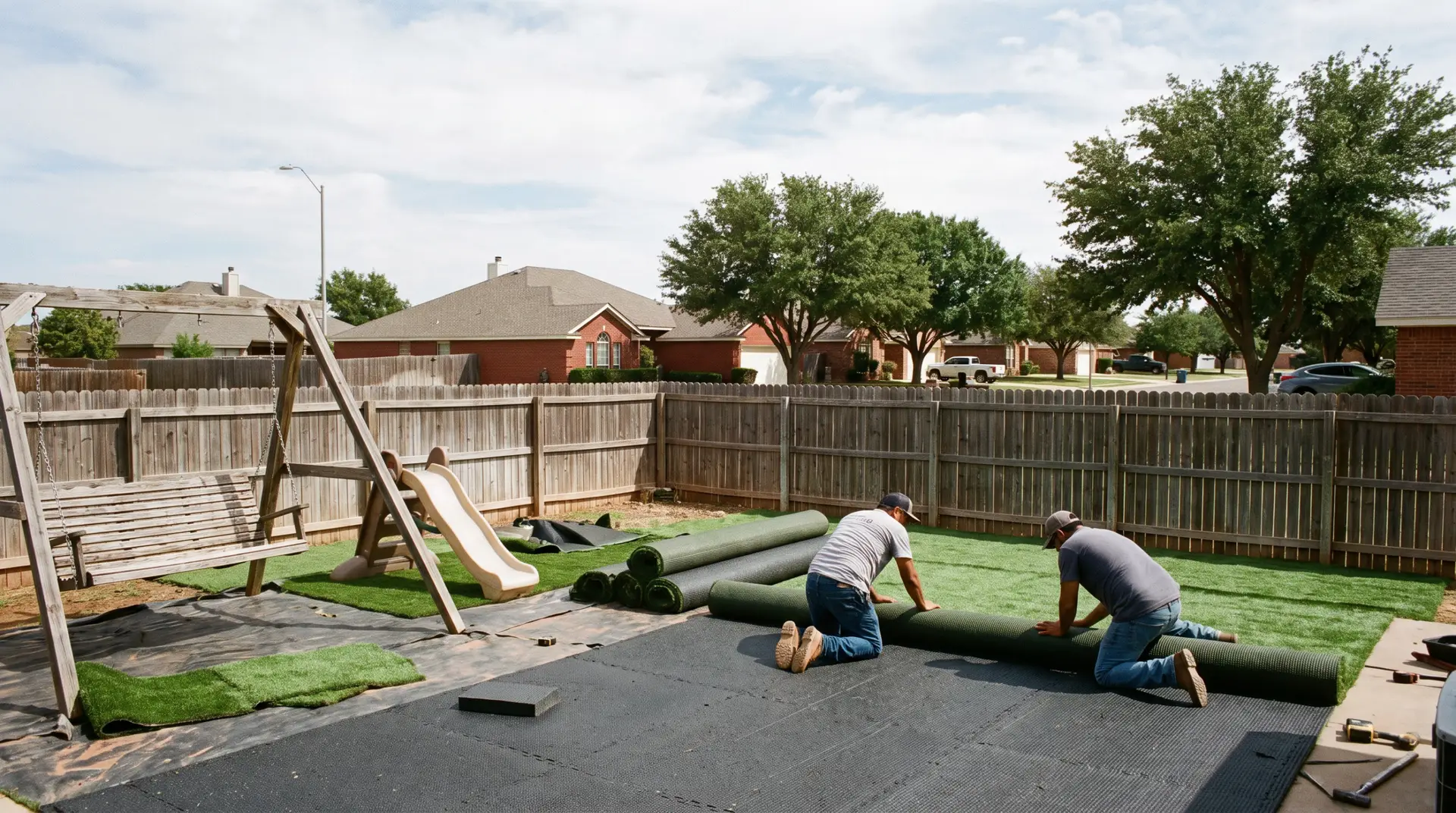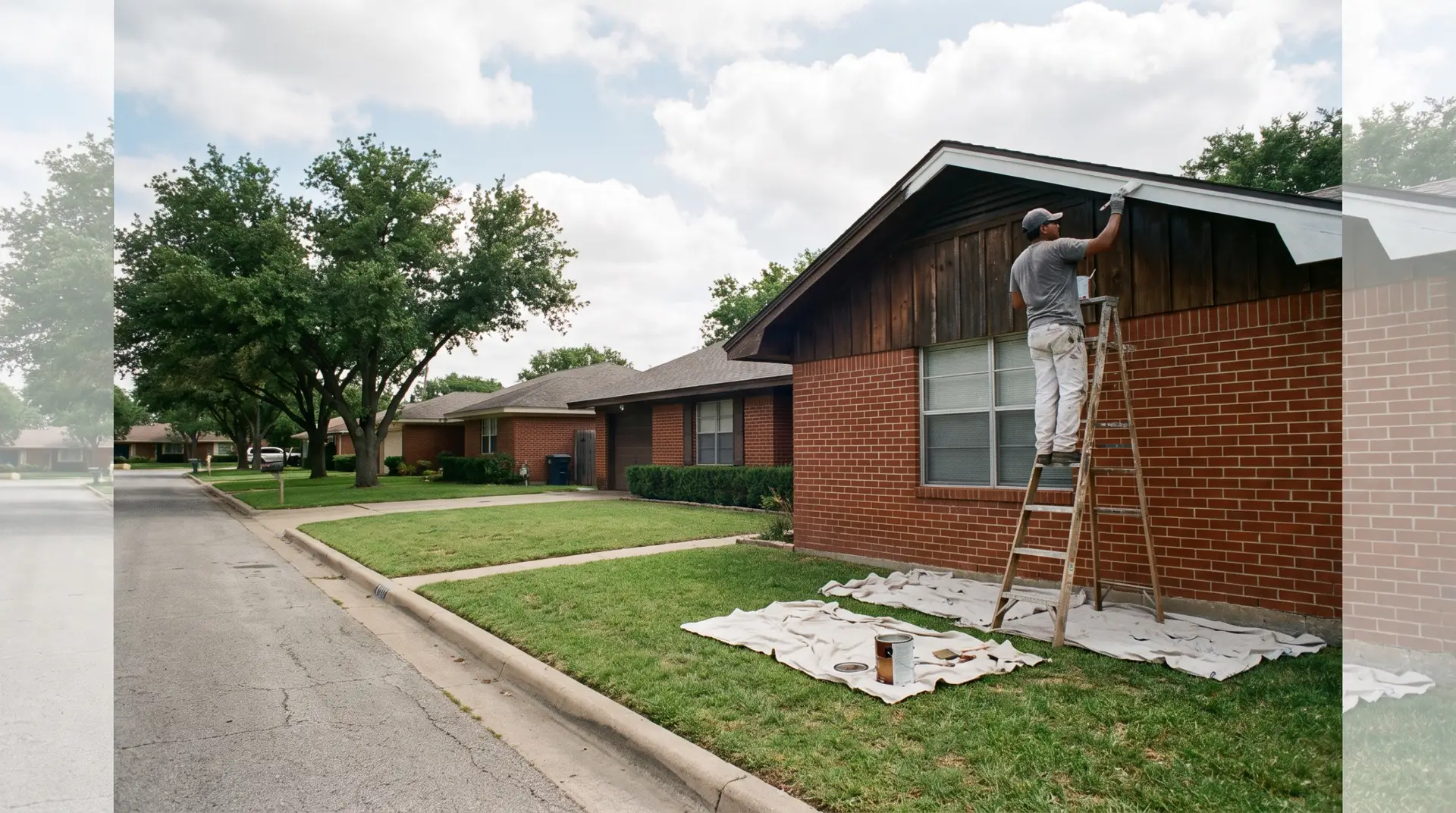
Christmas light clips are a two-dollar piece of plastic that can cost you a four-figure roof repair, which is why we bring them up before we bring up anything else. Every December we get calls from Lubbock homeowners who found a leak in January and cannot figure out where it came from, and a surprising number of those leaks trace back to how last year’s lights went up.
The good news is that hanging lights on a roof is genuinely safe when the attachment is right. No holes, no adhesive, no staples, nothing driven through a shingle or a piece of flashing. This guide covers which clips belong on which surface, what our wind and cold do to plastic, and the takedown mistakes that cause more damage than the installation ever does.
On this page, a complete guide to christmas light clips in Lubbock, TX:
- Quick Answer: Which Christmas Light Clips Are Safe for a Roof
- Six Types of Christmas Light Clips and Where Each Belongs
- What Actually Damages a Roof at Christmas
- Lubbock Weather and Your Clip Choice
- Installing and Taking Down Lights Without Hurting the Roof
- Final Word: Christmas Light Clips and Doing It Once
- Frequently Asked Questions About Christmas Light Clips
Quick Answer: Which Christmas Light Clips Are Safe for a Roof
Use clips that hook over an existing edge and never anything that penetrates. On asphalt shingles that means an all-in-one shingle tab clip that slides under the front lip of the shingle. On gutters it means a gutter clip that grips the front lip. On a ridge it means a ridge or peak clip that straddles the cap.
Never use staples, nails, screws, roofing cement or hot glue. Every one of them either punches a hole in a water-shedding surface or bonds to granules and pulls them off on removal. Both problems are invisible in December and obvious the following spring when the first real rain arrives.
Buy fresh clips every two or three seasons. Our UV load makes plastic brittle faster than most of the country, and a clip that snaps in a 60 mph February gust drops a live light line onto your landscaping. On metal roofs, use magnetic clips or standing seam clamps and never drill a panel. Good christmas light clips cost a few cents each. Roof repairs do not.
Safe christmas light clips hook over an existing edge instead of penetrating it. Use shingle tab clips on shingles, gutter clips on gutters, ridge clips on peaks, and magnets on metal. Never use staples, nails or adhesive, and replace brittle plastic clips every two or three seasons.
Six Types of Christmas Light Clips and Where Each Belongs
Walk the seasonal aisle at any Lubbock hardware store and you will see half a dozen little bags of plastic that all look similar. They are not interchangeable. Each one is shaped for a specific surface, and using the wrong shape is how people end up wedging clips into places that were never designed to hold them.
The list below covers what we actually carry on the truck. Between these six, we can light almost any Lubbock house without touching the roof surface itself. If your house has a detail none of them fit, that is a sign to change the light layout rather than to reach for a staple gun.
Count your linear footage before you buy. Clips space roughly every 12 inches on C9 strings and every 6 to 8 inches on minis, so a 120-foot roofline needs a lot more of them than most people expect. Running short in the middle of a run is how improvised attachment methods get invented at four in the afternoon.
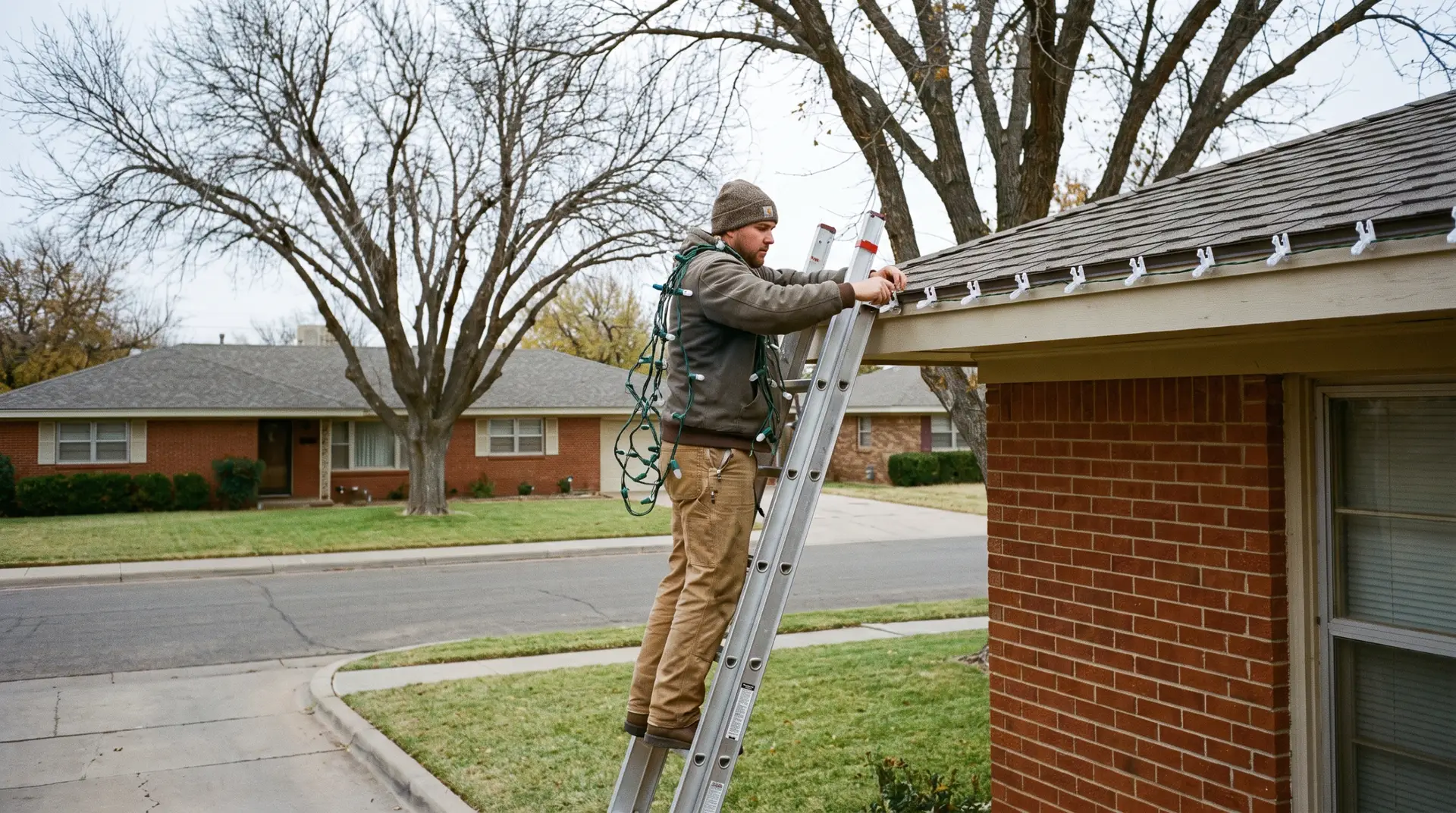
- All-in-one shingle tab clips: The workhorse. A flat plastic tongue slides under the lower edge of a shingle and the hook faces out, holding either a C9 socket or a mini string. They grip by friction alone and leave nothing behind when they come off.
- Gutter clips: Shaped to hook over the front lip of a K-style gutter and hang bulbs facing out or down. These are the safest option on the whole house because they never touch the roof surface, and they work on aluminum and steel gutters alike.
- Ridge and peak clips: Wider clips that straddle the cap shingle along a ridge or a gable peak, holding lights at the very top line of the roof. They are the only correct way to light a ridge without adhesive.
- Parapet and brick clips: For commercial fronts and brick returns, these use a spring or a wedge that seats in a mortar joint. They avoid drilling masonry, which matters because holes in mortar collect water and freeze in January.
- Magnetic clips: Small rare-earth magnets with a bulb socket attached. On metal roofs, metal fascia and steel awnings they hold well and leave nothing behind. Check the pull strength rating, because weak magnets slide in our wind.
- Adjustable universal clips: A hinged clip that can be flipped to work on either a shingle edge or a gutter lip. Handy when you do not know what you will hit, though a purpose-shaped clip always holds better than a compromise.
Skip anything sold as a peel-and-stick light hook or an adhesive light strip for exterior use here. Adhesive backing has to bond to a clean, warm, dry surface. Lubbock in late November gives you dust on everything, surface temperatures that swing forty degrees between noon and midnight, and gusty afternoons. Those hooks release in the cold, and the ones that do hold pull granules off the shingle or paint off the fascia when you finally get them loose.
What Actually Damages a Roof at Christmas
In eight cases out of ten, the damage we find is not from the clip at all. It is from a fastener somebody used because they ran out of clips, or from walking on a cold roof, or from yanking a frozen light line in January. The clips get blamed because they are the visible part.
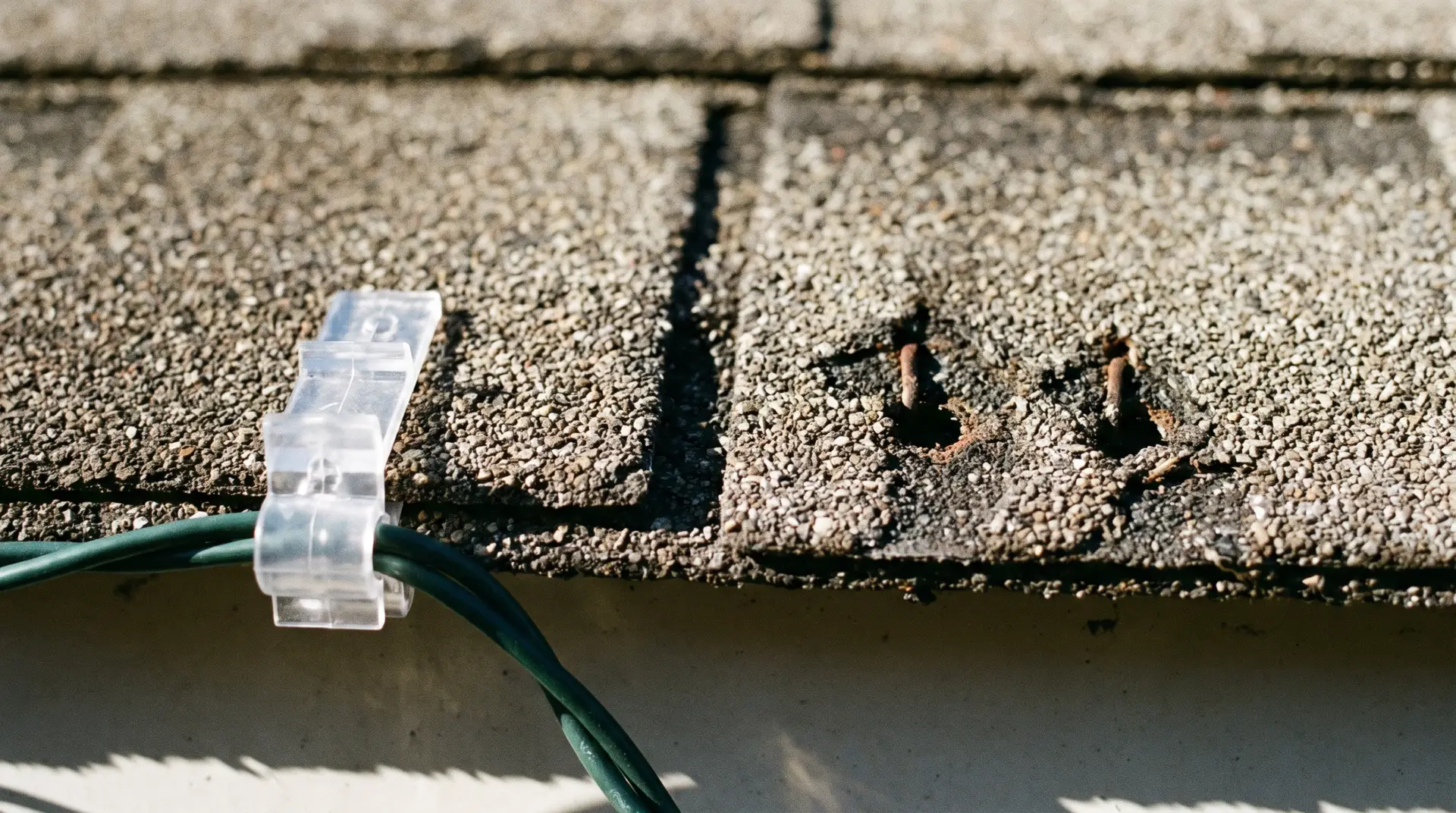
Staples are the worst offender. A staple through a shingle makes two punctures in the exact surface that is supposed to shed water, and it lands in the part of the shingle that has no sealant behind it. The hole is too small to leak immediately, so nobody notices, and then spring wind lifts the tab and water works in around the staple legs. Nails and screws do the same thing on a larger scale. On a metal roof, a screw through a panel that was never designed for a penetration is a guaranteed leak within a couple of years once the gasket dries out.
Foot traffic on cold asphalt is the second problem. Below about 45 degrees, asphalt shingles get stiff and the mat becomes easy to crack. Step on a cold shingle wrong, especially over an unsupported area between rafters, and you leave a fracture that does not show until it splits. That is why professional crews work from ladders and hooks wherever they can rather than walking the field of the roof.
The third is takedown. Frozen light lines get pulled instead of unclipped, and each pull either snaps a brittle clip or drags it out sideways under a shingle tab, tearing granules loose. If you want your roof to look the same in February as it did in November, the removal has to be as careful as the installation. Our guide to Christmas light removal and storage walks through how to do it without damage.
Lubbock Weather and Your Clip Choice
Decorations here spend eight or nine weeks strapped to the outside of a house in some of the harder conditions in Texas. Cold snaps drop us below freezing overnight and back into the sixties by afternoon. Gusty fronts arrive with almost no warning. Blowing dust coats everything on the roof. Choosing christmas light clips for Lubbock means choosing for wind and temperature swings, not just for what fits the bulb.
Wind Is the Main Load
A lit roofline is a long, light line held by hundreds of small plastic hooks, and a February gust front will find every weak one. Two things help. First, space clips tighter than the package suggests, closer to eight inches on minis and twelve on C9s, so no single clip carries a long unsupported span. Second, secure the run at every corner and direction change, because that is where the line whips hardest. Where wind exposure is severe, gutter clips generally hold better than shingle tab clips because the gutter lip gives a deeper, more positive grip.
Cold Makes Plastic Brittle
Polycarbonate and nylon clips stay flexible in mild weather and stiffen as the temperature drops. Combine a 25-degree December morning with plastic that already spent two summers in West Texas sun and clips snap when you flex them. That is why we replace clip stock regularly instead of reusing the same bag for five years. It is also why installing on a warmer afternoon, rather than at dawn, results in fewer broken clips and fewer scratched shingles.
Dust, UV and Adhesive Failure
Caliche dust settles on every horizontal surface between storms, and it is exactly what keeps adhesives from bonding. Even a clean-looking fascia board has a fine film on it by November. Ultraviolet exposure at this elevation then breaks down both adhesive and plastic through the season. This is the practical reason we build every install around mechanical grip. A clip that hooks over an edge does not care how dusty the surface is or how strong the sun was in August.
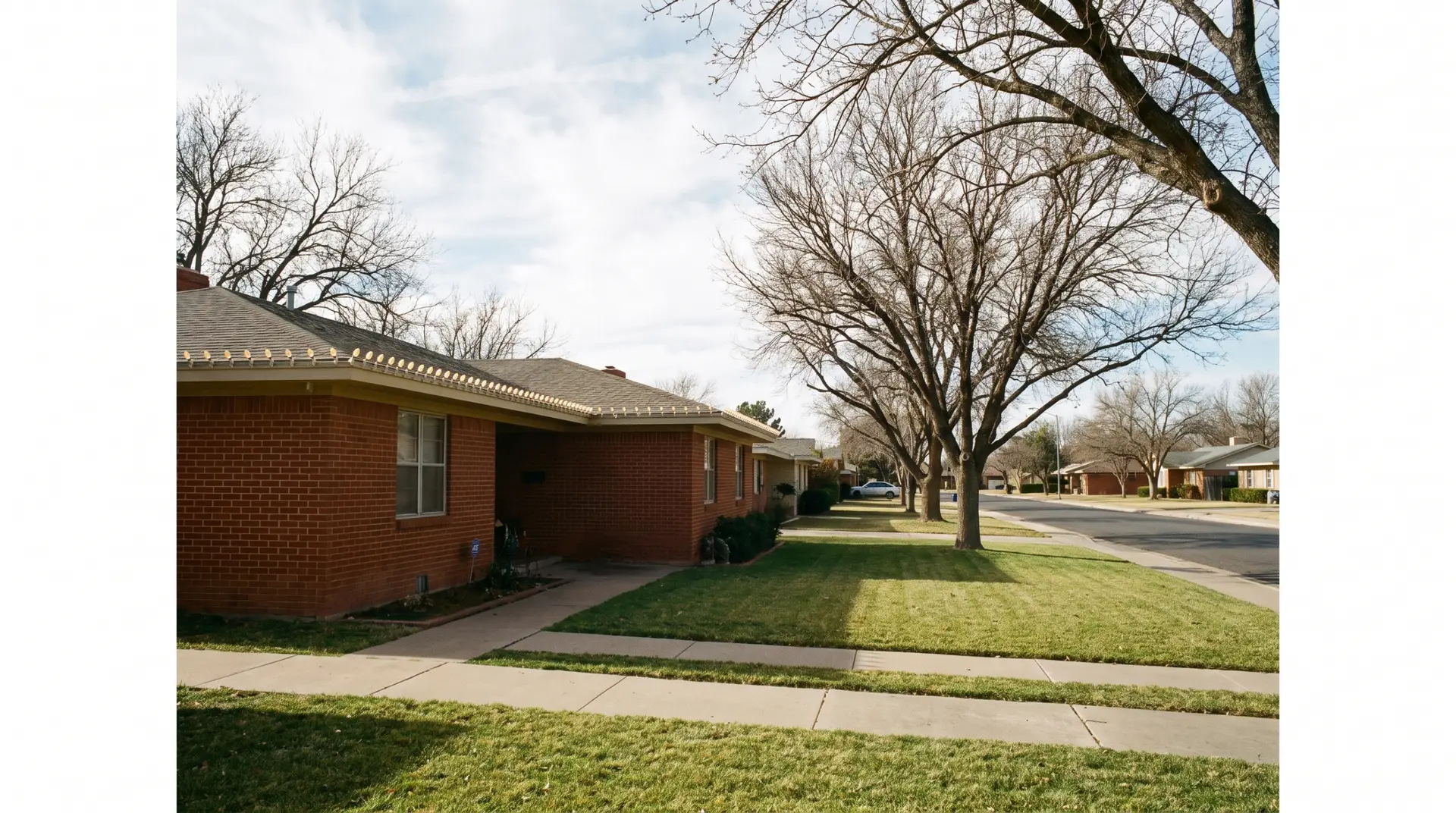
Installing and Taking Down Lights Without Hurting the Roof
Plan the run on the ground first. Lay the strings out along the driveway, count your footage, and figure out where the power feeds and where each run ends. Ten minutes of layout saves a dozen trips up the ladder, and every ladder trip you skip is a real reduction in risk. Use a fiberglass ladder, set it at roughly a four to one angle, and extend it three feet past the eave so you have something to hold at the top.
Work from the ladder, not from the roof, wherever the reach allows. Move the ladder more often than feels necessary rather than leaning out to save a step. Clip the first bulb, then work along the edge, seating each clip fully under the shingle lip or over the gutter so the hook faces out and the line hangs straight. If a clip does not seat easily, it is the wrong clip for that detail. Do not force it.
Keep the electrical side sensible too. Use outdoor-rated cords and strings, do not exceed the manufacturer’s limit on connected runs, and put the whole display on a GFCI-protected outlet. The Electrical Safety Foundation International keeps a straightforward set of holiday decorating safety guidelines covering cords, connections and outdoor use that is worth five minutes before you start.
At takedown, unclip rather than pull. Warm afternoons in January are your friend, because plastic that is above freezing flexes instead of snapping. Coil each run onto a spool or a piece of cardboard as it comes down, label it by the section of house it covers, and keep the good clips in a bag with the string they belong to. Next year you will thank yourself.
Two more habits worth building. Never leave lights up past February, because another three months of sun turns every clip on the house brittle and bakes the cord jacket. And check your roof from the ground with binoculars after takedown, looking for lifted tabs, missing granule patches or a clip left behind at a corner. Finding one loose shingle in January costs a service call. Finding it in June, after spring storms have worked on it, costs considerably more.
Final Word: Christmas Light Clips and Doing It Once
The whole approach comes down to one rule. Nothing gets driven into the roof, ever. If a spot on your house has no edge to hook, change the design so the lights follow a gutter, a fascia or a ridge instead. A slightly different light layout is free. A repair to a shingle field that got stapled is not.
Two habits go with that rule. Buy fresh christmas light clips every couple of seasons instead of reusing brittle ones, and take the lights down in a mild stretch rather than fighting frozen plastic. Those two things prevent most of the roof damage we see from decorations.
If your roof is steep, two stories, or you simply do not want to be on a ladder in December wind, that is a fair reason to hire it out. Professional crews carry the right clip for every surface, work the whole roofline from ladders and hooks, and handle takedown and storage in January. Our Christmas light installation team covers Lubbock, Wolfforth, Shallowater, Idalou and Ransom Canyon, and our guide on safe roofline lighting goes deeper on layout if you plan to handle it yourself.
Frequently Asked Questions About Christmas Light Clips
Roof-safe answers to what Lubbock homeowners ask every December
Properly shaped clips do not. A shingle tab clip slides under the front lip of the shingle and holds by friction, so nothing penetrates the water-shedding surface and nothing bonds to the granules. Damage comes from the alternatives people reach for when they run out of clips, or from forcing a clip into a detail it was not made for. Seat each clip gently, and if one resists, stop and use a different style rather than pushing it in.
You can get two or three seasons out of a set, but not much more in West Texas. Ultraviolet exposure and repeated freeze-thaw cycles make the plastic brittle, and a brittle clip either snaps during installation or lets go in a February gust. Sort your clips when you unpack them and flex a few. If several crack, replace the batch. A bag of new clips costs a few dollars and prevents both a light line on the ground and a scratched shingle.
Magnets and seam clamps. Rare-earth magnetic clips stick directly to painted metal panels and leave no mark, and standing seam clamps grip the raised seam mechanically. Never drill or screw into a metal panel to hang decorations, because the panel is a continuous water barrier and any penetration you add is a leak waiting on a dried-out gasket. Check the pull rating on magnetic clips, since weak ones will slide down a slick painted panel on a windy night.
Yes, and gutter clips are usually the safest attachment on the house because they never touch the roof at all. A properly hung K-style gutter carries the weight of a light string without trouble. What gutters do not tolerate is a ladder leaned against them or somebody pulling down hard on a frozen run in January. Set your ladder against the fascia or use a ladder standoff, and unclip the lights rather than yanking them off the lip.
Early to mid November is the sweet spot. Afternoon temperatures are still mild enough that clips flex instead of snapping, shingles are warm enough to be pliable, and you can pick a day without a front blowing through. Waiting until the week of Thanksgiving often means working in wind and cold, which is when mistakes and broken clips happen. You do not have to turn them on early. Getting them mounted while the weather cooperates is the point.