Concrete slab cost in Lubbock usually lands between $6–$12 per square foot for a plain 4-inch pad, and it climbs from there once you add thickness, steel or a thickened edge. A 10×12 shed pad is a different animal from a 40-foot RV pad, and a room addition slab is different again.
We pour flatwork all over the South Plains, from Tech Terrace backyards to acreage out past Wolfforth, and the gap between two bids almost always comes down to what sits under the concrete, not the concrete itself. This guide walks the number down by project type so you can read a bid line by line and know what you are actually buying. It also covers the West Texas ground conditions that quietly decide whether your slab is still flat in ten years.
On this page, a complete guide to concrete slab cost in Lubbock, TX:
- Quick Answer: Concrete Slab Cost in Lubbock, TX
- What You Are Actually Paying For in a Slab Bid
- Shed Pads, RV Pads and Addition Slabs: Real Numbers
- How West Texas Ground and Weather Change Concrete Slab Cost
- Thickness, Joints and the Corners Not Worth Cutting
- Final Word: Getting an Honest Concrete Slab Cost Quote
- Frequently Asked Questions About Concrete Slab Cost
Quick Answer: Concrete Slab Cost in Lubbock, TX
For a standard 4-inch slab with fiber or mesh, poured over properly prepped ground, plan on $6–$12 per square foot installed. A 10×12 shed pad typically runs $900–$1,600. A 12×20 RV pad poured 6 inches thick with rebar on 18-inch centers usually falls in the $3,500–$6,500 range, and a 12×40 pad wide enough to run out the awning and step onto concrete can reach $7,000–$12,000.
Room addition slabs carry the widest spread, roughly $10–$18 per square foot, because they need a thickened perimeter beam, tied steel, plumbing sleeves set before the pour, and in many cases an engineer’s stamp. Small pours also carry a floor price. Nobody mobilizes a crew, a pump and a short load of ready-mix for $400, so a tiny 6×8 pad may cost $700–$1,100 even though the math on square footage says less.
In short: budget $6–$12 per square foot for a basic 4-inch pad, $8–$14 for a reinforced 6-inch RV pad, and $10–$18 for an addition slab with footings. Small pours carry a minimum charge because mobilization costs the same either way.
What You Are Actually Paying For in a Slab Bid
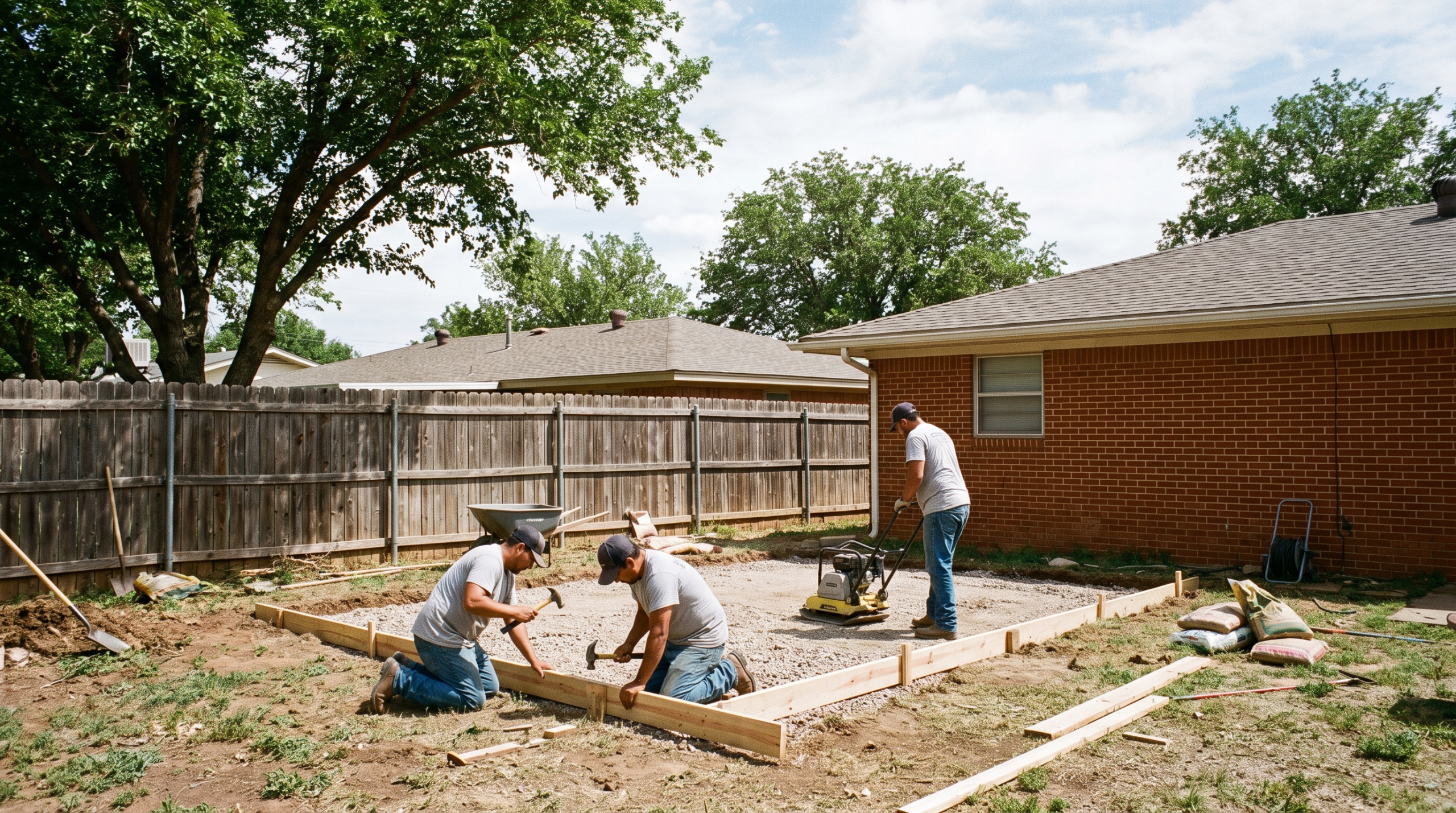
Ready-mix concrete is only part of the ticket. On a typical residential pour in Lubbock, the material itself is maybe a third of the price. The rest is labor, base prep, forming, reinforcement, finishing and cleanup, and those are exactly the line items that separate a slab that lasts thirty years from one that spiderwebs by year three.
When you set two bids side by side and one is $2,000 cheaper, look for what got left out. It is rarely the concrete. It is usually the base, the steel, or the control joints. Those three items are invisible the day the forms come off, which is exactly why they are the easiest place for a low bidder to save money at your expense. Here is how a real slab bid breaks down.
- Site prep and excavation: stripping sod, digging out soft spots and hauling off spoils. On expansive clay lots this is where the money goes, and skipping it guarantees movement later.
- Base material: compacted caliche or crushed base, usually 4 to 6 inches, moisture conditioned and rolled. Around here caliche is the local standard and it compacts well when it is worked at the right moisture.
- Forming: setting and staking forms dead level or to a deliberate slope so water runs away from the house instead of pooling against a slab edge.
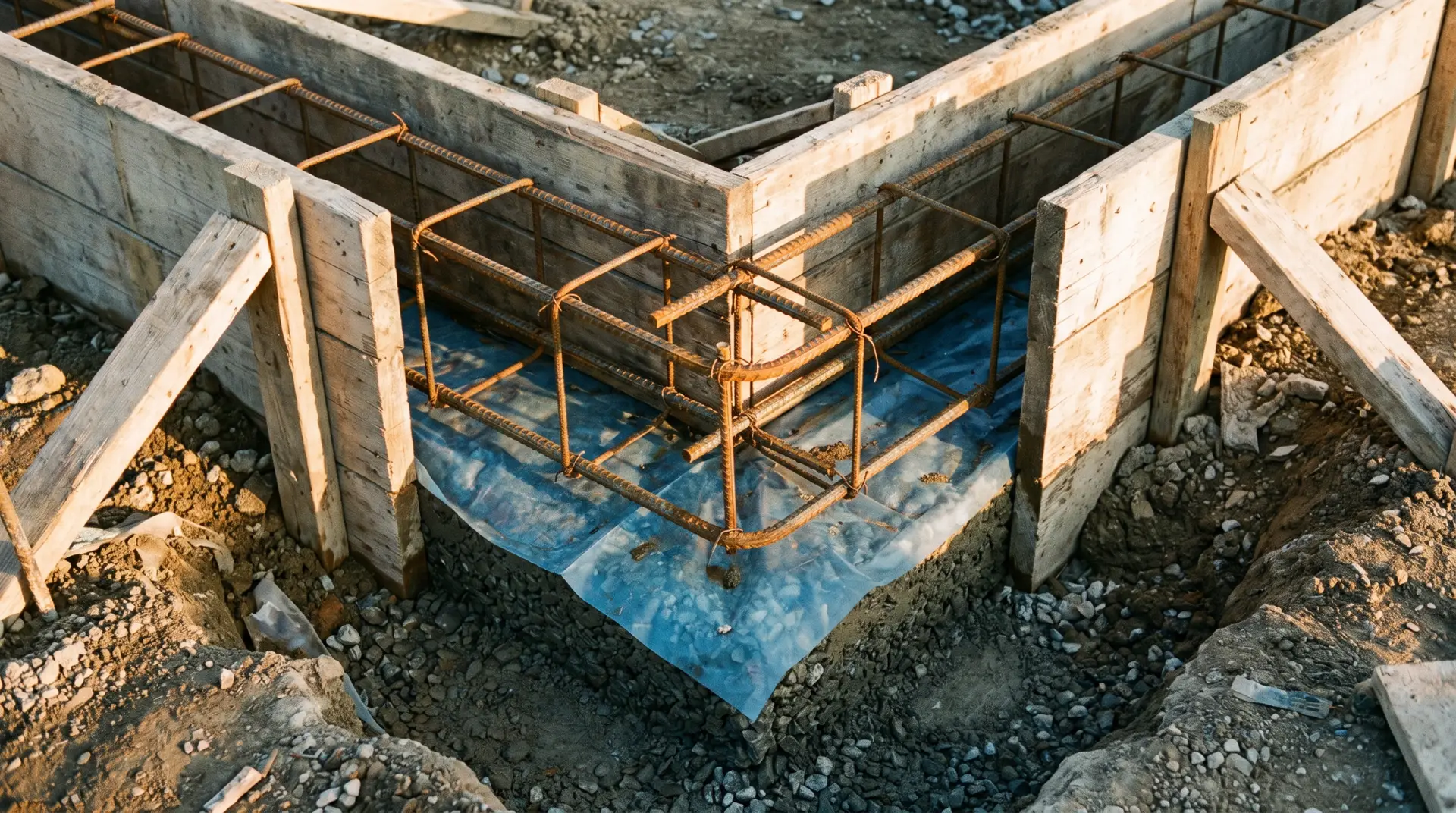
- Reinforcement: fiber mesh, welded wire or rebar tied on chairs. A shed pad may be fine with fiber. An RV pad carrying 15,000 pounds on four jacks needs #4 bar.
- Concrete and placement: the mix design itself, usually 3,000 to 4,000 psi here, plus pump or buggy time if a truck cannot back up to the pour.
- Finishing, jointing and cure: broom or trowel finish, saw-cut or tooled control joints, and a cure method that keeps water in the slab during the first week.
One caveat on square-foot pricing. It is a planning tool, not a quote. A 400 square foot pad with easy truck access, no demo and level ground can come in at the bottom of the range, while the same 400 feet behind a locked gate with a 40-foot wheelbarrow run will land at the top. Access drives labor hours more than most homeowners expect.
Shed Pads, RV Pads and Addition Slabs: Real Numbers
A shed pad is the simplest pour we do. Four inches, fiber reinforced, 4 inches of compacted base, one control joint if the pad is over about 12 feet in either direction. For a 10×12 you are looking at $900–$1,600 and roughly a day of work plus cure time. If the shed is going to hold a tractor or a shop full of steel, we bump it to 5 inches and add wire, which adds a few hundred dollars and is worth every dime.
RV pads are a different conversation. The load is concentrated on jack pads and tires, not spread out, so thickness and steel matter more than surface area. We pour most RV pads at 6 inches with #4 rebar and a slightly stiffer mix. Width is the part people underestimate: 10 feet is enough to park on and not enough to live with. Twelve to fourteen feet gives you room for the slide and the awning, and it is cheaper to pour it once than to add a strip later that will never match or stay tied together.
Addition slabs are structural. They need a turndown footing around the perimeter, usually 12 to 24 inches deep depending on soil and load, tied steel, a vapor barrier under living space, and any plumbing stubbed and pressure tested before the pour. That is why the range climbs to $10–$18 per square foot. If you are also planning driveway work in the same season, ask about combining pours; the pricing math looks a lot like what we cover in our Lubbock concrete driveway cost guide, and one mobilization beats two.
Two other pad types come up constantly around here. Hot tub pads need 5 to 6 inches and dead-level forming, because a filled spa is a concentrated load and a tub sitting on a pad with a low corner will torque its shell. Generator and AC equipment pads are small but fussy; they need conduit and line sets planned before the pour instead of cored afterward. Both are cheap add-ons if they get poured with something else and expensive one-offs if they do not, which is another argument for planning the whole backyard at once rather than one project a year.
How West Texas Ground and Weather Change Concrete Slab Cost
The single biggest variable in concrete slab cost around Lubbock has nothing to do with the concrete plant. It is the dirt. We sit on a mix of caliche and expansive clay, and clay moves. It swells when it finally gets water and shrinks hard through a dry summer, and a slab poured on unprepared clay rides that movement until something gives. Add hail season storms, 60 mph spring wind and big freeze-thaw swings and you have a place that punishes shortcuts.
Expansive Clay and Caliche Base
Clay soil is the reason two identical slabs can age completely differently three blocks apart. When clay dries out it pulls away and leaves a void under the edge of your slab; when a storm finally soaks it, it pushes back up. The fix is not more concrete, it is better base. We over-excavate soft clay, bring in caliche or crushed base, moisture condition it and compact in lifts. That prep can add $1–$3 per square foot to the bid and it is the best money in the whole project. If you want the long version of why slabs crack out here, we wrote about why concrete cracks in West Texas and what actually prevents it.
Wind, Heat and Fast Cure
A 95-degree day with 25 mph wind and single-digit humidity will pull water out of fresh concrete faster than the slab can use it. That gives you plastic shrinkage cracks, a dusty surface and a weaker top inch. Summer pours in Lubbock get scheduled early, sometimes with a truck on site at 6 a.m., and we use evaporation retarder, wet cure or a cure-and-seal depending on the finish. Crews that pour at 2 p.m. in July and walk away are the reason some slabs look ten years old at eighteen months.
Freeze-Thaw and Winter Pours
We get real freezes here, and water that soaks into an unsealed slab and freezes will scale the surface. Air-entrained mix helps. So does keeping the slab from getting saturated before it has strength. Winter pours are absolutely doable in Lubbock, but they need blankets on cold nights, a mix adjusted for temperature, and patience on strip and load times. If the forecast has a hard freeze inside 48 hours of a pour, the right call is usually to wait a few days.
Thickness, Joints and the Corners Not Worth Cutting
Three specs decide whether a slab holds up: thickness, reinforcement and control joints. Thickness is straightforward. Four inches for foot traffic and light storage, five for a heavy shop shed, six for RV, trailer or truck loads. Reinforcement is about what happens after the first crack, because concrete does crack. Fiber and wire hold hairline cracks tight. Rebar keeps a loaded slab from stepping apart at the joint.
Control joints are the part homeowners skip and regret. A slab wants to crack, and a joint is simply where you tell it to. Rule of thumb we use: joint spacing in feet should not exceed roughly two and a half times the slab thickness in inches, so a 4-inch slab gets joints every 10 feet or so, cut a quarter of the depth, within the first day. The Portland Cement Association keeps a plain-language reference on mix, placement and jointing basics at the PCA concrete resource library if you want to read the technical side yourself.
The last corner worth defending is drainage. A slab poured flat against a house, or one that dams water where it used to drain, creates a problem far more expensive than the pad. We set forms with a slope away from the structure, usually about an eighth of an inch per foot, and think about where that water goes during a heavy May storm. If you are tying a pad into a patio, the layout ideas in our Lubbock concrete patio guide are a good place to start planning the whole footprint at once.
One more spec worth asking about: the mix itself. Most residential flatwork here is a 3,000 to 4,000 psi mix, and a contractor should be able to tell you which one is going in your forms and why. Higher strength is not automatically better, since a stiff, low-slump mix in July wind is hard to finish well, and adding water on site to make it easier to work is the fastest way to weaken a slab. If a crew is hosing down the chute to loosen the load, that is a bad sign and you are allowed to say so.
Final Word: Getting an Honest Concrete Slab Cost Quote
When you collect bids, ask every contractor the same four questions: how thick, what reinforcement, how much base and how it gets compacted, and where the control joints go. Get the answers in writing. A bid that says nothing but square footage and a price is not a bid, it is a guess, and the difference usually shows up in year three as a crack you cannot unsee.
Also ask about scheduling around weather. Spring in Lubbock brings hail, blowing dust and wind that can wreck a fresh finish, so a good crew builds a little flexibility into the calendar instead of pouring into a bad forecast. And ask what happens if the ground under your pad turns out worse than it looked; a straight answer about change orders beforehand beats an argument in the middle of a dig.
If you want a real number for your lot instead of a range, we will come out, look at the ground, measure the access and put the specs in the proposal. You can see the full scope of what we handle on our Lubbock concrete services page, whether that is a shed pad in Shallowater, an RV pad in Idalou or an addition slab in the middle of town.
Frequently Asked Questions About Concrete Slab Cost
Straight answers to what Lubbock homeowners ask us before a pour
A 20x20 pad is 400 square feet, so at $6–$12 per square foot you are looking at roughly $2,400–$4,800 for a standard 4-inch slab with fiber reinforcement and compacted base. Push it to 6 inches with rebar for vehicle or trailer loads and the range moves to about $3,600–$5,600. Access matters. If a truck can back within a chute length of the forms, you stay near the bottom of the range. If we have to pump or wheel it through a side gate, expect the top.
Six inches with #4 rebar tied on 18-inch centers is our standard for a residential RV pad, and we will go thicker for a large fifth wheel or a diesel pusher. The load from leveling jacks concentrates on small footprints, and a 4-inch pad without steel will eventually punch or crack under that point load. Base prep matters just as much. On clay soil we over-excavate and bring in compacted caliche so the pad has something stable to bear on year round.
It depends on what the slab is for. A simple shed pad or patio slab often does not require a permit, while anything structural, anything tied to the house, or anything in an easement usually does. Room addition slabs always involve permitting and inspection because they carry a building. Rules also differ between city limits and county addresses out toward Wolfforth or Idalou. We pull permits when the job calls for one and we will tell you up front which category your project falls into.
You can usually walk on a slab after 24 to 48 hours, park a passenger vehicle after about seven days, and put an RV or loaded trailer on it after 28 days. Concrete keeps gaining strength for weeks after it looks finished, and most of that strength comes in the first month. In hot, windy Lubbock weather we also want the slab kept damp or sealed during the early cure, because water leaving too fast weakens the top surface where all your wear happens.
Yes, over the life of the pad. A good penetrating sealer slows water from soaking in, which reduces surface scaling from freeze-thaw and helps with the staining that comes from oil, rust and hard water. Sealing typically runs $1–$3 per square foot and needs redoing every few years depending on exposure. Spending that on a $5,000 RV pad to avoid patching or resurfacing later is simple math. New slabs should cure before the first sealer goes down.