Fence post repair is the difference between spending a few hundred dollars and tearing out a whole backyard fence, and in Lubbock the posts are almost always what fail first. Pickets weather, rails sag, but it is the post at the groundline that rots, snaps, or leans after a spring of hard wind. Walk any alley in Tech Terrace or a newer street in Wolfforth after a 60 mile per hour night and you will see the same thing: eight good posts and two that gave up.
The good news is that a fence is a system of repeatable parts. If the pickets and rails are sound and only a handful of posts are bad, you fix the posts and get another decade out of the fence. This guide covers how to tell which posts are failing, what the repair actually involves, what it runs in the Lubbock area, and the soil and weather reasons posts fail here faster than they do in East Texas.
On this page, a complete guide to fence post repair in Lubbock, TX:
- Quick Answer: When Fence Post Repair Beats Replacing the Fence
- Signs a Lubbock Fence Needs Post Repair Now
- How Fence Post Repair Actually Works, Step by Step
- Why Lubbock Soil and Weather Are Hard on Fence Posts
- Concrete, Gravel, and What Actually Rots a Post
- Final Word: Fix the Posts, Then Protect the Fence
- Frequently Asked Questions About Fence Post Repair
Quick Answer: When Fence Post Repair Beats Replacing the Fence
Repair the posts when fewer than about a quarter of them are bad and the pickets and rails still have life in them. In the Lubbock area, replacing a single failed post generally runs $150–$300 installed, depending on post material, how much concrete has to come out, and whether the crew has to pull and reset panels to reach it. A run of three or four posts usually lands in the $500–$1,000 range.
Compare that to a full cedar privacy fence, which in this market runs roughly $25–$40 per linear foot installed. On a 150 foot backyard, that is several thousand dollars. If half the posts are punky at grade and the pickets are cupped and gray, replacement is the honest answer. If you have two leaners and a gate that drags, fence post repair is the cheaper and faster call, and it can usually be knocked out in a single morning.
Short version: check every post at the groundline, not at eye level. If the sound posts outnumber the failed ones roughly three to one and the rails and pickets are solid, fence post repair is the better buy. Once the posts are back in the ground, stain the fence so the rest of it lasts as long as the repair.
Signs a Lubbock Fence Needs Post Repair Now
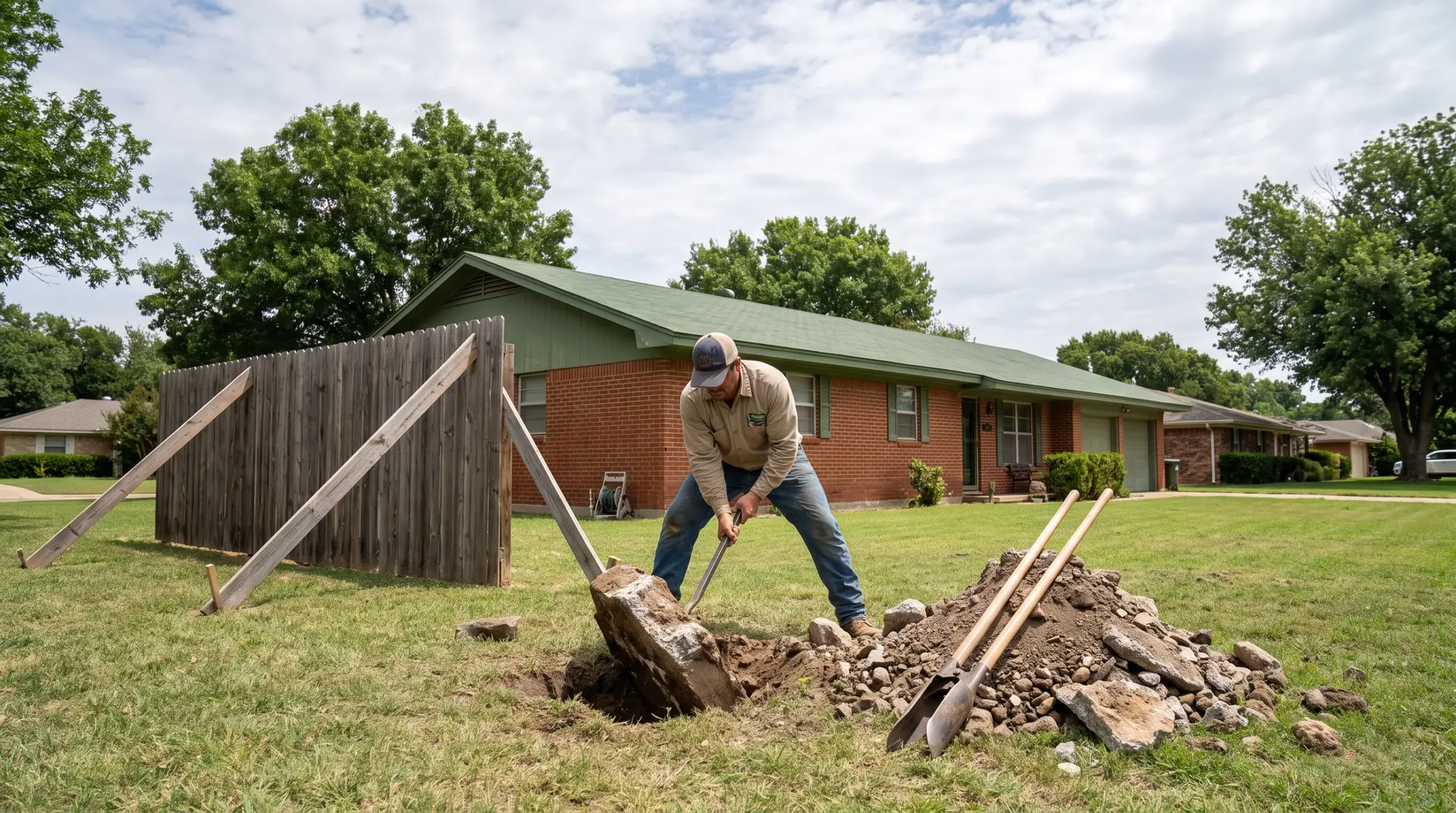
Most homeowners notice a fence problem when a panel is already leaning into the neighbor’s yard. The failure started a year or two earlier, right at the dirt line, where the wood stays damp after a sprinkler cycle and gets baked and sandblasted the rest of the week. Catching it early is the whole game, because a post that is only starting to soften can sometimes be reinforced instead of dug out.
Walk the fence once each spring with a screwdriver and give every post a two-handed shove. Push at shoulder height and watch what moves. A post that flexes while the concrete stays still has rotted at the collar. A post that rocks the whole concrete plug has a soil problem. Here is what to look for.
- Movement at the groundline: Shove the post hard. Any wobble, creak, or visible gap opening between wood and concrete means the post has lost its footing or its wood at grade. Sound posts barely move even in a stiff wind.
- Soft wood you can sink a screwdriver into: Jab a screwdriver into the post two inches above and two inches below the dirt. If it goes in more than a quarter inch with light pressure, the wood is decayed and the post needs to come out.
- A lean that shows up after wind: Sight down the fence line from the corner. Posts that tilted after a spring storm and never came back have either snapped below grade or loosened in the soil around the concrete.
- Cracked or heaved concrete collars: A concrete plug pushed up an inch above the dirt, or split down one side, means the clay under it has been swelling and shrinking. That post will keep moving until the footing is reset deeper.
- Gates that drag or will not latch: A gate is the best early warning on the fence because it hangs all its weight on one post. If the latch has drifted a half inch over a season, the hinge post is going.
- Nails or screws backing out of the rails: Fasteners working their way loose along one section mean the rails are carrying load the posts should be holding. Fix the post before the rail splits and takes the pickets with it.
Two caveats. A lean is not always a post problem, and a warped rail or a sagging panel can fake one, so confirm at the groundline before you dig. And call 811 for utility locates before any post hole gets opened, even a hole you are only re-digging. Irrigation lines, low-voltage lighting, and gas runs to outdoor kitchens all live in that same trench zone in Lubbock backyards.
How Fence Post Repair Actually Works, Step by Step
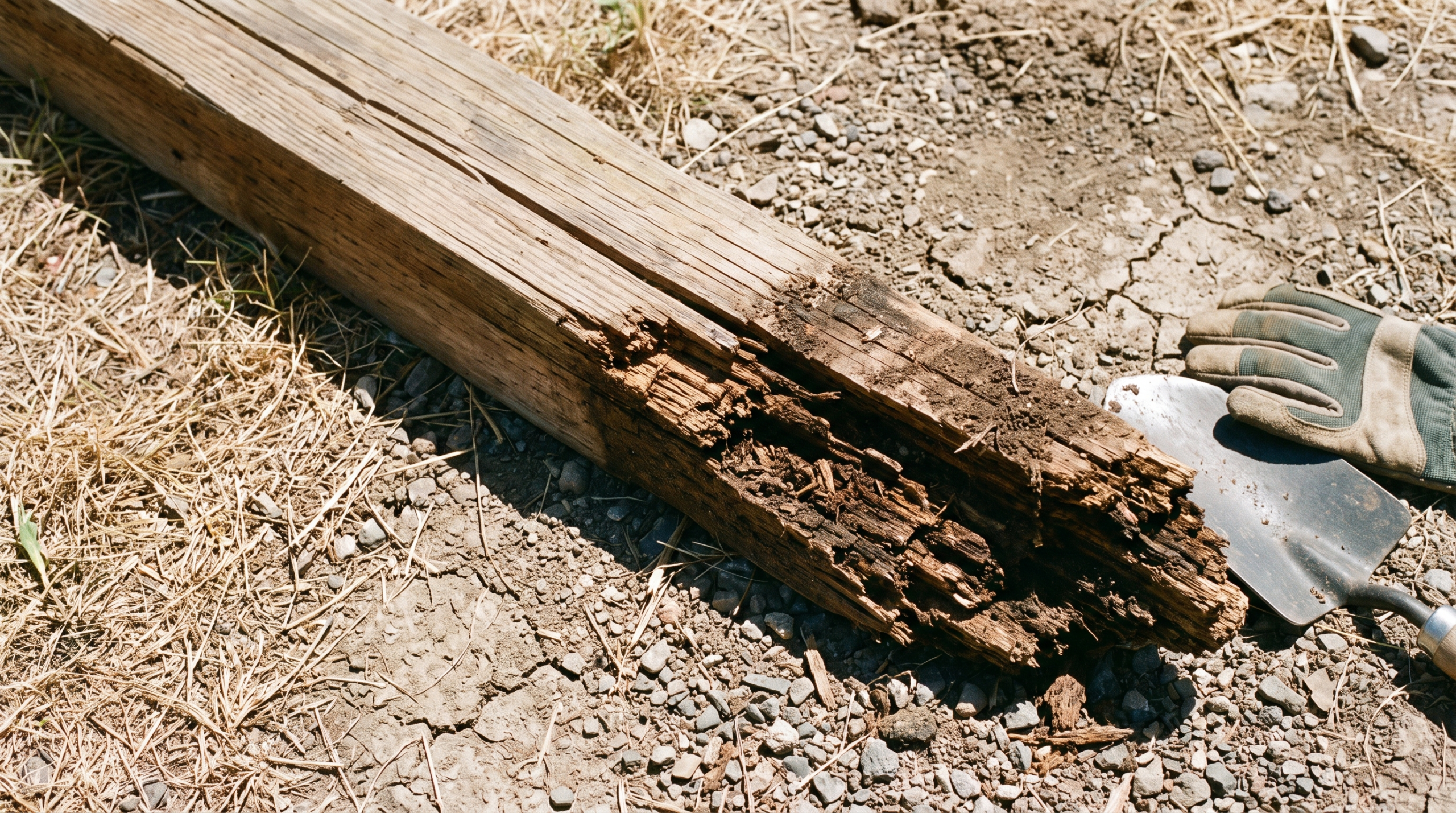
There are three real approaches, and a good crew picks based on what the post looks like below the dirt. Full replacement is the standard. The panels on both sides get unfastened or lifted, the old post and its concrete plug come out, the hole gets re-dug deeper and wider, and a new post goes in plumb with fresh concrete or a compacted gravel base. That is the repair that lasts, and it is what we do on any post that is soft at grade.
The second method is a steel spur or post mender, a galvanized stub driven alongside the old post and bolted through the sound wood above the rot. It is faster and cheaper and it works fine on a post that broke clean but still has solid wood a foot up. It is a poor choice on a post that is spongy for two feet, because you are bolting new steel to bad wood.
The third is a reset, where the post itself is fine but the footing failed. The concrete comes out, the hole gets deepened, and the same post goes back plumb. Whichever method fits, the fundamentals do not change: the hole should be about three times the post width, the post should sit at least a third of its length in the ground, and the concrete should be crowned above grade so water runs away from the wood. Deciding between patching and starting over is the same math we walk through in our guide to fence repair versus replacement in Lubbock.
Why Lubbock Soil and Weather Are Hard on Fence Posts
A fence post in Lubbock lives a rougher life than a fence post almost anywhere east of here. It is set in soil that swells and shrinks with every wet and dry cycle, it takes wind loads that would embarrass a sail, and it sits under UV that chews through unprotected wood in a couple of summers. Understanding those three forces explains why posts here fail at the dirt line and why the repair has to go deeper than the original install did. A repair that puts the same post back in the same shallow hole is a repair you will do again in three years.
Caliche and Expansive Clay Work the Footing Loose
Much of Lubbock sits on expansive clay over a caliche layer. The clay swells when a sprinkler zone runs or a monsoon week rolls through, then shrinks and pulls away as it dries, opening a gap around the concrete plug. Do that a few dozen times and the footing is sitting in a slightly oversized hole. Caliche makes it worse in the other direction, because crews hit that hard layer, stop digging, and set the post shallow. A shallow post in moving clay is a post that will lean, and no amount of concrete on top fixes a footing that never got below the active zone.
Spring Wind Turns the Post Into a Lever
A six foot privacy fence is a solid wall, and 60 mile per hour spring gusts push on every square foot of it. All of that load transfers into the posts, and the highest stress lands exactly at the groundline, where the wood is already the weakest. That is why posts snap at the dirt rather than in the middle. It is also why post spacing matters here. Eight feet on center is common, but on an exposed lot facing open farmland toward Shallowater or Idalou, tightening to six feet on center makes a real difference.
UV, Blowing Dust, and Freeze-Thaw at the Dirt Line
West Texas sun breaks down the surface fibers of untreated wood, blowing dust scours the softened surface away, and every winter the water sitting in those open checks freezes and expands. That cycle opens cracks that let moisture reach the core of the post. Sprinkler heads that spray the bottom of a fence accelerate all of it, because the wood never gets a chance to dry. Point the heads away from the fence and you buy yourself years on the same posts.

Concrete, Gravel, and What Actually Rots a Post
Ask five people how to set a fence post and you will get five answers. The argument is really about water. Concrete poured in a bowl shape, low in the middle and sloped toward the post, traps water against the wood and rots it from the collar down. Concrete crowned above grade, sloped away on all sides, sheds water and lasts. The concrete is not the villain. Bad finishing is.
Gravel setting works well in our soil, particularly on lots with drainage issues, because it lets water move down and out instead of pooling. It takes real compaction in lifts to hold a post plumb against 60 mile per hour wind, so it is only as good as the labor put into it. On tall privacy fences with long spans we still prefer concrete, crowned properly, sometimes with a few inches of gravel at the bottom of the hole under the post. Whatever goes in the hole, the post has to be braced and left alone until it sets, and that is the step homeowners skip most often on a weekend fence post repair.
Material matters more than either method. Use posts rated for ground contact, not the lighter treatment sold for above-ground use, and understand that the treatment protects the outer shell more than the core, so every field cut needs an end sealer. The USDA Forest Products Laboratory publishes the research on wood decay and durability that these standards come from, and the short version is simple: decay needs moisture, and wood that stays under about twenty percent moisture content does not rot. Everything about a good post install is aimed at that one number. Steel posts with wood rails and pickets are the other durable answer here, and plenty of Lubbock fences are built that way.
Final Word: Fix the Posts, Then Protect the Fence
Fence post repair is one of the few exterior projects where a small, well-timed fix genuinely saves a large expense. Two posts reset properly in the spring keep a whole run from coming down in the next big wind event, and the cost difference between the two outcomes is enormous. The trick is checking the posts before the lean shows up, not after. A five minute walk down the fence line every March, screwdriver in hand, tells you everything you need to know.
Once the posts are solid, protect the rest of the fence. Bare cedar in Lubbock goes silver in one summer and starts checking in two, and those open checks are how water gets into the wood in the first place. Staining on a regular cycle is the cheapest maintenance you can do on a fence, and our guide on how often to stain a fence in Lubbock lays out the timing for our climate.
Elite Roofing & Exterior works on fences across Lubbock, Wolfforth, Shallowater, and Idalou. If you have a leaner in the backyard or a gate that quit latching, we will walk the line, check every post at grade, and tell you straight whether repair or replacement is the better money. When the posts are back in the ground, our fence staining crew can seal the whole fence before the next round of spring dust.
Frequently Asked Questions About Fence Post Repair
What Lubbock homeowners ask before we start digging
Expect roughly $150 to $300 per post for a full replacement, including removing the old concrete plug, digging deeper, setting a new ground-contact post, and refastening the panels. A steel post mender on a post that broke clean runs less, often $100 to $175. Price moves with post material, how much concrete has to come out, gate hardware, and access. Corner and gate posts cost more because they are bigger, set deeper, and carry more load.
Usually yes on a standard picket fence. The rails on either side get unfastened at the bad post, the panels are supported while the post comes out, and everything goes back once the new post is set and plumb. On prefabricated panel fences or fences with pickets nailed across the post face, more has to come apart. Either way it is far less disruption than replacing a whole run, and most single-post repairs are done in a few hours.
Both work if they are done right. Concrete gives the most resistance to our spring wind, which matters on six foot privacy fences, but it has to be crowned above grade and sloped away so water sheds off instead of sitting against the wood. Gravel drains better and is easier to redo later, though it needs serious compaction in layers to hold a tall fence plumb. On exposed Lubbock lots we generally set posts in properly crowned concrete.
Plan on at least a third of the post length in the ground, which puts a six foot fence post about 24 to 30 inches deep, and go deeper on corner posts, gate posts, and exposed lots. The point is getting below the zone where our clay swells and shrinks with moisture. Hitting caliche is not a reason to stop short. A shallow post set in hard caliche still leans once the clay above it starts cycling.
When the failures are spread across the fence rather than concentrated. If more than about a quarter of the posts are soft at grade, if the rails are splitting, or if the pickets are cupped, thin, and pulling loose, you are paying repair prices twice on your way to a replacement anyway. The same is true when posts were set well under two feet deep originally, because every one of them is on the same clock. In those cases a new fence is the better spend.