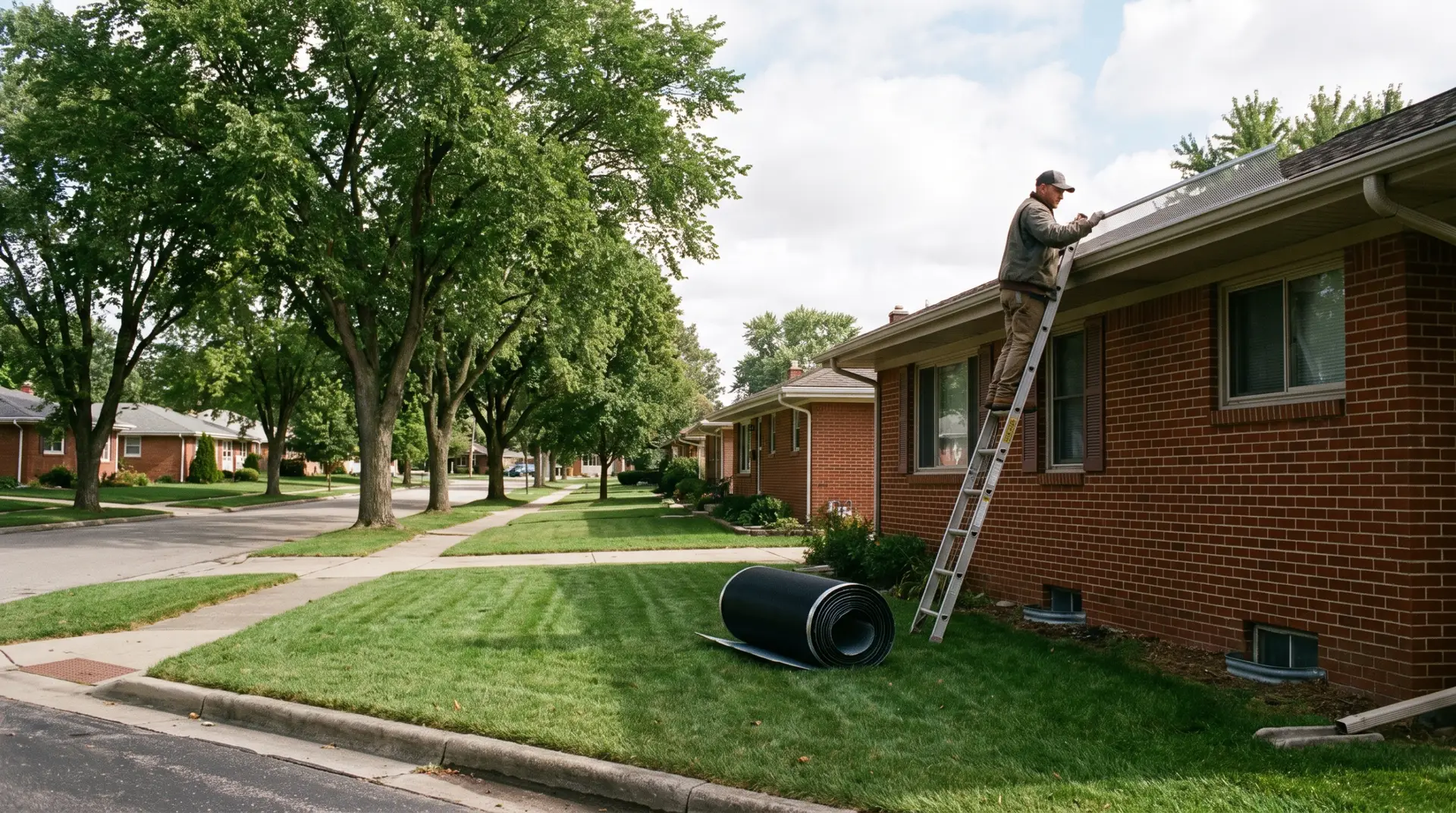
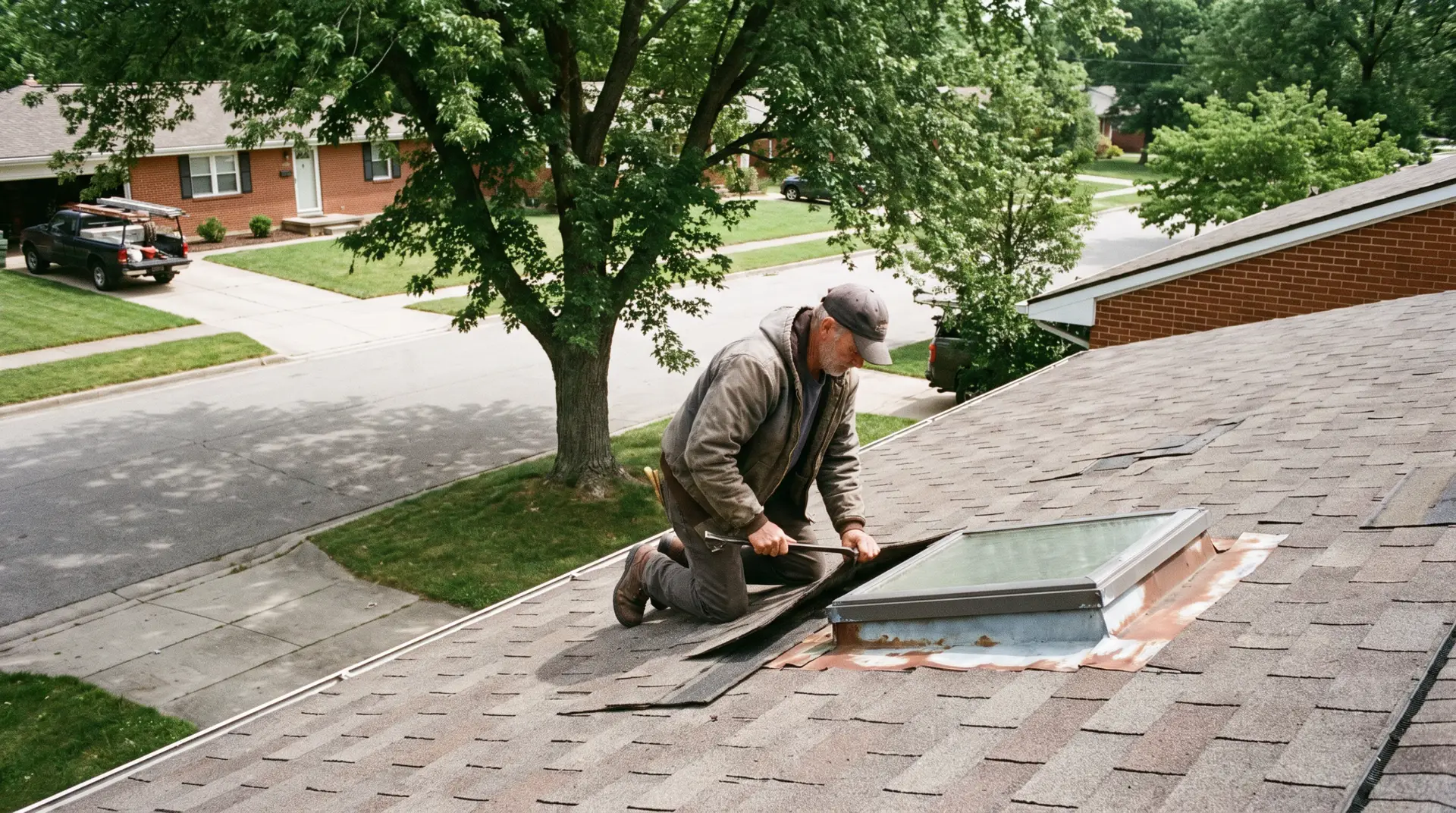
A roof inspection in Lubbock is a specific, repeatable process, not a guy squinting at your house from the driveway. Most homeowners have never watched one happen, so they have no way to tell a thorough visit from a five-minute sales call dressed up as an inspection.
This walks through what actually takes place, in order, from the moment the truck parks to the photo report that lands in your inbox. If you are trying to figure out whether your roof is failing, we cover the warning signs in a separate post. This one is about the physical process: where the inspector goes, what tools come out of the bag, what gets chalked on the shingles, and what the paperwork should say when it is over.
On this page, a complete guide to roof inspection in Lubbock, TX:
- Quick Answer: What Happens During a Roof Inspection
- The Six Stages of a Thorough Roof Inspection
- What the Roof Inspection Is Actually Looking For
- Lubbock Conditions That Shape a Roof Inspection
- The Report, the Adjuster, and What Happens Next
- Final Word: Booking a Roof Inspection in Lubbock
- Frequently Asked Questions About Roof Inspections
Quick Answer: What Happens During a Roof Inspection
A full roof inspection on a typical 1,800 to 2,500 square foot Lubbock house takes 45 to 90 minutes and covers four areas: a ground-level walk of all four elevations, the attic and ceilings inside, the roof surface itself, and every penetration and flashing detail. The inspector marks test areas in chalk, counts impact hits, and photographs everything.
Most Lubbock roofing companies perform a storm-damage roof inspection at no charge. A documented inspection for a real estate transaction, a warranty question, or an insurance dispute typically runs $150–$400. What you should receive either way is a written report with date-stamped photos, slope-by-slope findings, a clear statement of remaining service life, and a recommendation you can act on. If nobody got on the roof and nobody opened the attic hatch, you did not get an inspection.
A roof inspection in Lubbock takes 45 to 90 minutes and covers four areas: the ground-level elevations, the attic and interior ceilings, the roof surface, and all flashings and penetrations. You should receive a photo report with findings by slope.
The Six Stages of a Thorough Roof Inspection
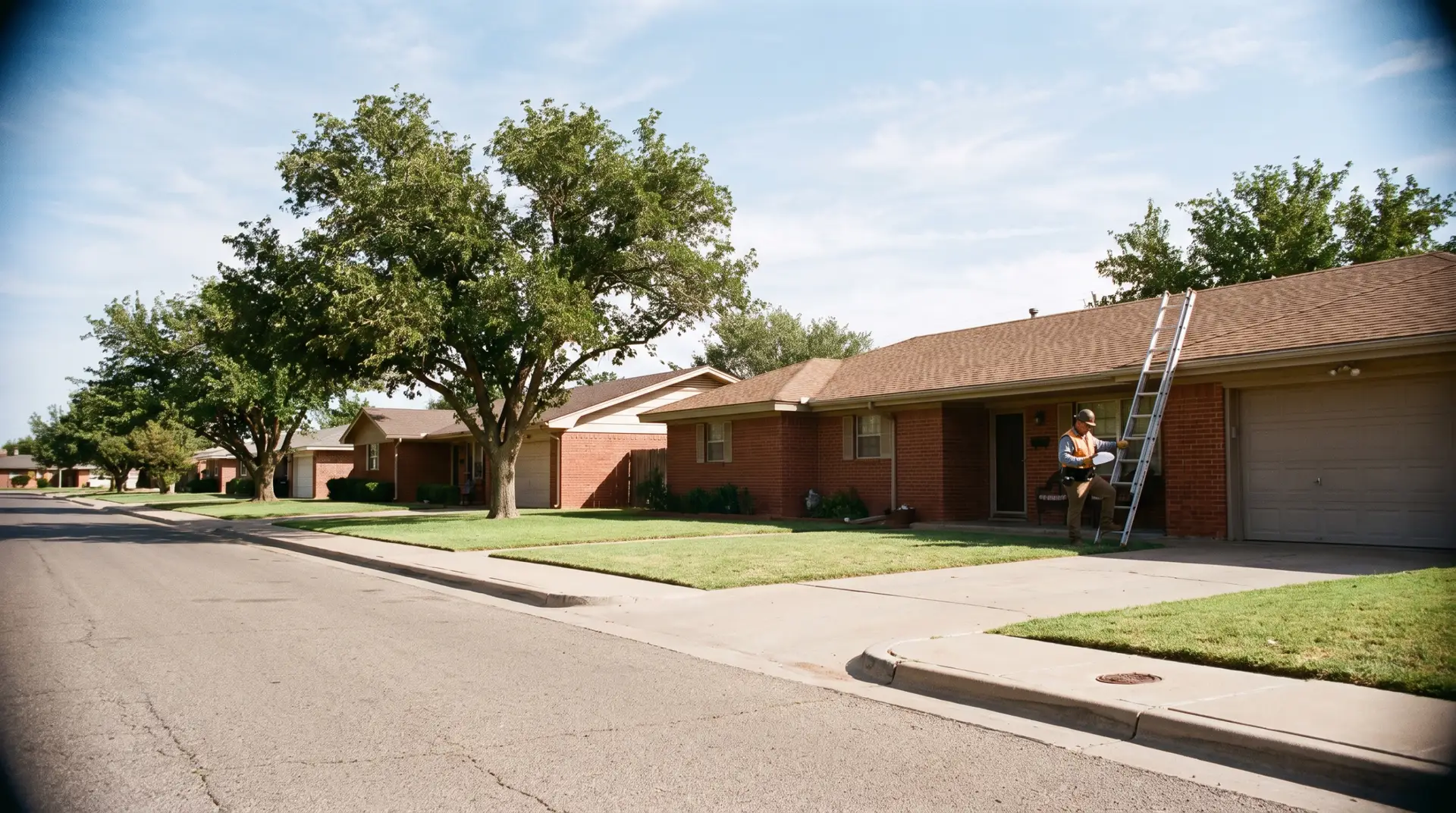
Every experienced inspector works the same order, and the order matters. You look from the ground before you climb, because a wind crease or a lifted ridge cap is often easier to spot from 40 feet back than from on top of it. You check the attic before or right after the roof, so you can connect a stain on the decking to the exact penetration above it. Working the other direction means guessing, and guesses are how a small flashing problem gets written up as a full replacement.
Here is the sequence you should see on your property. If a contractor skips three of these six and hands you a contract, you are watching a sales call. Ask before they start which of these steps they perform, and watch whether the answer matches what happens.
None of this requires you to know roofing. You only have to notice whether the ladder went up, whether the attic hatch came open, and whether anything got written down.
- Ground-level walk of all four elevations: The inspector circles the house looking at ridge lines for sag, gutters and downspouts for granule accumulation, siding and window wraps for hail strikes, and soft metal like vent caps, gutter aprons, and the air conditioner condenser fins. Soft metal shows hail impact clearly, which helps establish whether a storm hit this address at all.
- Attic and interior check: Hatch comes open, flashlight goes on. The inspector looks for daylight through the decking, rusted nail shanks, dark staining on rafters, wet or compressed insulation, mold at the north eaves, and whether the intake and exhaust ventilation are working. Interior ceilings around chimneys, bathroom vents, and skylights get checked from below.
- Roof surface walk, slope by slope: Boots on the roof, walking each slope on a grid. The inspector feels for soft or spongy decking underfoot, checks whether shingle tabs are still sealed, looks at granule coverage, and inspects ridge and hip caps. Steep or fragile roofs get a ladder-and-edge inspection or a drone flight instead.
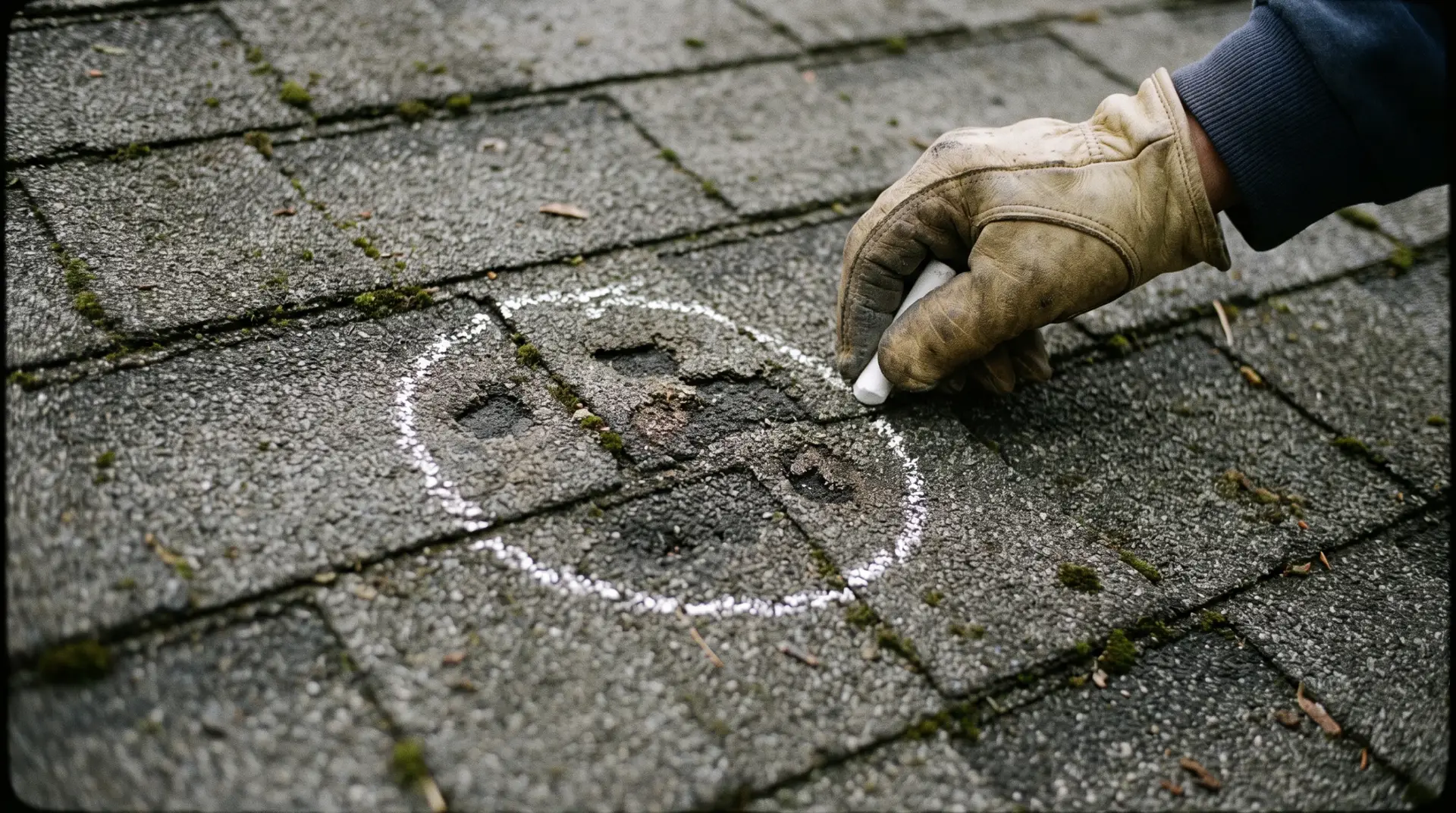
- Chalked test squares and impact counts: On any storm claim, the inspector chalks a 10-foot by 10-foot square on each slope and counts hail hits inside it. That count, along with strike size and direction, is what an insurance adjuster will compare against. Bruised spots get circled, dated, and photographed with a tape measure in frame.
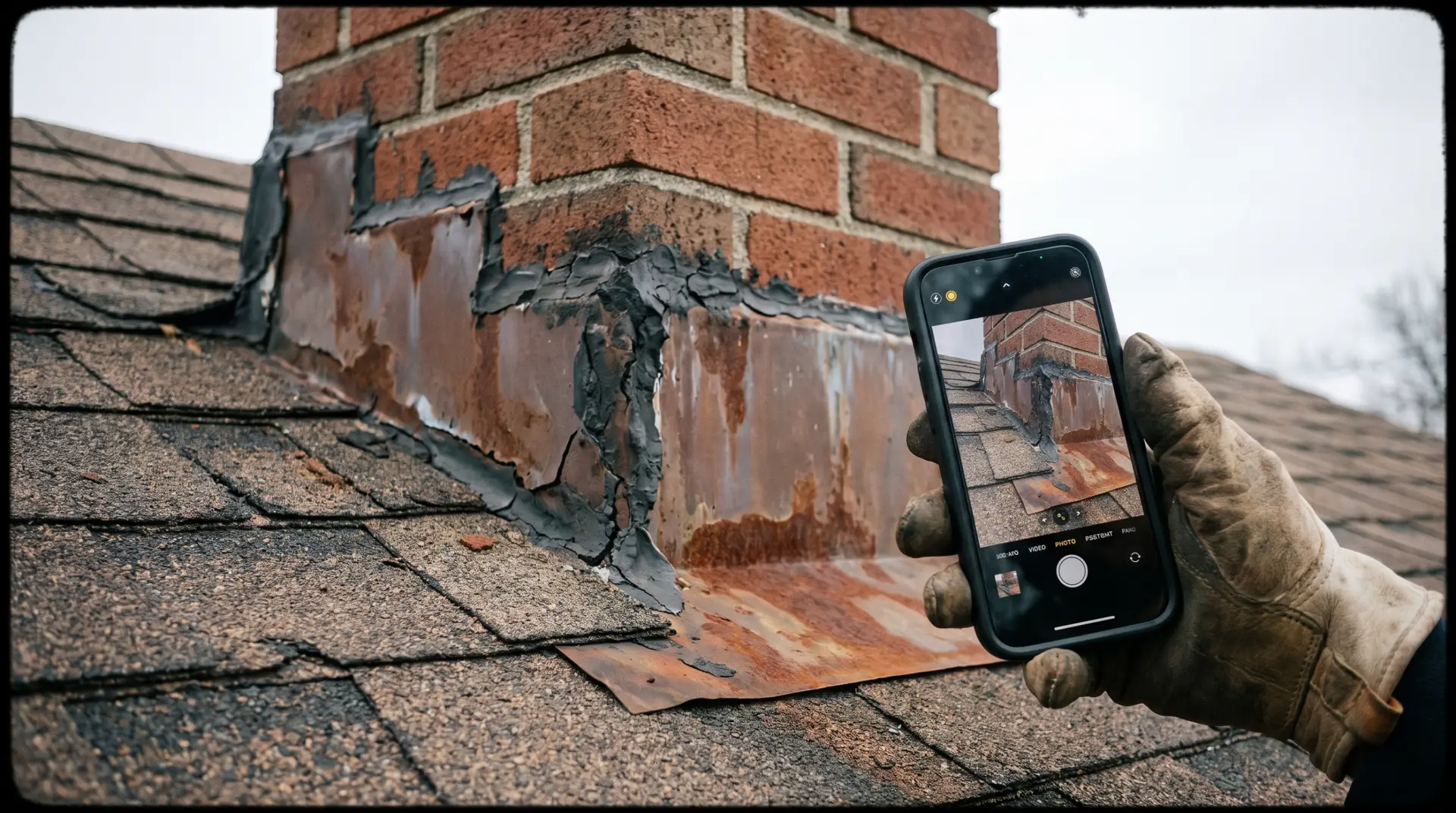
- Penetrations, flashings, and edges: Pipe boots, furnace and bath vents, chimney counterflashing, skylight curbs, valley metal, drip edge, and the rake and eave terminations. This is where the majority of Lubbock leaks actually start, and a rubber pipe boot that has split at the collar is one of the most common findings on a roof over eight years old.
- Written report with photos and next steps: Date-stamped images organized by slope, a plain description of what was found, an estimate of remaining service life, and a recommendation: monitor, repair, file a claim, or replace. A verbal summary in the driveway is not a report, and it is useless six months later when you need documentation. Ask for it as a PDF you can forward, not a text message with four photos attached.
Two situations change the process. A roof under 4 years old with an active manufacturer warranty needs the inspector to document installation defects differently than storm damage, since those go to different parties. And on a low-slope or modified bitumen section, the inspector should check seams and ponding depth rather than counting hail hits, because flat sections fail in an entirely different pattern. Ask which type of section you have before the visit, since a house with both needs both approaches and some crews only do one.
What the Roof Inspection Is Actually Looking For
Hail bruising is the headline in West Texas, and it looks like a dark, soft spot where the impact fractured the fiberglass mat under the granules. Press it and it gives slightly, like a bruise on an apple. That is different from a blister, which is round and raised, and different from mechanical damage, which is scuffing where someone walked or dragged a ladder.
Wind damage reads as creasing. A shingle that lifted and folded back leaves a horizontal crack line across the tab, and even after it lays back down that crease is permanent. The inspector checks whether tabs are still sealed by lifting them by hand along the rake edges and the windward slopes, which in Lubbock means the west and south faces. A tab that lifts easily by hand has lost its seal, and a slope full of unsealed tabs is one storm away from losing shingles even if nothing looks wrong from the ground today.
Age-related wear shows up as granule loss and mat exposure, usually starting in the valleys and along the sun-hit southern slope. Once you can see the black fiberglass mat, the asphalt underneath is exposed to ultraviolet light and the shingle is on a short clock. Other standard findings include backed-out nails pushing up through shingles, cracked or missing sealant at counterflashing, rusted valley metal, and separated seams on the drip edge.
Inside the attic, the inspector is connecting the dots. A stain on the decking directly under a bath vent points at a failed boot. Rusted nail tips across the whole underside point at a ventilation problem rather than a leak. Compressed insulation blocking the soffit intake explains why the shingles on that slope aged faster than the rest of the roof. Our post on signs you need a new roof in Lubbock covers what these findings mean for replacement timing.
Lubbock Conditions That Shape a Roof Inspection
An inspector trained in Dallas has to recalibrate on the South Plains. Our roofs age in a specific pattern driven by three things: hail that arrives with wind behind it, blowing dust that scours granules year-round, and a temperature swing that can run 40 degrees in a single day. Each one leaves a signature, and reading them correctly is most of the skill in a good inspection here. A roof that reads as failed in one climate can have years left in another, and the reverse is also true.
Hail Bruising Versus Blowing-Dust Wear
The hardest call on a Lubbock roof is distinguishing storm damage from ordinary weathering, because our blowing dust removes granules on its own. Scoured wear is diffuse and follows the wind exposure of a slope. Hail damage is random, circular, and comes with a soft spot in the mat. This is why the soft-metal check matters so much. If the gutter apron, the turbine vent, and the condenser fins all show dents, hail hit the property, and the marks on the shingles get read in that context. If the soft metal is clean, that slope is probably just old.
Wind Creasing on West and South Slopes
Our spring winds regularly run 40 to 60 miles per hour out of the southwest, and they work on the same slopes year after year. The inspector spends extra time on those faces, hand-lifting tabs to check the seal strip and looking for the horizontal crease that marks a shingle that has folded back at least once. Roofs in open country around Shallowater, Idalou, and the newer additions west of Frenship take more of this than a sheltered lot in Tech Terrace with 60-year-old elms around it, and the inspection notes should reflect that exposure.
Thermal Cycling on Low-Slope and Patio Sections
Plenty of Lubbock homes have a low-slope section over a patio cover, a room addition, or a carport. Those areas expand and contract hard through our daily temperature swing, and they fail at the seams and terminations rather than in the field. On that part of the walk, the inspector is looking for open laps, alligatoring on old built-up surfaces, ponding that has not drained 48 hours after a rain, and the flashing where the low slope ties into the main roof. That tie-in is the single most common leak point on a house like this.
The Report, the Adjuster, and What Happens Next
When the roof inspection is done, you should have documentation you can hand to somebody else. Date-stamped photos, slope labels, measurements, and a written finding for each issue. If a claim is in play, that packet is what the adjuster works from, and a contractor who shows up to the adjuster meeting with organized photos gets a very different conversation than one who shows up with a verbal opinion.
Understand the difference between the two inspections. Your contractor is documenting condition and scope. The insurance adjuster is determining what the policy covers, which is a separate question, and adjusters carry their own chalk and count their own test squares. Both should be on the roof, ideally on the same day, and you are allowed to have your contractor present when the adjuster comes out. The Insurance Institute for Business and Home Safety roof research is a useful non-commercial reference for understanding how roof systems perform under hail and wind, if you want to read up before the meeting.
Read anything before you sign it. A contingency agreement handed over on the tailgate right after an inspection can bind you to one contractor for the entire claim, sometimes with a cancellation penalty. A legitimate company will give you the report and let you think about it. Our hail damage insurance claim guide for Lubbock walks through the claim sequence in detail, and our checklist for choosing a roofing contractor covers the questions worth asking before anyone climbs your ladder.
Final Word: Booking a Roof Inspection in Lubbock
The right rhythm for a West Texas roof is a roof inspection once a year, plus one after any storm that drops hail larger than a quarter or brings sustained winds over 50 miles per hour. Late spring, after hail season winds down in June, is the natural annual checkpoint. Fall works too if you would rather go into winter knowing where you stand.
What you are buying with a routine inspection is time. A split pipe boot found in May is a small repair. The same boot found in February, after it has been dripping onto the decking through every freeze, is a decking repair, an insulation replacement, and a drywall patch. The repair itself did not get harder. The water just had eight months to find the rest of the house.
If it has been more than a year, or you have never had anybody look at the roof since you bought the house, Elite Roofing & Exterior provides roof inspections across Lubbock and the surrounding South Plains. We put boots on the roof, open the attic, and send a photo report you can keep on file whether you end up needing work or not.
Frequently Asked Questions About Roof Inspections
What Lubbock homeowners ask before booking an inspection
Plan on 45 to 90 minutes for a typical Lubbock single-story or two-story home. The roof surface walk itself is usually 20 to 30 minutes, with the rest going to the ground-level elevations, the attic, the flashing details, and photography. Complex roofs with multiple valleys, dormers, a low-slope section, or a steep pitch take longer. If somebody is off your roof in ten minutes, they looked at one slope and made an assumption about the other three.
It helps but is not always required. The inspector needs interior access for the attic hatch and to check ceilings, so somebody should be there for that portion. If you cannot be, ask whether they can do an exterior-only visit now and schedule the attic portion separately. Being present also lets you ask questions on the spot, and a good inspector will show you photos on a tablet before leaving rather than making you wait for an email.
Yes, in almost every case. A documented roof inspection tells you whether you actually have storm damage before you open a claim, which matters because a denied or withdrawn claim still shows up in your claim history. If the inspection finds real hail bruising and wind creasing, you file with photos already in hand. If it finds ordinary wear, you have saved yourself a claim and learned where your roof stands.
A drone is a good supplement and sometimes the only safe option on a very steep pitch, a tile roof, or a deteriorated deck. It cannot feel soft decking underfoot, lift a shingle tab to test the seal, or press on a suspected hail bruise to see whether the mat is fractured. The best practice in Lubbock is a physical walk where the roof allows it, with drone imagery used for overall documentation and the areas nobody should be standing on.
Once a year for any roof over five years old, plus an extra visit after significant hail or a high-wind event. Late spring is the sensible annual slot here, since it lands after our March through June hail season. Roofs older than fifteen years are worth checking twice a year, because that is when small flashing and boot failures start turning into decking problems, and the difference between a $400 repair and a $4,000 one is usually just timing.