Artificial turf vs xeriscaping is the yard argument that lands on the kitchen table every July in Lubbock, usually about an hour after the water bill shows up. Both options answer the same problem. They take a thirsty cool-season lawn that was never built for a semi-arid climate and replace it with something that survives out here without a sprinkler running four days a week.
They get there in very different ways, and neither one wins on every count. Turf costs more on install day and hands you a green rectangle that never needs mowing. A well-designed xeriscape costs less to put in, feeds bees and hummingbirds through the summer, and still asks for weeding and a little drip water. Here is the comparison we actually walk homeowners through, with the tradeoffs left in instead of sanded off.
On this page, a complete guide to artificial turf vs xeriscaping in Lubbock, TX:
- Quick Answer: Artificial Turf vs Xeriscaping in Lubbock, TX
- Six Places the Two Options Really Split
- What Each One Does to a Lubbock Water Bill
- Artificial Turf vs Xeriscaping Under West Texas Conditions
- Ten-Year Cost, Not Install-Day Cost
- Final Word: Build the Yard You Will Actually Use
- Frequently Asked Questions About Artificial Turf vs Xeriscaping
Quick Answer: Artificial Turf vs Xeriscaping in Lubbock, TX
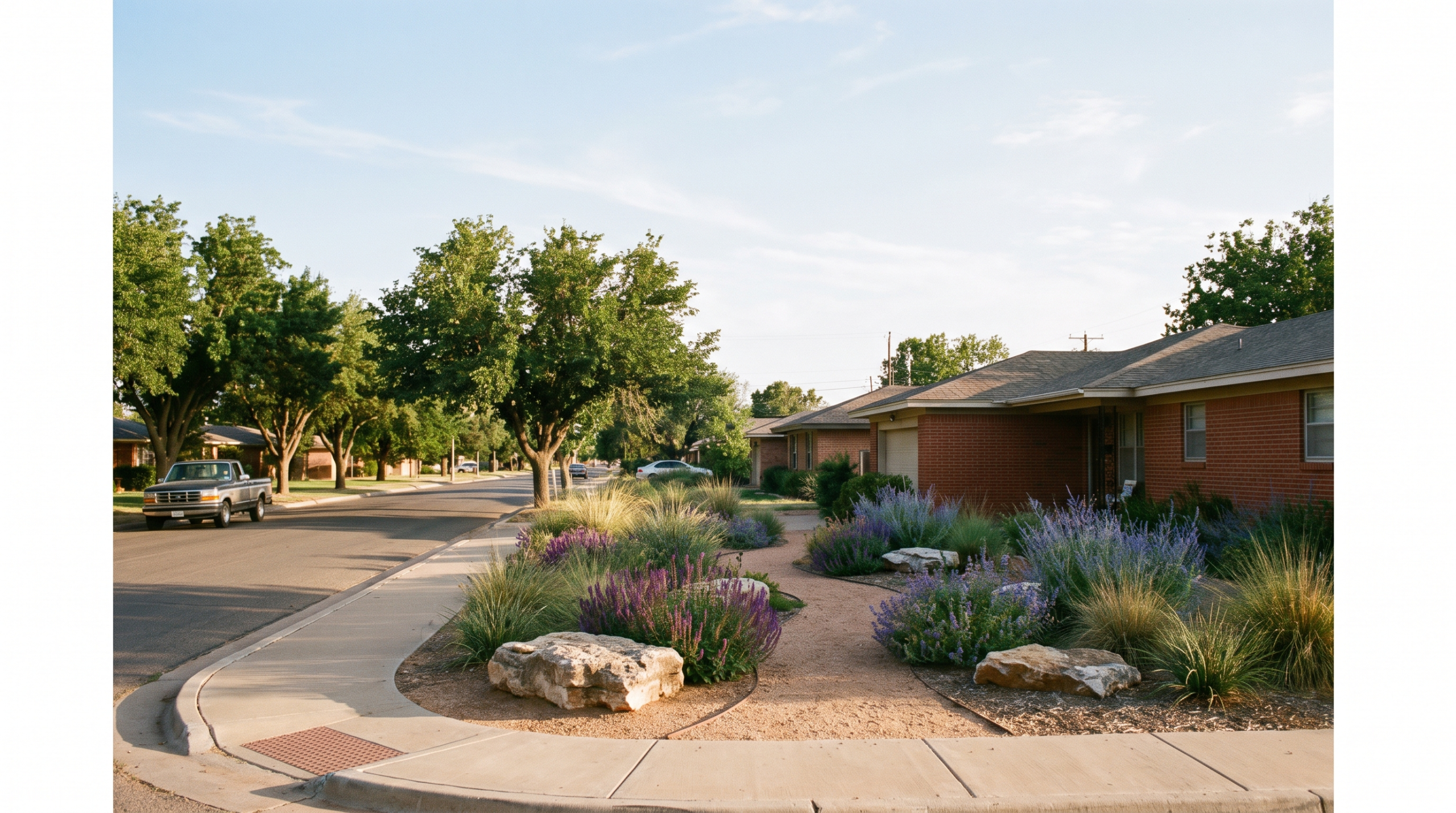
Installed artificial turf in Lubbock generally runs $8–$15 per square foot, depending on pile height, pad, base depth, and how much cutting and seaming an odd-shaped yard takes. A designed xeriscape with decomposed granite or gravel, a drip line, edging, and native plantings usually lands at $3–$9 per square foot, and you can phase it one bed at a time instead of writing a single check.
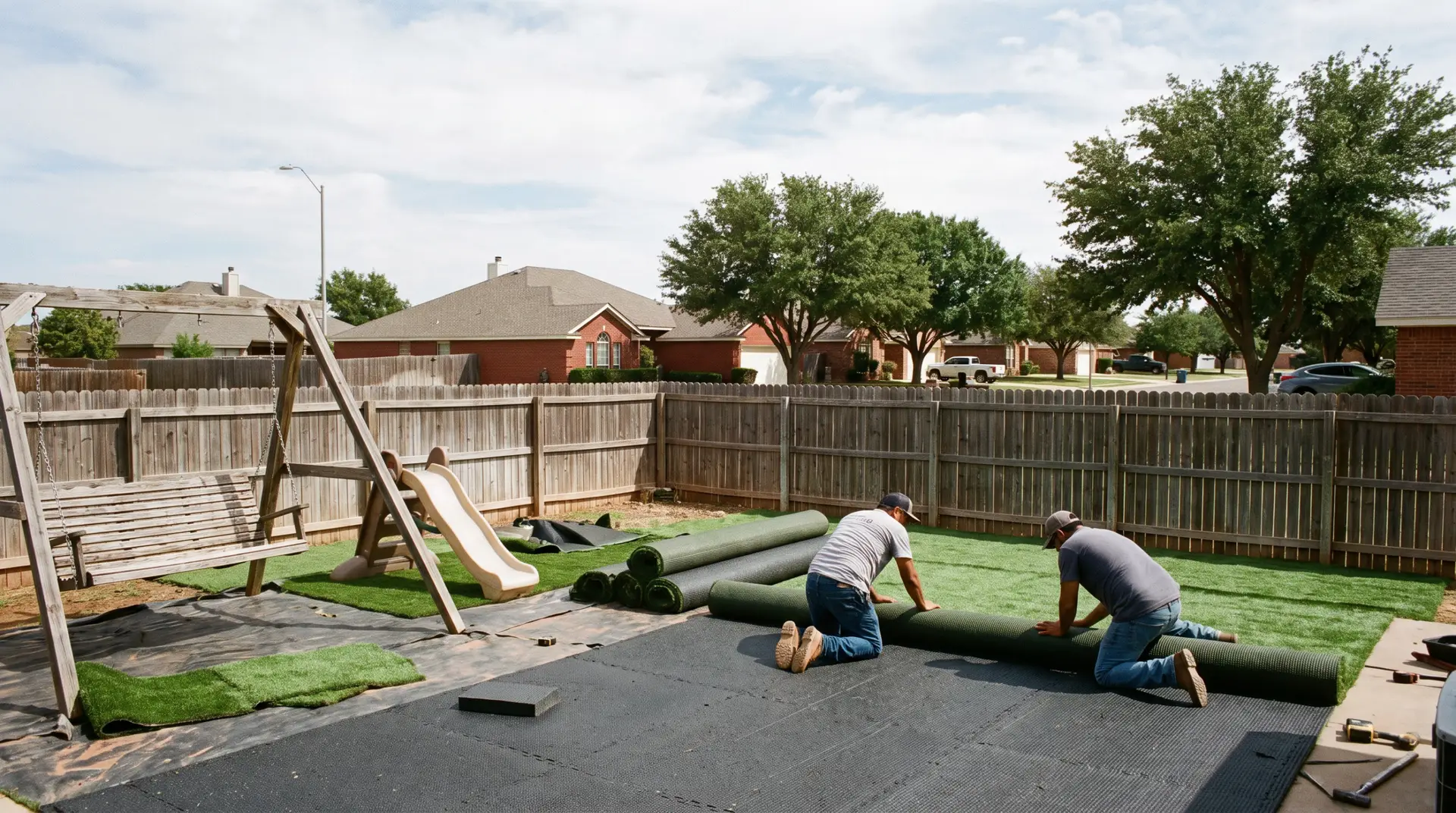
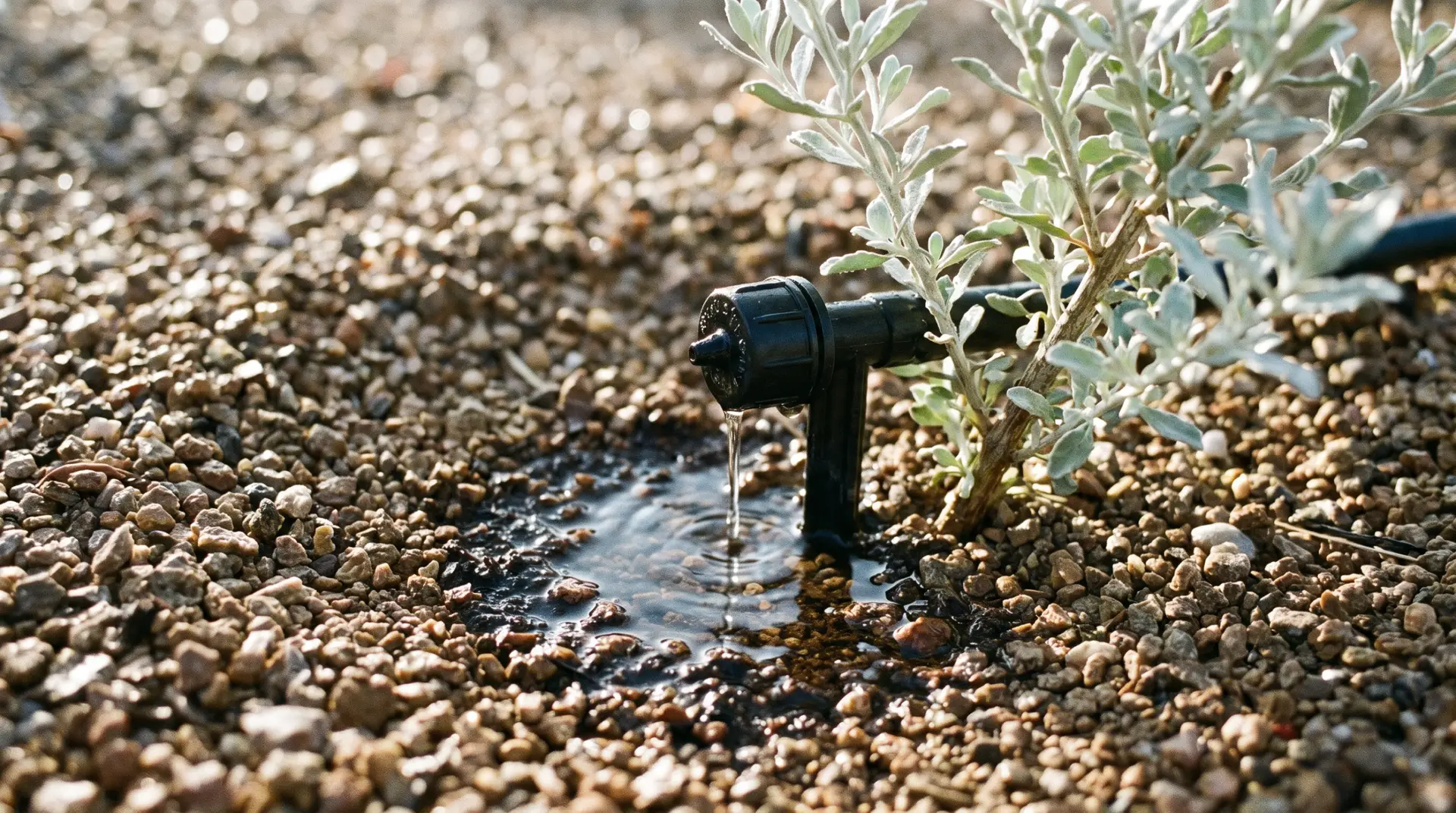
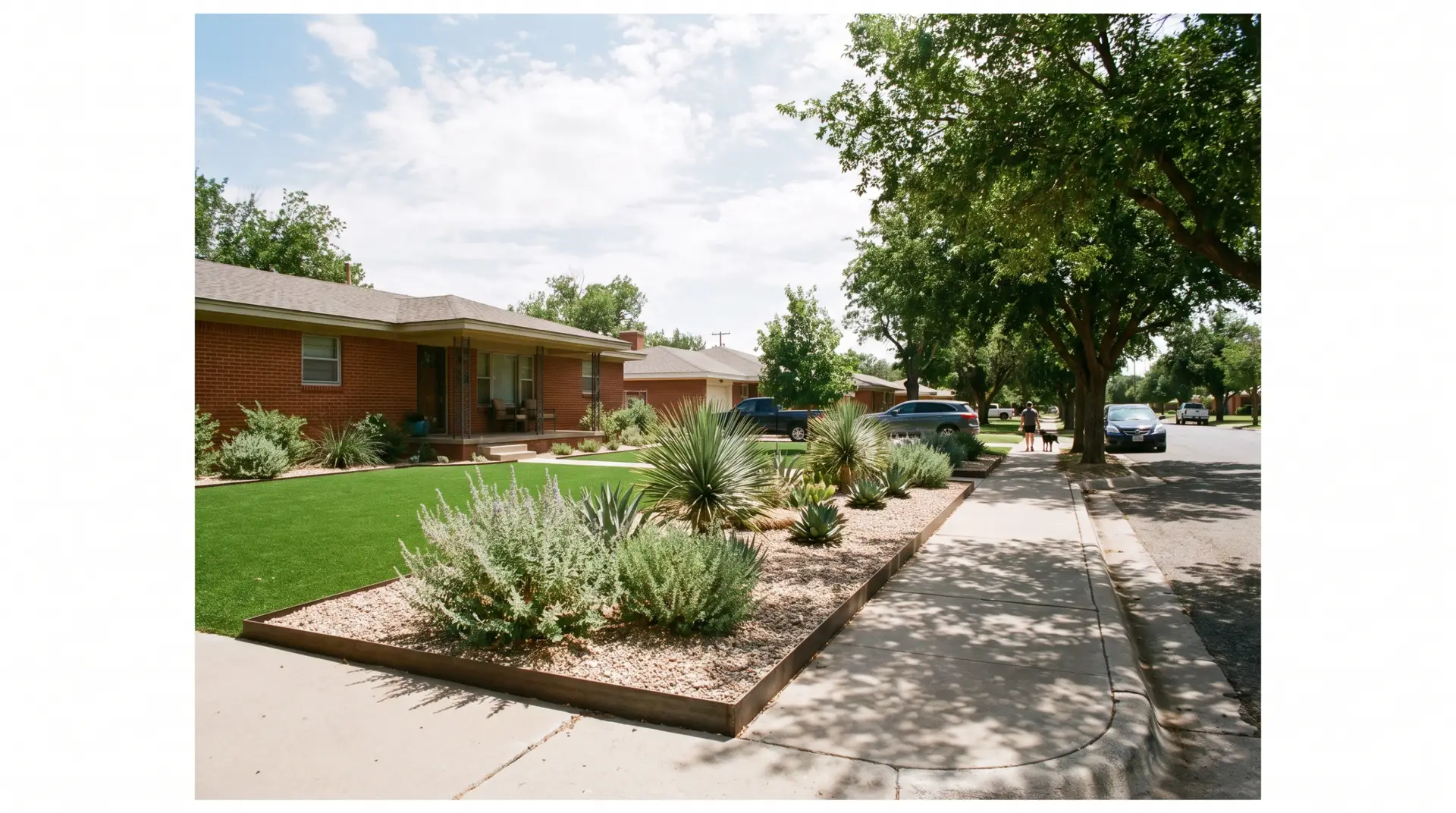
On water, turf is effectively zero irrigation once it is down, minus the occasional hose rinse. An established xeriscape usually cuts outdoor water use by roughly half to three quarters against a fescue or bluegrass lawn, though it needs steady water through its first two growing seasons while roots go down. Turf wins on water use and on mowing. Xeriscape wins on up-front cost, surface temperature, and habitat. Most yards we build now use both: turf where the kids and the dog actually play, plants and rock everywhere else.
The short version of artificial turf vs xeriscaping: turf costs more to install, around $8–$15 per square foot, then uses almost no water. Xeriscape runs closer to $3–$9 per square foot, cuts irrigation sharply once established, stays cooler underfoot, and feeds pollinators.
Six Places the Two Options Really Split
Most comparisons of artificial turf vs xeriscaping turn into a sales pitch for whichever one the contractor installs. That is not much help when you are standing in your own front yard in Wolfforth trying to decide. The six points below are where the two approaches genuinely diverge, and they are the ones that change the answer depending on your house, your budget, and who uses the yard.
Read them as a scorecard rather than a verdict. A family with two Labradors and a St. Augustine lawn that dies in traffic patterns is going to weight these differently than a retired couple in Tech Terrace who wants quail and hummingbirds and a lower bill.
- Up-front cost: Xeriscape is cheaper to start and easy to phase. Turf is a single larger number because you are paying for excavation, several inches of compacted base, the pad, the turf itself, and the infill. A 600 square foot front yard is a meaningful difference between the two on day one.
- Water use: Turf drops irrigation to essentially nothing. A xeriscape drops it a long way but not to zero, and it needs real water for two seasons to get established. If your goal is the lowest possible summer bill, turf gets there faster.
- Surface heat: This is where turf gives ground. Synthetic fiber under full West Texas sun in August gets far hotter than shaded planting beds or a gravel bed with shrubs over it. Cooling infill and shade help, but bare feet will still notice at 3 p.m.
- Maintenance: Turf needs brushing, a leaf blower after a dust event, and infill topped up every few years. Xeriscape needs weeding, seasonal cutbacks, and drip emitters checked. Neither is zero. Turf upkeep is more predictable; xeriscape upkeep is more seasonal.
- Kids, dogs, and hard use: Turf takes abuse that no plant survives. Dog runs, side yards, play sets, and the strip along a fence where a border collie patrols all stay green on turf and turn to bare caliche dust under anything living.
- Pollinators and native plants: Turf is a surface, not habitat. Blackfoot daisy, salvia greggii, autumn sage, little bluestem, and yucca pull in bees, butterflies, and birds, and they hold soil in a spring wind better than anything else on this list.
One caution before you commit either way. A xeriscape done badly, meaning a bare gravel field with three struggling shrubs and no drip, is worse than the lawn it replaced: hotter, uglier, and a magnet for weeds. And turf laid over poorly compacted caliche will ripple and dish inside two years. The install quality matters more than the category you pick. Check your HOA rules in newer Frenship and southwest Lubbock additions before you order anything, because a few of them still have front-yard language written for St. Augustine.
What Each One Does to a Lubbock Water Bill
Lubbock sits in a semi-arid belt with roughly 19 inches of yearly rain in a normal year, and normal years are not the average experience. Rain arrives in a handful of storms, not in a steady drip, and most of what falls on a hot afternoon evaporates or runs off before it soaks past the root zone. That is the backdrop for every irrigation decision made on the South Plains.
Wind is the part people underestimate. A 30 mph spring afternoon pulls moisture out of soil and off sprinkler spray before it hits the grass. Water a fescue lawn at 2 p.m. in April and a real share of it never reaches the ground. That is why the city pushes early morning watering windows and why watering schedules tighten during dry stretches. Anyone who has been here through a drought cycle has seen restrictions come and go, and they arrive exactly when your lawn needs the most.
It also helps to know what you are actually paying for. Municipal water here is billed on a tiered structure, so the more you use in a month, the more each additional gallon costs, and sewer charges on many accounts are set from winter use. That means heavy summer irrigation gets penalized twice over: once by the volume itself and again by pushing you into a higher tier. Rates and tier breaks change, so pull your own statement and look at where your July usage lands rather than trusting a number off the internet. Two neighbors on the same street can be in different tiers purely because one still runs a sprinkler zone across the parkway strip.
For a lot of Lubbock houses, summer irrigation is the single biggest swing on the utility bill between February and August. Take the sprinkler load off a front yard and the bill flattens out year round. Turf makes that change on the day it goes down. A xeriscape gets there in stage two, after the first couple of seasons, and then holds a lower baseline as long as the drip system stays in good order. Either way, the money you save is real and it repeats every summer.
Artificial Turf vs Xeriscaping Under West Texas Conditions
Artificial turf vs xeriscaping plays out differently in Lubbock than it does in Austin or Phoenix. We have caliche under a shallow layer of expansive clay, wind that sandblasts everything from March through June, summer sun that is brutal at 3,200 feet of elevation, and a freeze-thaw cycle that can swing 40 degrees in a day. Each of those hits one option harder than the other.
Summer Surface Heat
Synthetic grass absorbs solar energy and has no way to shed it. There is no transpiration, no evaporative cooling, nothing but dark backing and plastic fiber holding heat. On a 100 degree Lubbock afternoon, a turf surface in full sun is hot enough that dogs will avoid it and kids will hop across it. Lighter fiber colors, a cooling infill, and a quick hose-down all knock the peak down for a while. Planted beds do better on their own because leaves shade the ground and living plants move water into the air. If your yard is a west-facing front with no tree, that difference is worth thinking about before you sign.
Wind, Blowing Dust, and Caliche
Spring here means 60 mph gusts and dust in every seam of the house. On turf, that dust settles into the fiber and infill, so it needs a blower every few weeks in season and a deep rinse once or twice a year. On a xeriscape, wind is harder on young plants, and loose pea gravel will migrate out of beds if the edging is cheap. Both fixes are known. Turf needs a properly compacted base so the surface drains instead of holding silt. Xeriscape needs steel or masonry edging, larger stone in exposed areas, and plants chosen because they take wind, not because they looked good at the nursery.
Hail, Freeze-Thaw, and the Long Haul
Hail season runs March through June and mostly leaves both options alone. Turf shrugs off hail entirely. Native shrubs get shredded in a bad storm and come back the next season, which is one quiet advantage of planting things that evolved here. Freeze-thaw is the longer test. Expansive clay swells wet and shrinks dry, and that movement telegraphs through a rigid base. Turf laid on a shallow or poorly compacted base develops low spots and wrinkles after a couple of winters. A xeriscape absorbs the same movement without anyone noticing, because gravel and mulch simply settle back into place.
Ten-Year Cost, Not Install-Day Cost
Install price is the number everyone compares, and it is the least useful one. Run both options out ten years and the picture changes. Quality turf on a correct base lasts 15 to 20 years here with brushing and periodic infill top-ups, so a 600 square foot yard at the middle of the range is a one-time expense plus modest upkeep. Over that same decade, a xeriscape costs less to install, then asks for plant replacements, mulch refreshes every couple of years, drip repairs after freezes, and a few hours of weeding each spring.
The water side pulls the other direction. Turf zeroes out irrigation immediately, while a xeriscape keeps a smaller but real water line on the bill. Add mowing to the comparison and the gap narrows further, since a lawn service or your own Saturday morning has a value whether or not you write a check for it. The EPA publishes a plain-language set of outdoor water efficiency tips that is worth reading before you plan either project, particularly the parts on plant selection and irrigation scheduling.
Our honest read after a lot of these jobs: over ten years the two land close enough that cost should not be the deciding factor. Decide on use. If the space is play space, put turf on it. If it is a space you look at rather than walk on, plant it. For real numbers on the turf side, our Lubbock artificial turf cost guide breaks the price down by component.
Final Word: Build the Yard You Will Actually Use
The best answer to artificial turf vs xeriscaping in most Lubbock yards is not one or the other. It is a line drawn between them. Turf goes where feet and paws go, which is usually the back yard, the side gate run, and any strip that has never held grass. Xeriscape goes in the front beds, along the drive, under the mesquite or the live oak, and anywhere you are mostly looking rather than walking.
Start by walking your property and marking the traffic patterns. The bare dirt tells you where turf earns its cost. Everything still green tells you where plants can do the job cheaper. Then check drainage, because neither surface fixes a yard that sheds water toward the foundation, and on our clay that is a problem worth solving first.
One more piece of advice from doing this for a living: build the plant beds before the first hot stretch, not during it. Fall and early spring plantings go in while soil temperatures are moderate, roots establish before June, and the first-summer water bill stays reasonable. Turf can go down any month of the year, so if you are phasing a project, put the plants in during the good window and schedule the turf whenever the crew and the budget line up. Doing it backwards means babysitting new shrubs through a 105 degree July.
If you want a second opinion on the tradeoffs, our guides on how hot artificial turf gets in a Lubbock summer and keeping turf looking new cover the two questions people ask after the fact. When you are ready to price the turf portion, our turf installation team will measure the yard and lay out what each section would take, whether that ends up being all turf, all plants, or the mix most families settle on.
Frequently Asked Questions About Artificial Turf vs Xeriscaping
Water, cost, heat and upkeep questions Lubbock homeowners ask before they commit
They finish closer than most people expect. Xeriscape costs far less to install, then spends money in small amounts on plant replacements, mulch, drip repairs, and weeding time. Turf is a large one-time cost that then runs cheap, with brushing, occasional infill, and no irrigation. Over a decade in Lubbock the two usually land within a few hundred dollars of each other on a typical front yard. Choose based on how the space gets used, not on the ten-year math.
It depends on what you are replacing. Swap out a fescue or bluegrass lawn that you were irrigating heavily through July and August and the savings are substantial, though payback still takes years rather than a season. Swap out a buffalo grass lawn you rarely watered and the water savings barely move. Pull your last three summer bills, look at the jump from your winter baseline, and you will have a fair estimate of what irrigation is actually costing you.
Yes, and it is what we install most often. A common layout puts turf in the back yard where the dog and the kids wear a lawn out, then uses gravel, native perennials, and a drip line across the front and along the drive. Steel edging keeps the two from bleeding into each other. Plan the transition line before anything is ordered, since the base work for turf and the trenching for drip are easier to do in one mobilization than in two.
Only if it is planted badly. Deciduous natives do go dormant and get cut back, so a bed built entirely from salvia and grasses looks bare in January. The fix is structure: yucca, sotol, agave, Texas sage, rosemary, and dwarf conifers keep shape and color through the cold, with seasonal perennials layered in around them. Mix roughly a third evergreen structure into any bed and the yard reads finished twelve months a year rather than four.
Most do, but read your own covenants before you buy materials. Texas law protects a homeowner’s ability to use drought-tolerant landscaping, and many local associations have updated their language in recent years. Some older documents still specify a live turf lawn in front yards, and a few set rules on gravel color or the percentage of a front yard that can be hard surface. A quick email to your board before the project starts saves an expensive argument afterward.