Christmas light timers are the cheapest part of a holiday display and the part that decides whether you enjoy it or fight it all December. A good schedule means the lights come on while the neighborhood is still driving home from work and shut off on their own at bedtime, without anybody standing in a 25 degree wind reaching behind a shrub for a plug.
The choices have gotten better and cheaper in the last few years. A plain mechanical dial still works fine. A dusk-to-dawn photocell handles the on-time by itself. An outdoor-rated smart plug lets you run the whole front of the house from your phone while you are at a Texas Tech game. What matters most out here is not the app. It is whether the thing survives blowing dust, single-digit mornings, and a 60 mph gust in February.
On this page, a complete guide to christmas light timers in Lubbock, TX:
- Quick Answer: Which Christmas Light Timers Work Best in Lubbock?
- Six Kinds of Christmas Light Timers and Where Each One Fits
- Amps, Watts, and How Many Strands One Timer Can Carry
- What West Texas Weather Does to Christmas Light Timers
- Setting a Schedule That Fits a Lubbock December
- Final Word: Spend Twelve Dollars, Save Twelve Trips Outside
- Frequently Asked Questions About Christmas Light Timers
Quick Answer: Which Christmas Light Timers Work Best in Lubbock?
For most Lubbock homes, an outdoor-rated Wi-Fi smart plug in the $15–$35 range is the best value, as long as the label says wet location and the operating range covers our winter lows. A basic mechanical or digital outdoor timer at $10–$25 does the same job without an app and without depending on your router reaching the far corner of the yard.
Whichever you use, respect the load. A standard 15-amp circuit supports 1,800 watts, and continuous holiday loads should stay near 1,440 watts, or 80 percent. That is generous with LEDs and tight with incandescents. Set the schedule to run roughly 5 p.m. to 11 p.m., which covers the evening drive-by traffic and cuts your run time nearly in half against leaving lights on all night. Christmas light timers pay for themselves in the first season on electricity alone.
Outdoor-rated smart plugs are the best all-around choice for christmas light timers in Lubbock, with simple mechanical timers a solid backup where Wi-Fi is weak. Keep each circuit under about 1,440 watts, run 5 p.m. to 11 p.m., and use in-use covers on every outdoor connection.
Six Kinds of Christmas Light Timers and Where Each One Fits
Every option below controls the same thing, which is when power reaches the strands. They differ in how much they cost, how much they can carry, how they handle cold, and how much fiddling they need once the weather turns. We install all of them depending on the house.
The rule we go by: the more of the display that runs on one control point, the more you should spend on that control point. A single wreath can live on a $12 dial. Three roof lines, two trees, and a wrapped porch column deserve something you can actually rely on in January.
- Mechanical dial timer: A rotating dial with pins for on and off, usually $10–$18, rated for outdoor use in a weatherproof housing. No battery, no app, nothing to lose settings in a power blip. Downsides are a fixed clock that drifts a few minutes and no way to adjust it from inside the house.
- Digital outdoor timer: Same idea with a small screen, multiple on and off events per day, and a countdown mode. Better precision than a dial and often two independent outlets. The button battery does go flat, and a cold morning is when it forgets everything, so replace it each season.
- Photocell or dusk-to-dawn plug: A light sensor turns the display on at dusk with no clock at all, typically with a 4, 6, or 8 hour shutoff. Very hard to beat for simplicity. Keep the sensor away from a porch fixture or a street light or it will fight itself all night.
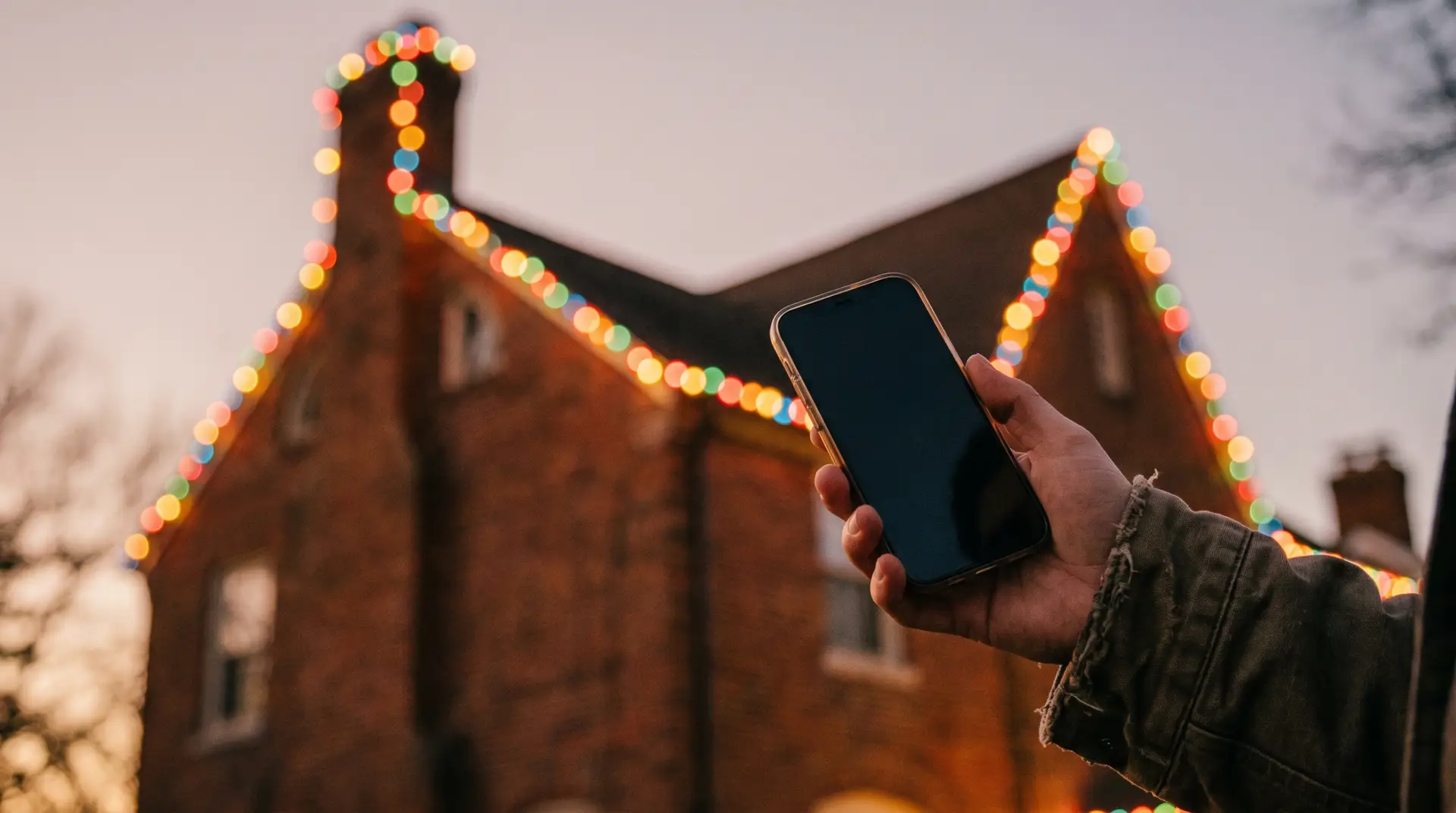
- Wi-Fi smart plug, outdoor rated: The one we recommend most, usually $15–$35. Schedules, sunset-based triggers, voice control, and remote shutoff when the wind picks up. Needs a solid 2.4 GHz signal at the outlet and a real wet-location rating, not an indoor plug in a bread bag.
- Hub-based or permanent lighting controller: Zigbee, Z-Wave, or the app that ships with a permanent roofline system. This is where you get scenes, zones, color changes, and a display that runs different patterns for Christmas, game day, and the Fourth of July from the same track.
- RF remote outlet switch: A weatherproof receiver at the outlet paired with a handheld remote or wall button inside. No clock and no network, just on and off from the couch, which suits an older homeowner who wants control without an app. Pair it with a photocell if you also want the display handling its own on-time, and keep a spare remote battery in a drawer.
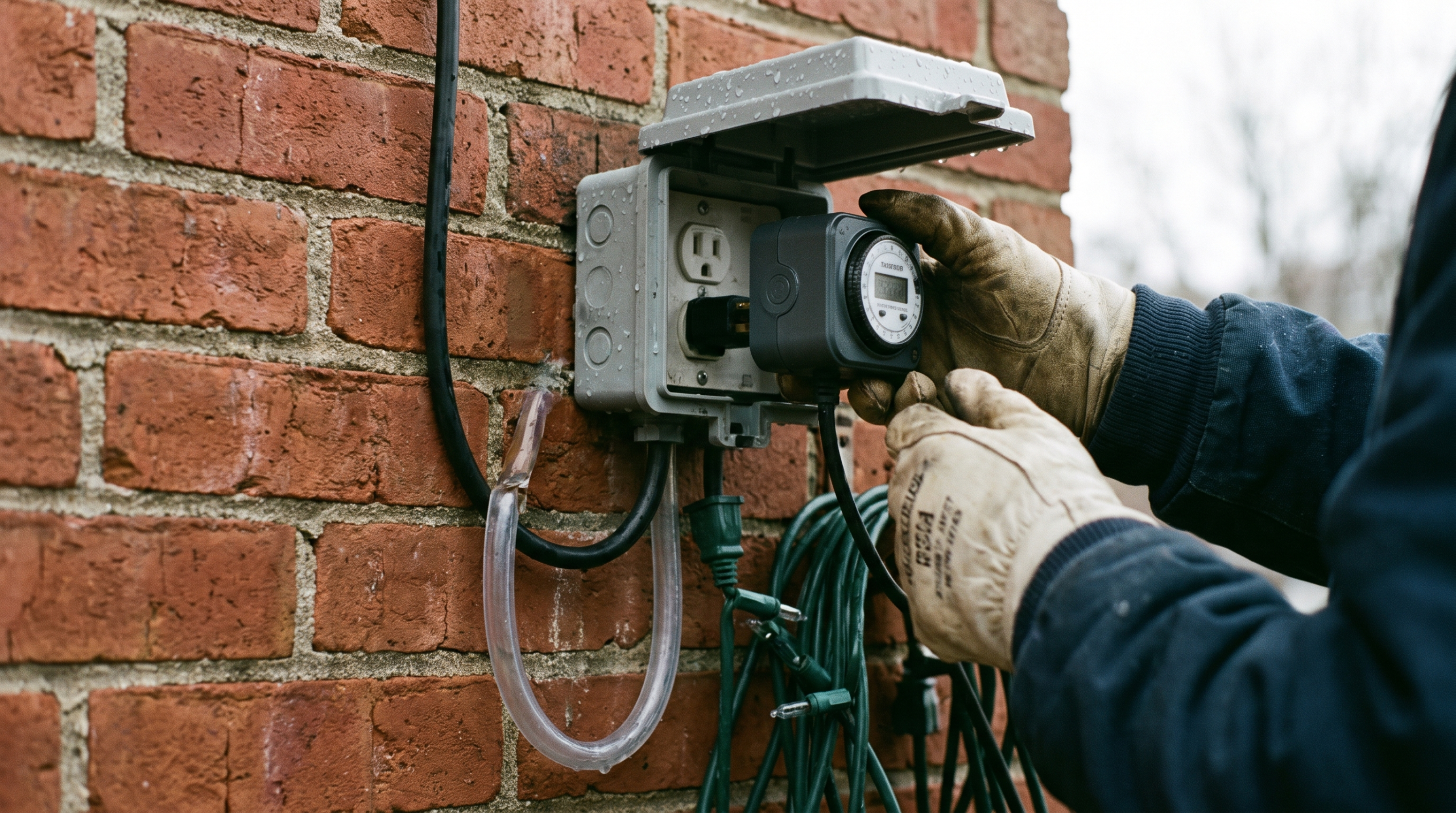
Whatever you pick, the connection points matter as much as the timer. Every outdoor receptacle feeding a display should be GFCI protected and covered by an in-use bubble cover that closes over the cord. Slip a drip loop into each connection so water runs off before it reaches the plug. Wrap the joint between two extension cords with electrical tape or a cord-lock sleeve, because a Lubbock wind will pull an untaped connection apart by the second week of December.
Cord gauge counts as well. A 16-gauge cord is fine for a short run of LEDs and undersized for a long run of incandescents, where 14 or 12 gauge is the right call. Match the cord to the load and the distance, use one rated for outdoor use, and never chain more than three cords end to end.
Amps, Watts, and How Many Strands One Timer Can Carry
This is the part homeowners skip and then wonder why a breaker trips every night at 5:01. Start with the circuit. A 15-amp household circuit carries 1,800 watts at 120 volts, and anything running for hours should be held to about 80 percent of that, or 1,440 watts. A 20-amp circuit gives you 2,400 watts, with 1,920 as the working figure.
Now the loads. Incandescent C9 bulbs draw roughly 7 watts each, so a 25-bulb strand is about 175 watts and eight strands will max a circuit by themselves. C7 bulbs sit near 5 watts. Old-style mini strands run about 40 watts per 100 lights. LED versions of all three are dramatically lighter: a 25-count LED C9 strand lands somewhere near 5 to 10 watts total, which is why homeowners who convert to LED can run an entire roof line and two trees on one circuit without thinking about it.
Inflatables deserve their own note. The fan inside runs continuously and draws more than people assume, and a starting motor pulls a surge above its running load. Three or four inflatables on the same timer as a roof line is a common way to find the limit of a cheap smart plug. Give them their own control and their own circuit if you can, which also lets you shut them down at a decent hour without going dark out front.
The timer itself has a rating too, and it is usually lower than the circuit. Many outdoor smart plugs are rated 10 amps, some 15, and a few list a lower figure for inductive loads like inflatables with fans. Read the label on the back, add up the wattage of everything downstream, and stay under it. If the numbers get close, split the display across two circuits with two timers rather than daisy-chaining more cords into one outlet. Christmas light timers do not fail dramatically when overloaded, they just get warm, and warm plastic in an outdoor box is how problems start.
What West Texas Weather Does to Christmas Light Timers
A timer that runs fine on a covered porch in Houston has a harder life on a Lubbock driveway. We get single-digit mornings, blowing dust that gets into everything, sun that chalks plastic, and enough wind to move anything that is not screwed down. Three failure patterns show up every year, and all three are avoidable for a few dollars.
Cold Mornings and Battery Backup
Most outdoor smart plugs list an operating range that bottoms out around minus 4 degrees, which sounds like plenty until a January cold snap parks us in the single digits with wind on top. At the low end, LCD screens go sluggish, button batteries in digital timers lose voltage, and cheap relays get sticky. Two habits fix nearly all of it. Put a fresh battery in any digital timer before you hang the first strand, and mount the control where it gets a little shelter, such as under an eave or behind a column, rather than sitting in the open on the north side of the house.
Blowing Dust and Water Intrusion
Our dust is fine enough to get past gaskets, and it collects on contacts inside cheap housings. Add an occasional wet snow or a sideways rain and you have the mix that corrodes a plug in one season. Use in-use covers rated for wet locations, point the openings down, and keep every connection off the ground rather than lying in the mulch where sprinkler overspray finds it. When you pull the display in January, wipe each timer down and store it inside instead of leaving it in the garage where it collects dust for eleven months.
Wind, Router Range, and Power Blips
Sixty mph gusts do two things to a smart setup. They physically separate cord connections, so the timer is fine and the lights are dark, and they knock out power just long enough to reboot a router. A good smart plug remembers its schedule through an outage and resumes on its own. A cheap one comes back on and stays on. Test that before December by flipping the breaker for ten seconds. Also check the signal where the plug actually lives, because a router at the back of the house often does not reach the front curb.
Setting a Schedule That Fits a Lubbock December
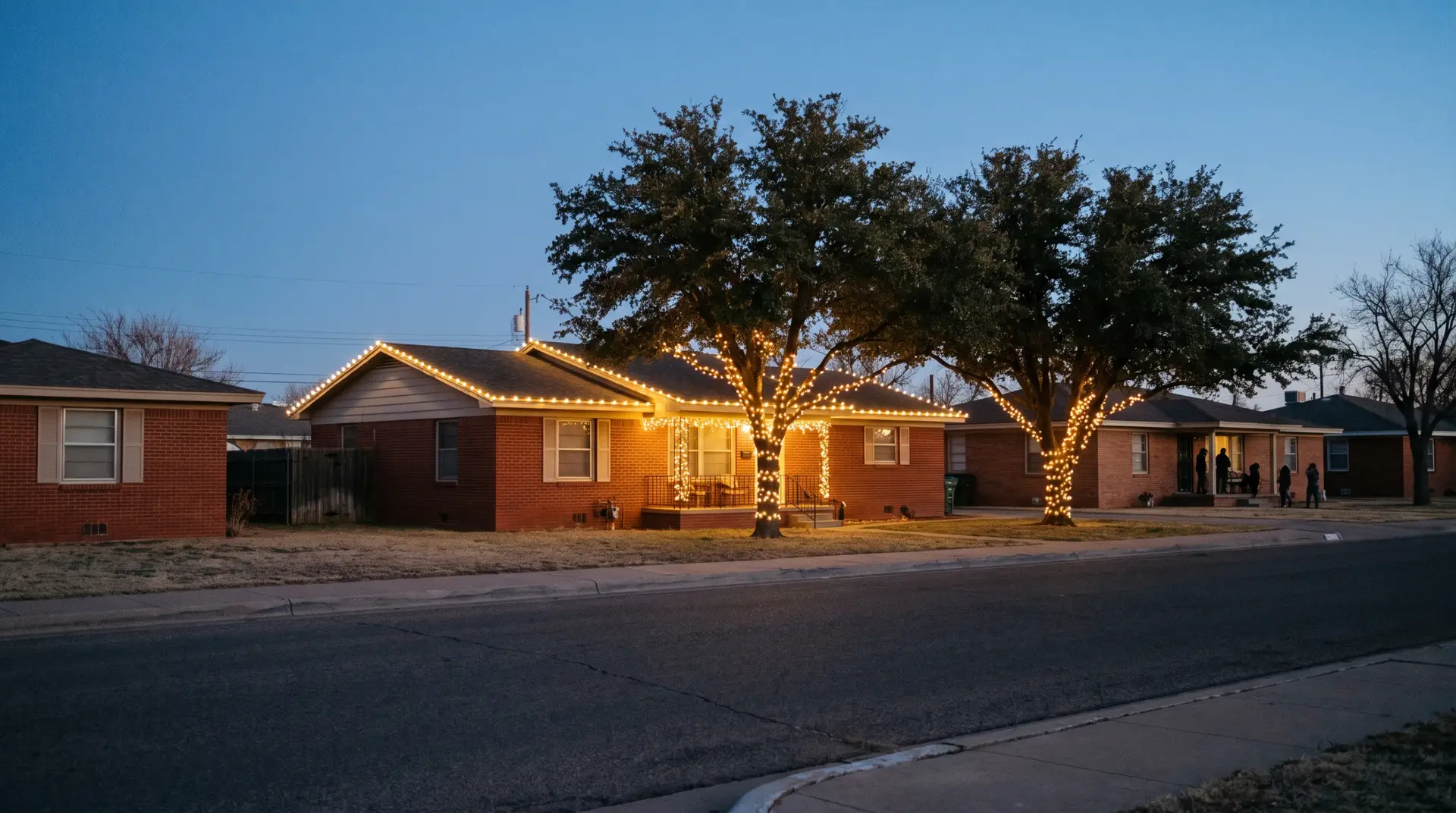
Sunset in Lubbock lands close to 5:40 p.m. in late December, and the front-yard audience shows up between about 6 and 9 p.m. on weeknights. A 5 p.m. to 11 p.m. window covers all of it. If your timer supports sunset-based triggers, use them instead of a fixed clock, because sunset moves nearly half an hour between Thanksgiving and New Year’s and a fixed 5 p.m. start looks silly the week you set it up.
A few scheduling habits worth stealing. Add a short morning window, say 6 to 7:30 a.m., if your street has school traffic, since December mornings here are dark and the display gets a second audience for free. Set a separate later shutoff for Friday and Saturday. Turn everything off remotely during a wind advisory so a loose strand is not energized while it whips against gutters. And if you have children, put the inflatables on their own timer so they can deflate at a reasonable hour while the roof line stays lit.
Scenes are the part people underuse. If your controller supports them, build three: a full display for the evening window, a dimmer version for late night that leaves only the roof line lit, and an off state. On a permanent lighting system you can add scarlet and black for a Tech home game and a plain warm white for the rest of the year, which is how these systems stay useful in March. Save each scene once and you never think about it again.
Safety belongs in the schedule conversation too. The Electrical Safety Foundation International keeps a straightforward holiday electrical safety section covering cord ratings, GFCI use, and outdoor connections, and it takes about five minutes to read. Christmas light timers reduce risk on their own by cutting unattended run hours roughly in half, which is a real benefit on top of the lower bill.
Final Word: Spend Twelve Dollars, Save Twelve Trips Outside
Nobody puts up lights hoping to interact with them daily. Christmas light timers are what make the display feel finished. Pick outdoor-rated hardware, keep each control point under its wattage limit, protect the connections with in-use covers, and set a schedule that matches when people are actually driving by.
If you are running a large display, zone it. One control for the roof line, one for the yard and trees, one for anything inflatable. Zoning keeps you under load limits, makes troubleshooting simple when one section goes dark, and lets you shut down the noisy parts without turning off the house. Label each plug with a paint pen before you climb the ladder, and next year’s setup takes half the time.
Want the rest of the picture? Our guides on C9, C7 and mini bulb types and safe roofline installation cover what goes on the other end of the cord. If you would rather skip the ladder entirely, our Lubbock Christmas light installation crew handles the design, the hanging, the timer setup, and the takedown in January, and we book the good weekends early.
Frequently Asked Questions About Christmas Light Timers
Load limits, cold weather and smart plug questions from Lubbock homeowners
For most homes, yes, provided the plug is genuinely rated for wet locations and your Wi-Fi reaches the outlet. Smart plugs give you sunset-based scheduling that shifts with the calendar, remote shutoff during a wind event, and voice control. Mechanical timers win on simplicity and on outbuildings or far corners of a property where the signal is thin. Plenty of good displays run on both: smart plugs at the house, a dial timer on the back fence line.
Add the wattage, not the strand count. Keep a 15-amp circuit under about 1,440 watts of continuous load and stay under whatever the timer itself is rated for, which is often 10 amps. With LED strands drawing only a few watts each, you can typically run an entire roof line and several trees on one control. With incandescent C9 bulbs at roughly 7 watts apiece, eight strands will fill a circuit. Check the tag on the strand, since manufacturers list it.
A properly rated one will. Look for a wet-location rating and an operating range that goes below zero, then mount it under an eave or behind a column rather than out in the open. Replace the button battery in any digital timer each season, because cold is what exposes a weak one. Keep every connection off the ground and inside an in-use bubble cover. Bring the hardware indoors when the display comes down in January.
Five in the evening until eleven covers the traffic on a Lubbock street and keeps run time reasonable. Sunset here is near 5:40 p.m. in late December, so a sunset trigger with a fixed off-time is the tidiest setup. Weekends can run later. Some families add a short morning window before school. Anything past midnight is mostly lighting an empty street, and cutting those hours is the easiest way to shave the December electric bill.
They do, though the amount depends on what you are running. Cutting an all-night display to a six-hour evening window removes better than half the run hours, and that shows up directly on the bill. The savings are modest with LED strands and noticeable with incandescent C9 bulbs, which draw roughly ten times the power. The bigger return is that unattended hours drop, so cords and connections spend far less time energized with nobody home.