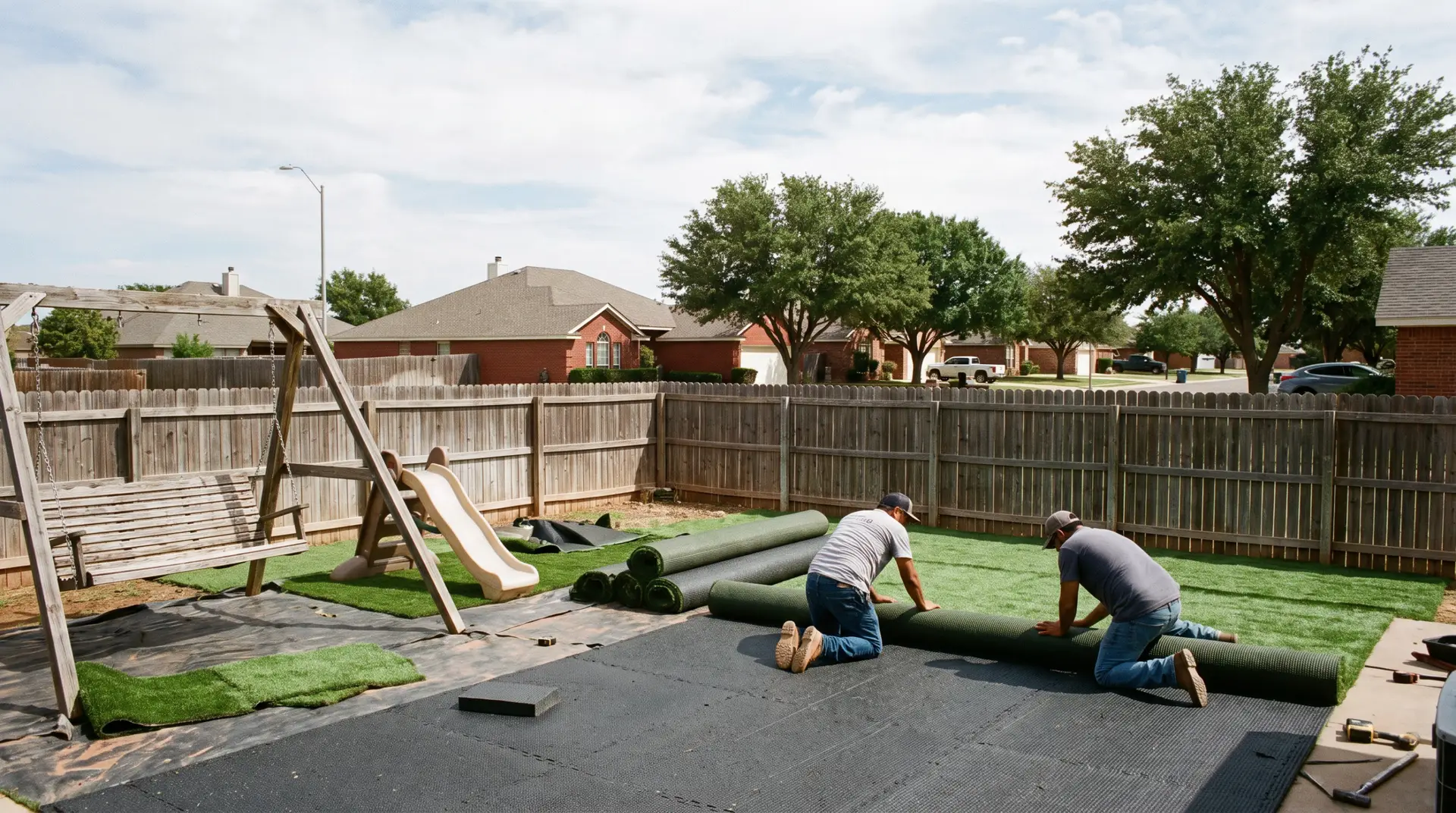
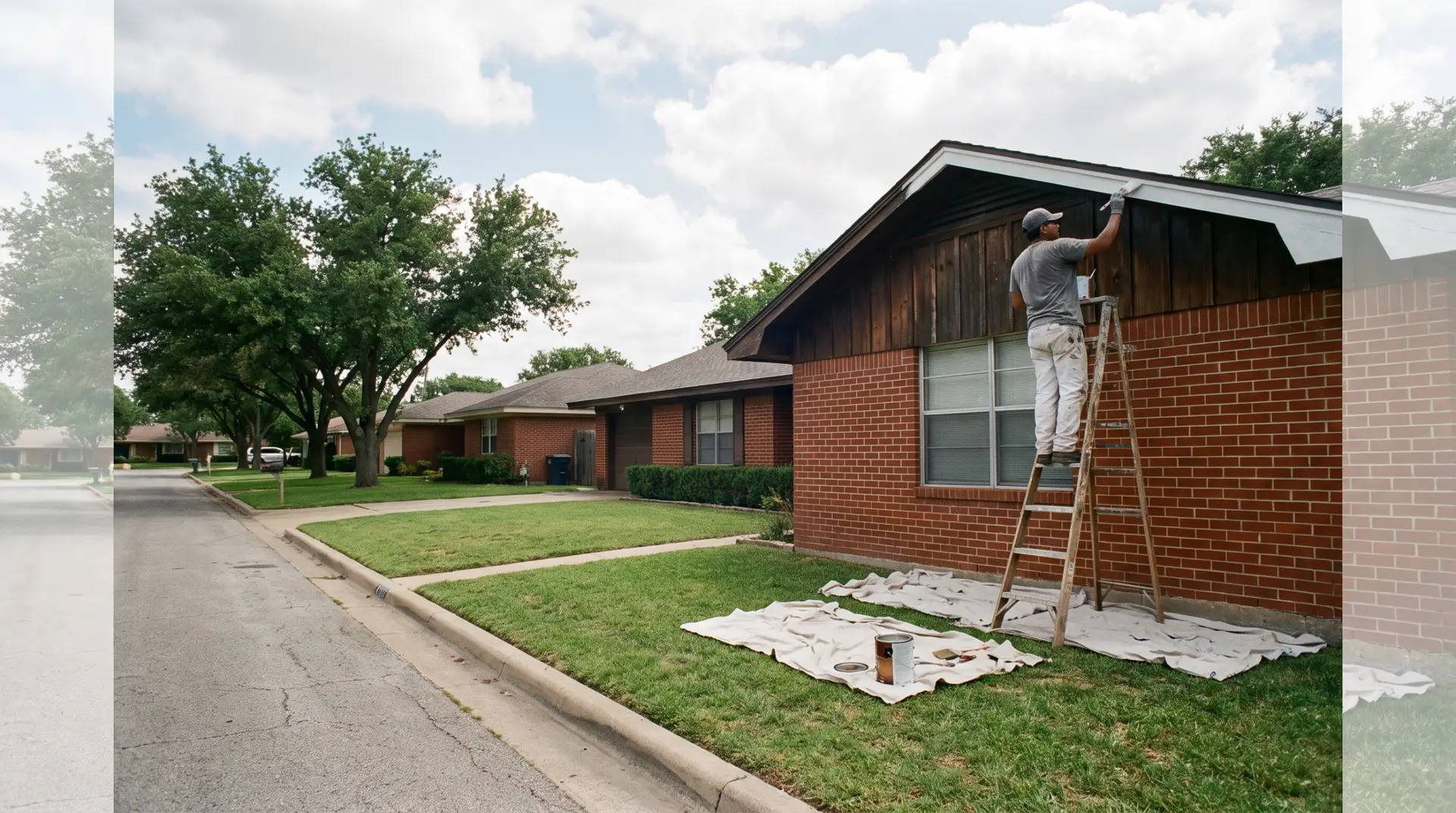
Permanent christmas lights are the tracks of small LED points you have started seeing tucked into rooflines around Lubbock, sitting quiet and off most of the year and lighting up in December without anybody dragging a ladder out. The industry calls them permanent or architectural lighting, and the pitch is simple: install once, control from your phone, never climb the roof again.
The pitch is mostly true. The parts nobody puts in the brochure are what the track looks like in daylight, what the wind and sun out here do to a system mounted on fascia, and the fact that you are drilling into your roof edge for good. This guide covers real cost ranges, how a permanent system compares to seasonal service, what our weather does to it, and the honest trade-offs before you commit.
On this page, a complete guide to permanent christmas lights in Lubbock, TX:
- Quick Answer: What Permanent Christmas Lights Cost
- What You Actually Get With a Track System
- Permanent Christmas Lights vs Seasonal Installation
- How West Texas Weather Treats Permanent Christmas Lights
- The Honest Downsides Nobody Mentions
- Final Word: Are Permanent Christmas Lights Worth It Here?
- Frequently Asked Questions About Permanent Christmas Lights
Quick Answer: What Permanent Christmas Lights Cost
For a typical single-story Lubbock home with 150 to 200 feet of roofline, a professionally installed permanent LED system generally runs $3,500–$7,000. Pricing is usually quoted per linear foot, commonly $25–$45 per foot installed, with the spread driven by product quality, pixel spacing, roof height, and how much of the house you want covered.
Two-story homes, steep pitches, wrapped porches, gables and detached garages push the total up. A larger home with 300 or more feet of covered roofline can reach $8,000–$14,000. Seasonal professional installation, by comparison, tends to run $500–$1,500 per year for a comparable house including takedown and storage.
Run the break-even and most homeowners land somewhere between five and eight seasons. That is the real number to weigh: if you plan to be in the house for a decade, permanent lighting usually wins on cost. If you might move in three years, it almost never does. Those numbers assume professional installation with a warranty behind it. Kits sold direct to homeowners run less, but you are then on the ladder, on the fascia and on your own when a section quits.
Budget $3,500–$7,000 for permanent lighting on an average Lubbock home, or $25–$45 per linear foot. Seasonal service runs $500–$1,500 a year, so the break-even is roughly five to eight seasons of ownership.
What You Actually Get With a Track System
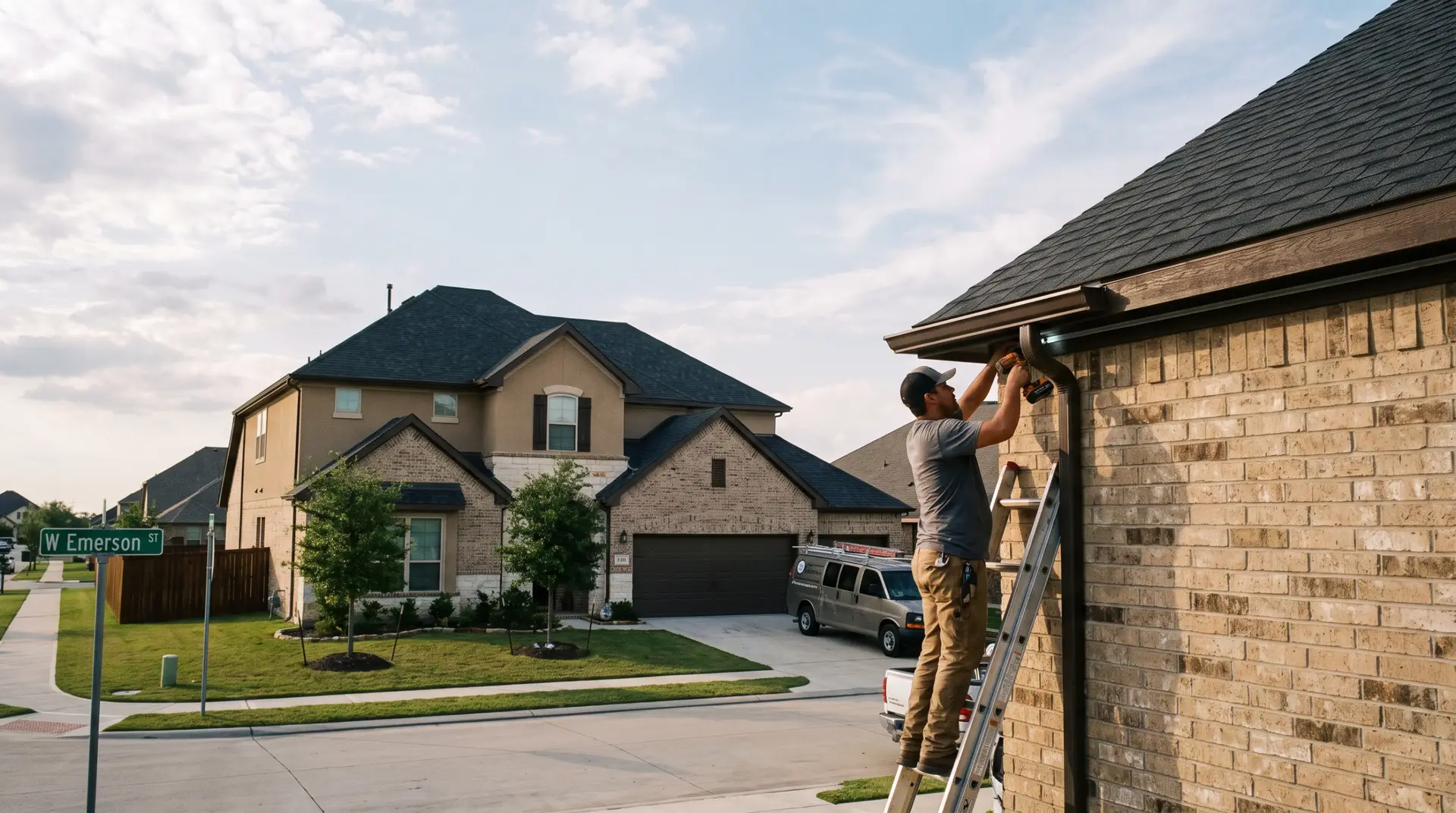
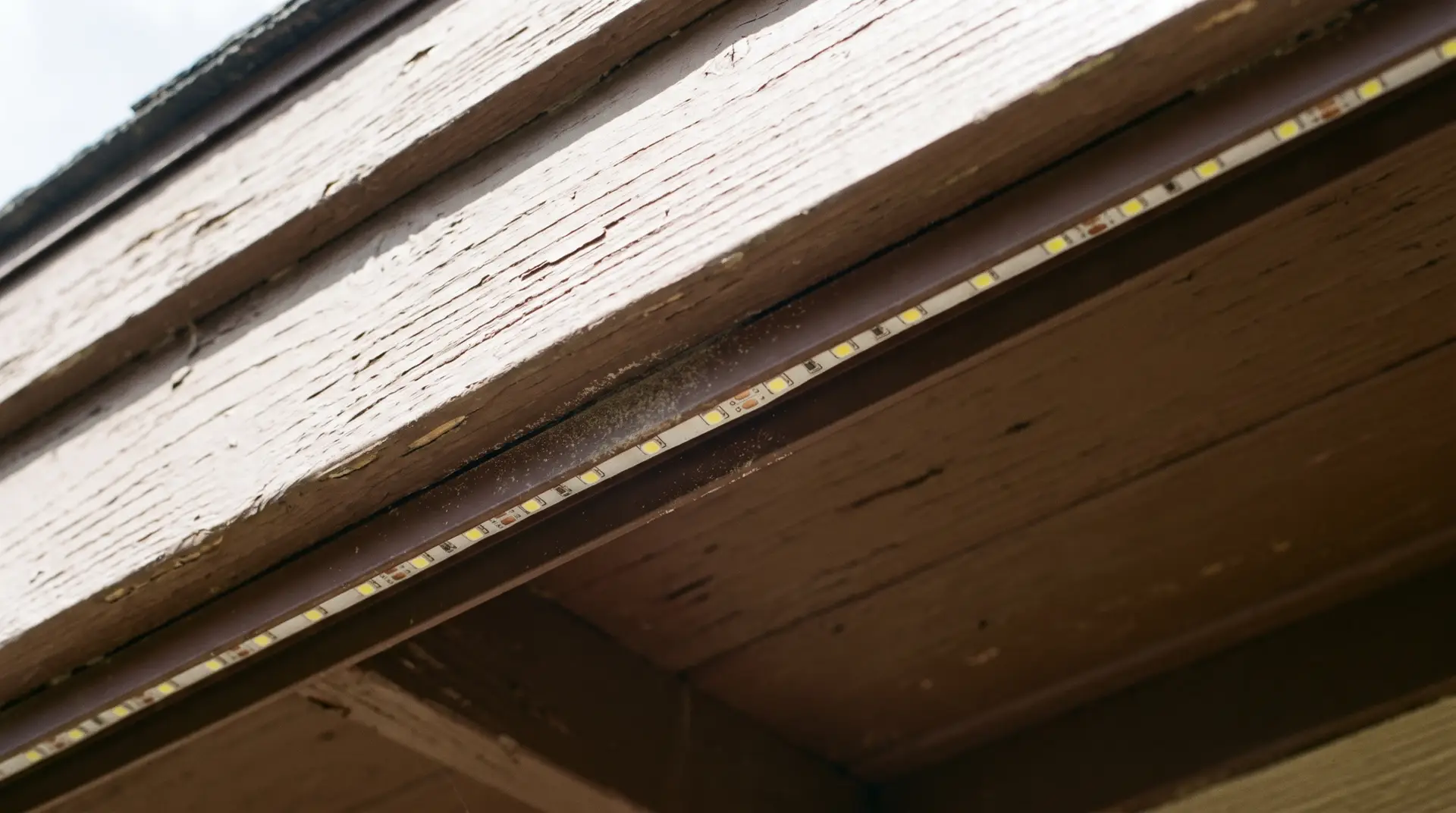
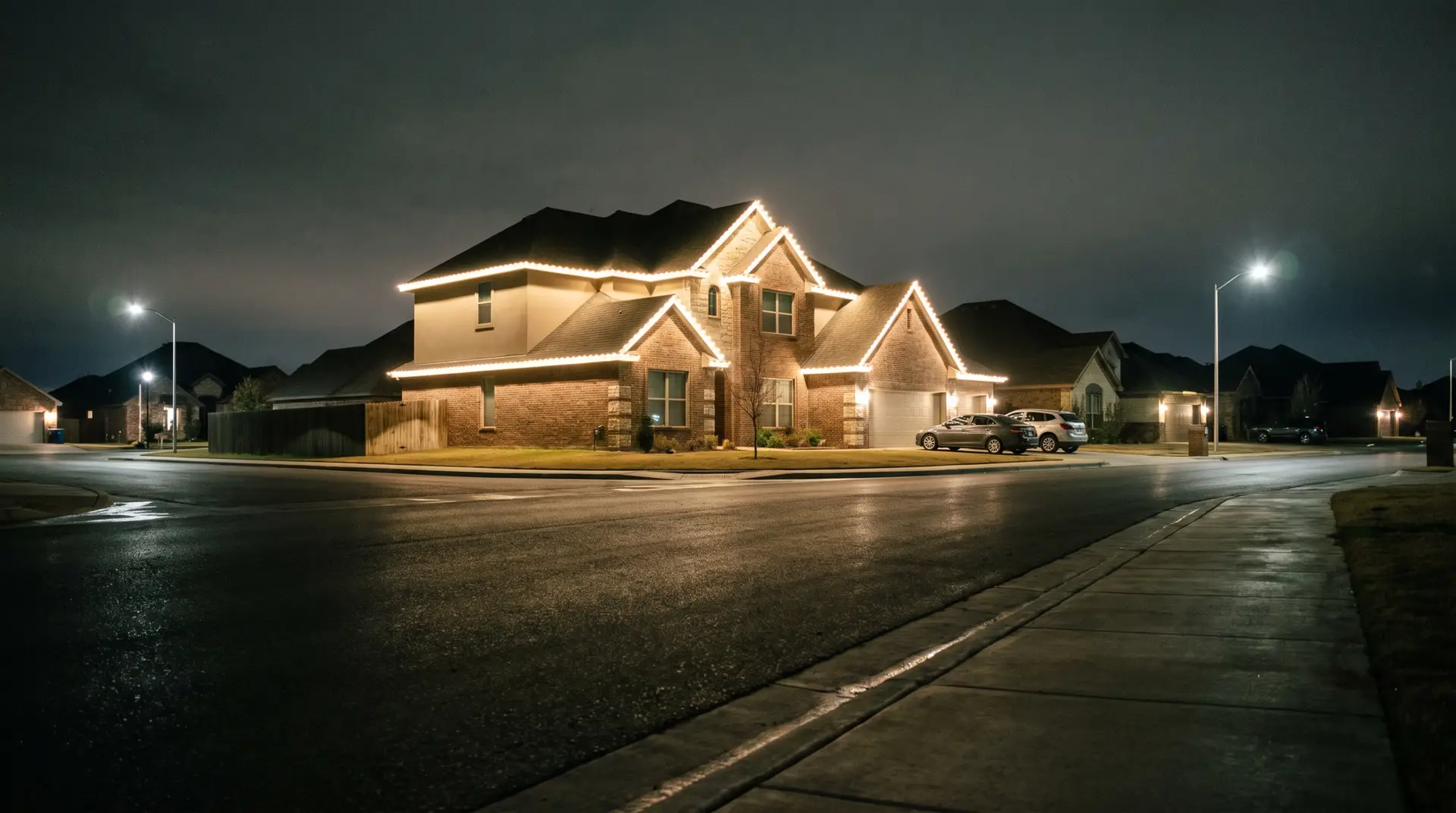
A permanent system is not a string of bulbs left up year round. It is a run of aluminum or polycarbonate channel fastened along the fascia or under the drip edge, with individually addressable RGB or RGBW LED points seated inside it, wired back to a low-voltage transformer and a controller. The channel is powder coated to match trim colors, so from the street it reads as a thin shadow line rather than a light strip.
Because each point is addressable, the system does far more than warm white in December. You can run a single warm tone that mimics traditional bulbs, a two-color chase, or nothing at all for eleven months, and the hardware looks the same either way. Here is what a good install includes.
- App and schedule control: color, brightness, zones, patterns and on-off times from your phone, with sunset-based scheduling so you are not resetting a timer every few weeks.
- Year-round holiday use: red, white and blue in July, orange for Halloween, pastels at Easter, red and black on game days, or a soft warm white as accent lighting any night of the year.
- Zoned coverage: gables, porch columns, garage line and second story can run different scenes, and you can light only the front elevation to keep cost down.
- Concealed channel and wiring: the track hides the diodes and the wire, holds them straight through wind, and gets fastened into fascia or under the drip edge rather than into shingles.
- Dedicated power and transformer: low-voltage runs back to a weather-rated transformer near an outdoor outlet, sized for the length of the run so the far end is not dimmer than the near end.
- Warranty on parts and labor: most manufacturers warrant the channel and diodes for several years, and your installer should carry a separate workmanship warranty on the mounting and wiring.
Worth asking before you sign: whether the quote includes the whole roofline or only the front, whether the controller is a proprietary app or an open standard, and what a single failed section costs to repair in year six. Those three answers explain most of the price differences between competing bids. Also ask who services the system if the manufacturer changes their app or goes out of business, because the controller is the part most likely to age out before the lights do.
Permanent Christmas Lights vs Seasonal Installation
Seasonal service still makes sense for a lot of people. You get fresh product every year, a design you can change, C9 bulbs with the size and glow a lot of homeowners actually prefer, and no permanent attachment to the house. You also get a bill every November and a scheduling window that fills up fast around here. If you are comparing the two paths, our breakdown of professional Christmas light installation costs in Lubbock lays out what a seasonal package includes.
Permanent systems win on convenience and on the twelve-month use case. There is no ladder, no tangled boxes in the attic, no crew scheduling in a cold snap, and no gap between Thanksgiving and the first free installation slot. The lights are simply there, and you turn them on.
Where seasonal still holds an edge is appearance. Small addressable points do not look like C9 bulbs, and if you love that big, warm, classic bulb along the eave, a permanent system will not fully reproduce it. Some homeowners split the difference by installing permanent track for year-round accent and adding traditional bulbs or wreaths seasonally. Our guide to C9, C7 and mini bulb types is a good way to see the visual difference before you decide.
There is a middle path worth mentioning. Some homeowners put permanent christmas lights on the main front elevation, where the ladder work is worst and the visual payoff is highest, and keep seasonal service for the back of the house, the trees and the landscape beds. That keeps the up-front number down, gets rid of the dangerous part of the annual install, and still leaves room to change the design each year where it is easy to reach.
How West Texas Weather Treats Permanent Christmas Lights
Anything mounted on the outside of a house in Lubbock is signing up for a hard life. Spring wind past 60 mph, blowing dust, hail between March and June, brutal summer UV and a freeze-thaw cycle that can swing forty degrees in a day. A permanent lighting system lives through all of it while bolted to the most exposed edge on your house, which is why the mounting details matter more than the light show. A demo video shot in a calm climate tells you nothing about how a system holds up through a Lubbock April.
Wind and How the Track Is Fastened
Fascia is a wind-loaded edge, and a channel screwed on with too few fasteners or into rotten wood will work loose within a couple of springs. We want stainless or coated screws at close spacing, hitting solid material, with the track set so water sheds instead of collecting behind it. On homes with metal fascia wrap, the fastening plan has to account for that wrap without trapping moisture underneath. Done right, the channel is more wind-stable than any clipped string of lights, since nothing is hanging free to whip.
UV, Dust and Heat
Our sun fades everything eventually, and cheap channel goes chalky and brittle after a few summers. Powder-coated aluminum holds color and stays rigid; low-grade plastic does not. Dust is the other quiet problem here, filming over lenses and dulling output. Plan on rinsing the track once or twice a year, and expect a quality system to hold its brightness for many seasons while a bargain one starts looking uneven by year three.
Freeze-Thaw and Water at the Connections
Water intrusion at splices and end caps is the most common failure we see on outdoor low-voltage work in this climate. A December freeze after a wet day will crack a poorly sealed connection, and a single bad connection can take out a run. Gasketed connectors, sealed end caps, drip loops before the transformer, and connections placed where they are not sitting in runoff from a valley are what keep a system running. It is unglamorous work and it is what separates a five-year install from a fifteen-year one.
The Honest Downsides Nobody Mentions
Start with the visible track. Salespeople say you cannot see it, and that is true from the curb with a color-matched channel. From the driveway, standing under your own eave, you can absolutely see it. It looks like a neat trim line, not an eyesore, but if you are the kind of homeowner who notices every detail on your fascia, go look at an installed house in person before you buy.
There is also a taste question. A system that can do a hundred colors invites people to use a hundred colors, and a house running a rainbow chase in March gets old for the neighbors fast. The homes that look best around here run a restrained warm white most of the year and save the color for actual holidays. Nothing about the hardware forces good taste, so decide up front what kind of house you want to be on the block.
Second, this is a permanent alteration. The channel is fastened to your roof edge with dozens of screws and low-voltage wire routed back to a controller. Removing it later leaves fastener holes and paint scars along the fascia, and roofing work down the road takes a little longer because the drip edge area has hardware in it. Tell your roofer it is there before any future replacement, and expect a modest charge for removing and reinstalling sections.
Third, the cost is real money in one lump. And fourth, permanent lighting carries the same electrical rules as anything else outdoors: weather-rated enclosures, GFCI protection, and no daisy-chained extension cords behind the shrubs. The Electrical Safety Foundation International keeps a straightforward set of holiday and decorative lighting safety guidance at its holiday safety section that is worth a read whichever route you take. Hiring a crew that pulls the right outlet and transformer instead of improvising is part of what you are paying for. If you are weighing where the lights should actually run, our guide to roofline Christmas lights on Lubbock homes covers the safe attachment points in more detail.
Final Word: Are Permanent Christmas Lights Worth It Here?
For homeowners planning to stay put, who already pay for seasonal installation, and who like the idea of accent lighting the other eleven months, permanent systems are an easy recommendation. The convenience is genuine, the year-round use gets more play than people expect, and the per-year cost over a decade beats writing a check every November.
For anyone likely to move within a few years, or who loves the look of big C9 bulbs, or who does not want hardware on the fascia, seasonal service is still the better answer, and there is nothing second-rate about it. We install both and we will tell you which one fits your house and your timeline.
If you want to see options and pricing for your specific roofline, we will measure the elevation, look at the fascia condition, and put the mounting and warranty details in writing rather than leaving them vague. You can start on our Lubbock Christmas light services page, and the earlier in the fall you call, the more of the calendar is still open. October is a lot easier than the week after Thanksgiving.
One last piece of advice from doing this a while: go look at finished work before you buy, in daylight and after dark. Any installer worth hiring can point you toward houses in Lubbock or Wolfforth running the product they sell. Fifteen minutes of driving around tells you more about channel color, point spacing and overall look than any brochure photo shot at exactly the right angle.
Frequently Asked Questions About Permanent Christmas Lights
What Lubbock homeowners ask before putting track on the fascia
Quality systems are generally built for 15 to 20 years of service on the diodes, with the channel expected to outlast that. What actually determines lifespan here is water intrusion at connections and UV exposure on the housing, not the LEDs themselves. Systems installed with gasketed connectors, sealed end caps and a properly sized transformer tend to run trouble free for a long time. Bargain product with unsealed splices can start failing in sections within a few West Texas winters, which is where most repair calls come from.
Yes, if you look. A color-matched channel installed tight to the fascia reads as a thin trim line from the street, and most people never register it. Standing close, under your own eave, it is clearly visible. Color matching matters a great deal here, so ask for a sample against your actual fascia paint before the order goes in. Homes with dark trim hide the track best. On white or light fascia, a matched channel still disappears well from normal viewing distance.
A proper install fastens the channel to the fascia board or under the drip edge, not through shingles, so the water plane of the roof is not penetrated. The risk comes from crews who screw into the roof deck or lift shingle courses to tuck wire underneath. Ask specifically where fasteners land. Also mention the system to your roofer before any future replacement, since sections may need to come off and go back on, and that should be planned rather than discovered mid tear-off. Fascia condition matters too, since rotten or soft wood needs replacing before anything gets fastened to it.
Very little. Addressable LED systems draw a small fraction of what old incandescent strings used, and most homes see a modest addition to the December bill rather than anything dramatic. Running white accent lighting a few hours a night the rest of the year costs even less. The bigger electrical consideration is the install itself: a dedicated weather-rated outdoor outlet with GFCI protection for the transformer, rather than an extension cord run from the garage.
Opinions split, so treat it as a lifestyle purchase rather than an investment. Some buyers see an installed system as a nice extra they did not have to pay for. Others see hardware on the fascia they may not want. It is unlikely to move an appraisal either direction. Keep your warranty paperwork and controller documentation so you can hand it to a buyer, and make sure whoever installs it does clean work, since sloppy channel lines are the version that actually hurts you at showing time.