Christmas light safety gets talked about like a lecture, right up until somebody in your neighborhood comes off a ladder in December. Then it gets real. We hang lights on Lubbock houses every season, and the hazards that actually cause trouble here are boring and predictable: an extension cord that is not rated for outdoors, a ladder foot set in loose caliche, a garage circuit carrying eight strings, and a plug connection sitting in a puddle of melted snow.
None of that requires special skill to avoid. It requires knowing what to check before you plug in and being honest about which parts of the job belong on the ground. This guide covers the electrical side, the ladder and roof side, what our wind and cold do to a display between Thanksgiving and New Year, and where the line sits between a weekend project and a job worth handing off.
On this page, a complete guide to christmas light safety in Lubbock, TX:
- Quick Answer: The Christmas Light Safety Rules That Matter Most
- Six Christmas Light Safety Checks Before You Plug Anything In
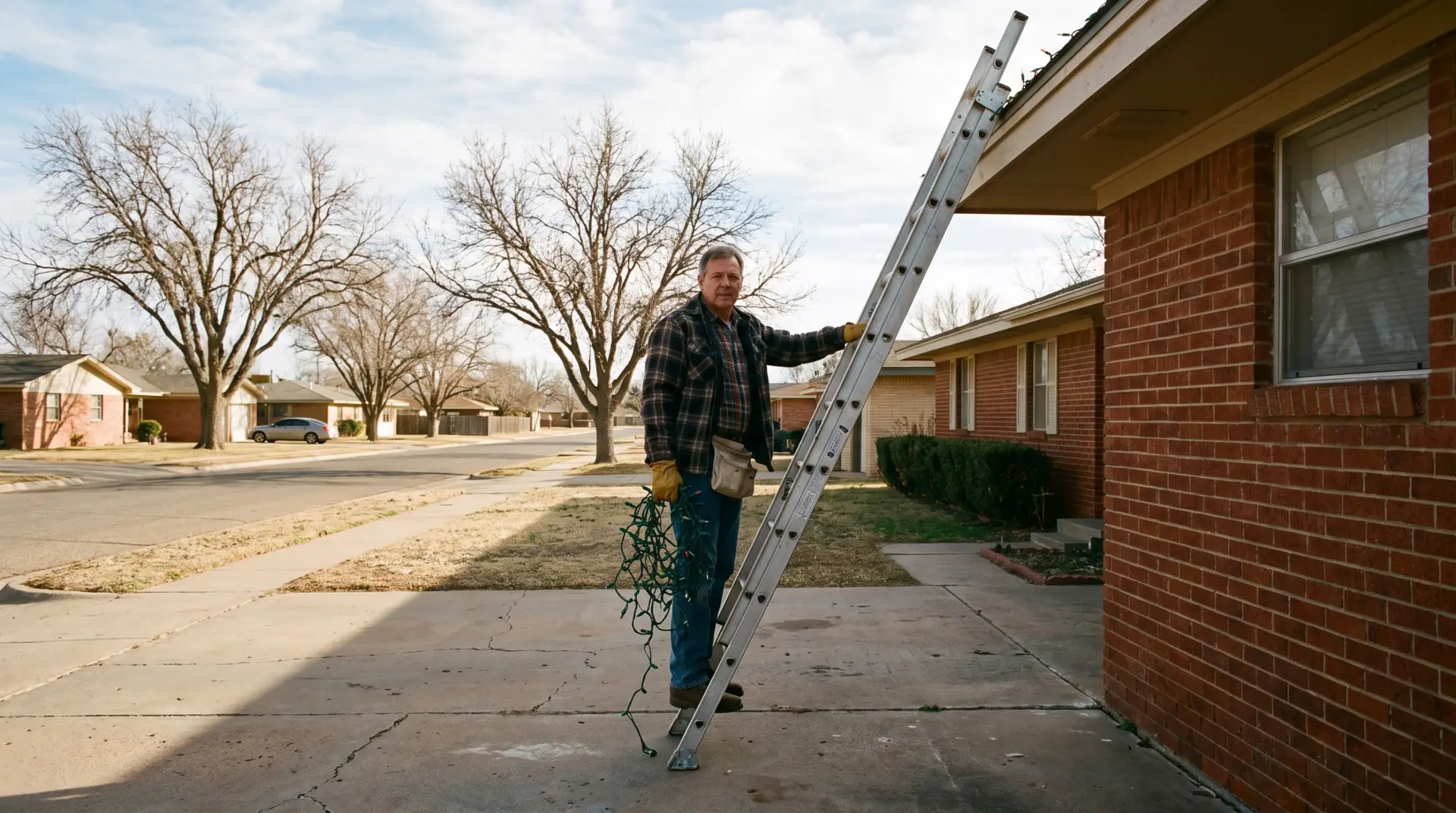
- Ladders and Roofs: The Part That Actually Sends People to the Hospital
- Christmas Light Safety in West Texas Wind, Dust and Cold
- Circuit Load, GFCI Protection and Fire Risk
- Final Word: Plan the Takedown Before You Start
- Frequently Asked Questions About Christmas Light Safety
Quick Answer: The Christmas Light Safety Rules That Matter Most
Five rules cover most of it. Use only lights and cords marked for outdoor use. Plug every outdoor run into a GFCI outlet or a GFCI-protected cord. Keep each connected run under 80 percent of the circuit rating, which on a standard 15 amp circuit means about 1,440 watts. Attach with clips made for shingles or gutters, never staples or roofing nails. And put the whole display on a timer so nothing burns unattended overnight.
For the ladder, set it at a 4:1 angle, one foot out for every four feet of height, on firm level ground, with the rails extending at least 3 feet above any edge you plan to reach over. Do not work alone, do not move a ladder while standing on it, and do not go up at all when the roof is wet, iced, or when the wind is gusting. In Lubbock in December, that last one rules out more days than people expect.
Use outdoor-rated lights and cords, run everything through GFCI protection, stay under 80 percent of the circuit load, attach with shingle or gutter clips instead of staples, and put the display on a timer. Set ladders at 4:1 on firm ground and stay down when it is windy, wet or icy.
Six Christmas Light Safety Checks Before You Plug Anything In
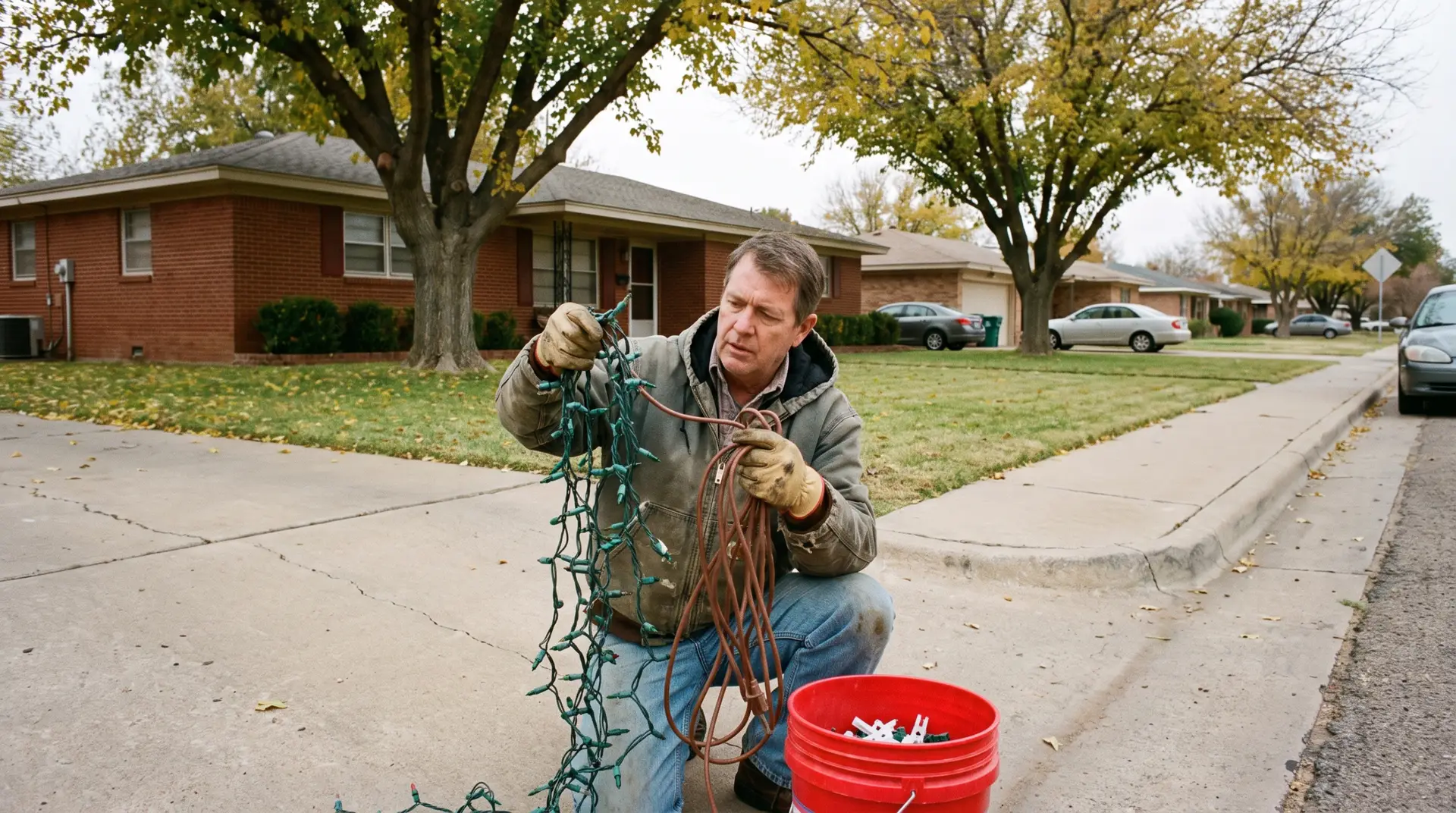
Most December problems were created in a storage tub the previous January. Cords get crushed under boxes, bulbs work loose, and the strand that was fine last year has a cracked socket somewhere in the middle. Fifteen minutes on the garage floor with the strings laid out catches nearly all of it, and it is far easier than diagnosing a dead section from the top of a ladder.
Lay everything out, plug each string in at a GFCI outlet, and walk the length of it. You are looking for heat, damage and anything that has gone brittle. Anything questionable goes in the trash, not back on the roof. A cracked socket you talk yourself into is the one that fails in the middle of a cold snap.
- Check the outdoor rating on every piece: Lights, cords and timers all carry a marking for indoor use, outdoor use, or both. Indoor-rated strings have thinner insulation that cracks in cold and lets moisture into the sockets. If the tag is gone and you cannot tell, replace it. A new set costs less than one service call.
- Inspect for cracked insulation and loose sockets: Run each strand through your hands. Feel for stiff spots, nicks, exposed copper, and sockets that wobble or have a bulb pushed in crooked. West Texas UV makes old wire brittle faster than most people realize, so strings kept in a hot garage age quickly even when they are not in use.
- Replace missing and burned-out bulbs: An empty socket on an incandescent string exposes contacts and lets water in. A burned-out bulb on some series-wired sets makes the rest of the string run harder. Carry spares on the ladder, and match the bulb size and voltage to what the set calls for rather than what is in the spare box.
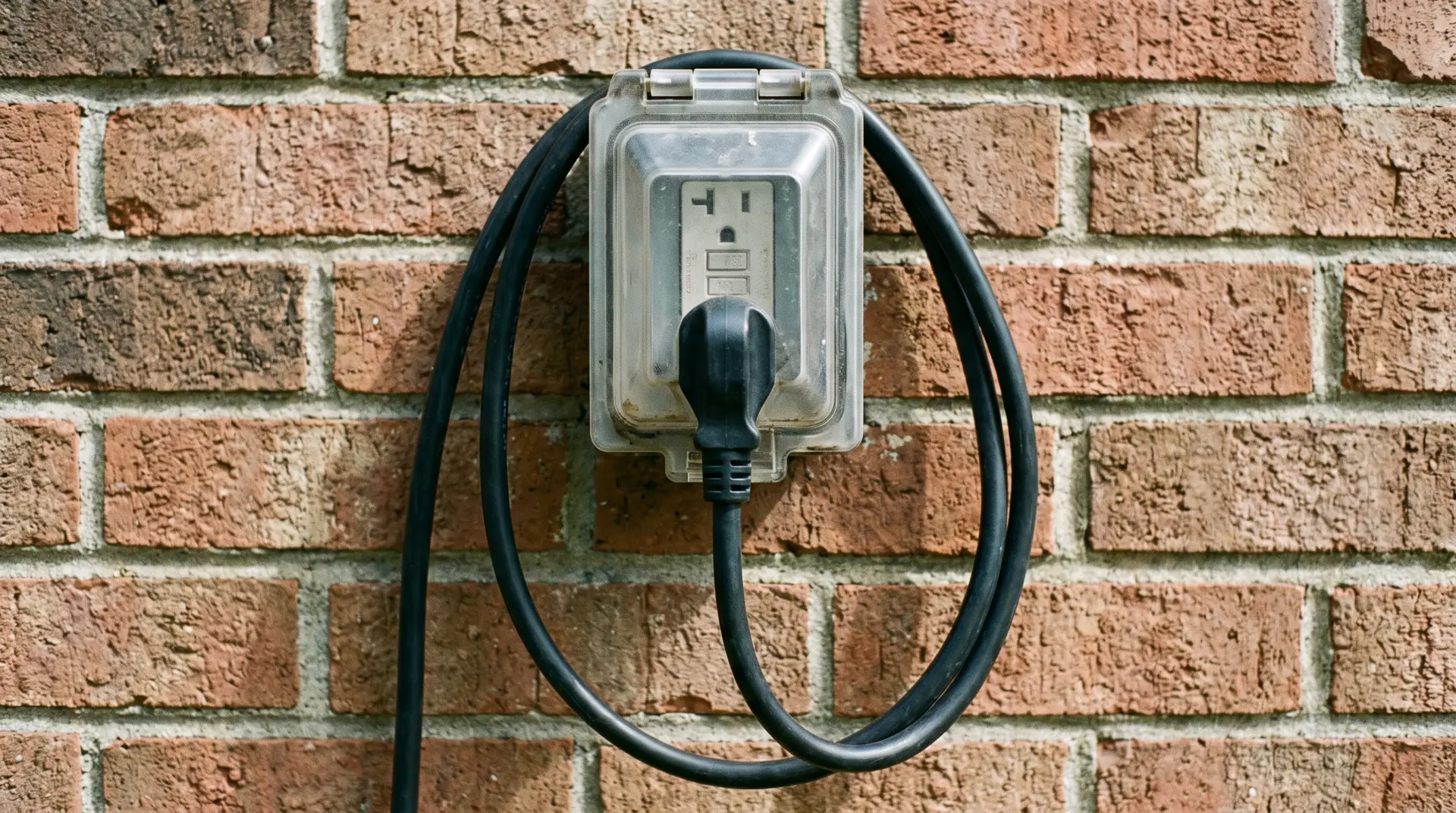
- Test the GFCI outlet itself: Press test, confirm the outlet drops power, press reset. Plenty of Lubbock homes built before the mid-1990s have exactly one exterior GFCI, often on the patio side, and some of them no longer trip. A GFCI that will not trip is not protecting anything.
- Sort your cords by gauge and length: Use 16 gauge for short light runs and 14 or 12 gauge for anything long or carrying multiple strings. Do not chain three short cords together to reach the front of the house. Longer runs at thin gauge drop voltage and generate heat at the connections.
- Set the clips aside before you climb: Have the right shingle tab or gutter clips in a pouch before the ladder goes up. Improvising with staples, nails or tape at the top of a ladder is where roof damage and injuries start. Count the clips against the run length on the ground.
Two things to leave alone entirely. Never attach anything to a service mast, meter head or any wire coming into the house, and never hang lights near an overhead service drop. Also skip nails and staples on the roof itself. A puncture in a shingle is a leak in February, and no display is worth a callback from your ceiling. The same goes for drilling fascia or screwing into brick mortar, which leaves you patching in January.
Ladders and Roofs: The Part That Actually Sends People to the Hospital
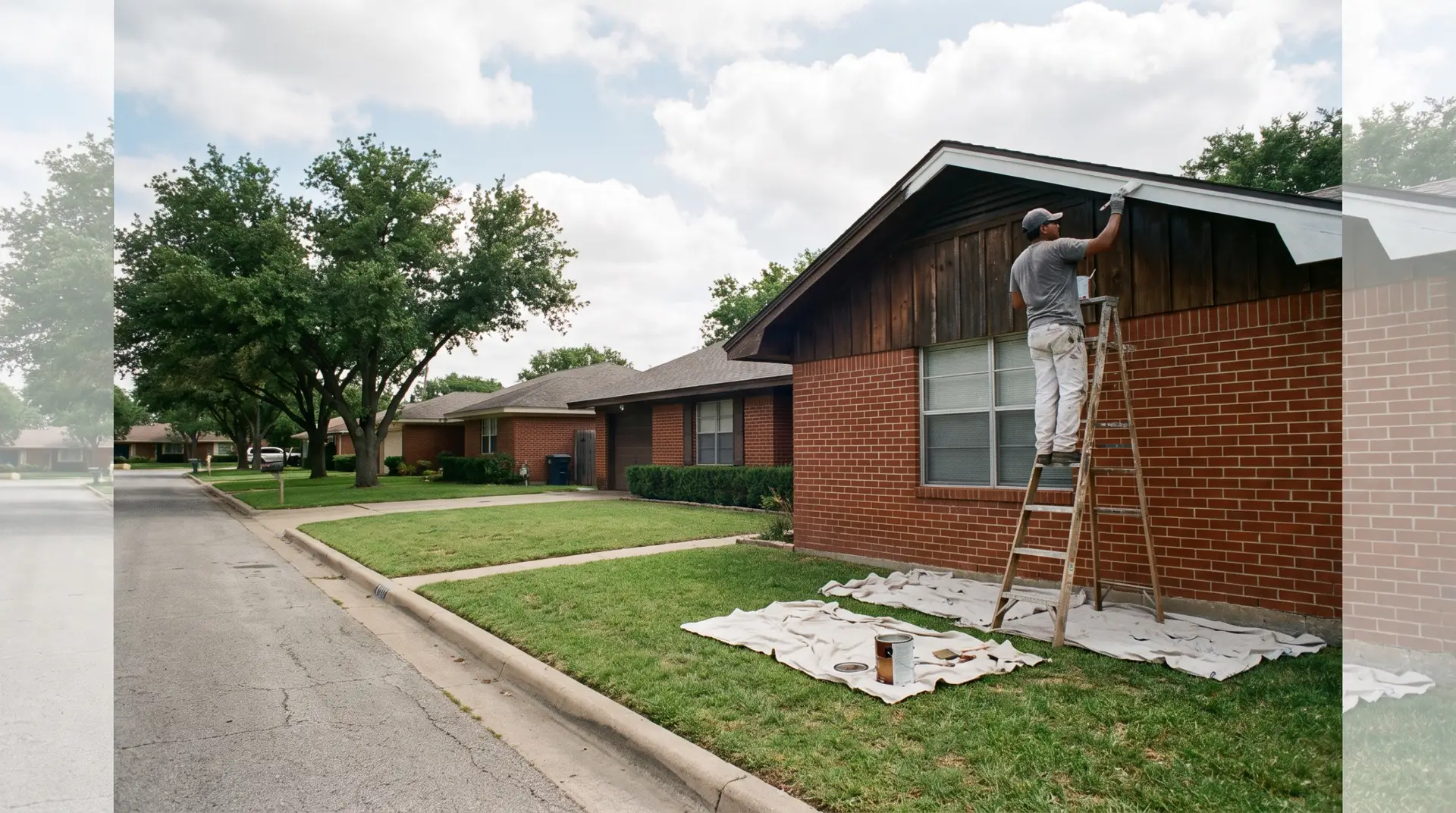
Electrical problems make the news. Falls fill the urgent care clinics. The pattern we see in Lubbock repeats every year: an extension ladder set too steep on ground that gives, or a homeowner reaching sideways instead of climbing down and moving the ladder six feet. Both are avoidable and neither takes extra equipment. What they take is a decision made on the ground, before the first climb, about how the run will be reached.
Set the base one foot out from the wall for every four feet of ladder height. Soft ground is the local wrinkle. Caliche fill compacts unevenly and a ladder foot can sink an inch or two under load, which changes the angle while you are up there. Set the feet on a board, check them after the first climb, and have somebody foot the ladder while you work. When you need to get onto the roof, the rails have to extend three feet past the eave so there is something to hold while stepping across.
Know your pitch before you commit. Anything over about 6:12 is steep enough that clean shoes and dry shingles are not enough, and a second story eave above about 18 feet is a ladder-and-ground job rather than a walk-the-slope job. Good christmas light safety practice on a steep or tall roof means working the perimeter from the ladder, using an extension pole for high clips, and accepting that some rooflines are not do-it-yourself. Our guide to installing roofline Christmas lights safely goes deeper on clips and pitch.
Christmas Light Safety in West Texas Wind, Dust and Cold
A display that goes up clean on a calm Saturday in November has to survive six weeks of Lubbock weather. December here means gusty afternoons, hard overnight freezes, dry air that builds static, and the occasional snow or ice event that puts weight on every run. Three local conditions do most of the damage, and all three have simple answers.
Wind That Works Everything Loose
We get windy stretches all winter, and a 40 mph afternoon will find every clip you did not fully seat. Strings pull free at the corners first, then whip against the shingles and grind granules off the surface. Loose strands also stress the connections, which is how a plug ends up half-pulled and arcing. Seat every clip by hand, keep runs snug rather than draped, and walk the perimeter from the ground after any big blow to spot sagging sections before they tear loose.
Cold, Ice and Wet Connections
Freeze-thaw swings here run both directions in a single day. Snow melts on a sunny afternoon, runs down to the lowest point in your cord run, and refreezes overnight. Every plug connection should be kept off the ground and off the roof surface, taped or covered with a weatherproof connector cover, and formed into a drip loop so water runs away from the plug instead of into it. Cold also stiffens wire, so never yank a frozen strand loose from a clip.
Blowing Dust and Static
Dry winters on the South Plains mean dust in every socket and a lot of static. Grit packed into an empty socket or a bulb base makes for a poor connection that heats up, and it is a common reason a section quits mid-season. Blow sockets out before installation, keep spare bulbs in a sealed bag rather than a loose box, and store everything indoors instead of in an uninsulated shed where dust and temperature swings work on the insulation year round.
Circuit Load, GFCI Protection and Fire Risk
The electrical side is where a small mistake compounds. A standard residential circuit is 15 or 20 amps, and the working rule is to stay under 80 percent of that, so roughly 1,440 watts on a 15 amp circuit and 1,920 on a 20. Old incandescent C9 bulbs draw around 7 watts each, which means a couple of long runs eat a circuit fast. LED versions of the same bulb draw a fraction of that, which is the single best reason to switch if you are still running incandescents on a large display.
GFCI protection is not optional outdoors. It cuts power in a fraction of a second when current finds a path it should not, which is exactly what happens when a socket fills with melted snow. If your house has no exterior GFCI outlet, use a portable GFCI adapter on the cord rather than skipping it. The Electrical Safety Foundation publishes free seasonal guidance on decorating loads, cords and outdoor connections at their holiday safety resources, and it is a short read worth doing before Thanksgiving.
Fire risk mostly comes down to heat and time. Overloaded cords warm up at the connections, dried-out greenery near a hot bulb is a genuine hazard, and displays left running all night with nobody home are the ones that go wrong. Put everything on a timer, run it in the evening, and shut it down overnight. Keep cords out from under rugs and door mats where heat cannot escape, keep bulbs away from wreaths and garland that have dried out indoors, and unplug the whole display before working on any part of it. If you are weighing bulb types for load and heat, our breakdown of C9, C7 and mini bulbs covers the tradeoffs.
Final Word: Plan the Takedown Before You Start
Almost nobody thinks about January in November, and that is when a lot of the damage and most of the second-half injuries happen. Cold, brittle strands get yanked off clips, frozen cords get pulled hard, and people go up on an icy roof because they want the lights down before company comes. Decide in advance how the display comes down and on what kind of day, and the whole season stays uneventful.
Store what you take down in labeled tubs indoors, coil rather than wad the strands, and throw away anything that failed rather than putting it back in the tub for next year. Our guide to Christmas light removal and storage in Lubbock walks through the process, and the installation cost guide covers what professional work actually runs here.
Sound christmas light safety comes down to honest limits. A single-story ranch in Wolfforth with a low pitch is a reasonable weekend project. A two-story in Tech Terrace with steep gables and a hard-to-reach peak is not, and there is nothing wrong with saying so. If you would rather have somebody else on the ladder, our Christmas light installation team handles design, install, maintenance and takedown, and we are already on the roof for a living.
Frequently Asked Questions About Christmas Light Safety
Electrical load, ladders, roof damage and weather questions from Lubbock homeowners
Follow the number printed on the tag of the set, because it varies by bulb type. Incandescent C9 strings often max out at two or three connected end to end, while LED sets frequently allow twenty or more because they draw so much less current. The other limit is the circuit. Keep everything on one outdoor circuit under 80 percent of its rating, which is about 1,440 watts on a standard 15 amp circuit. Exceeding either limit heats connections and trips breakers.
The lights do not. The attachment method does. Staples punch through the shingle face and create holes that never seal, roofing nails crack cold shingle tabs, and adhesives pull granules off when removed. Use all-in-one shingle tab clips or gutter clips sized to your roof edge, seat them by hand, and never walk a steep or wet slope. Strands left loose in the wind also grind against the surface all season, which is why snug runs and fully seated clips matter as much as clip type.
No. Put the display on a timer and run it during the evening hours. Lights left burning unattended overnight are the ones involved in most decoration fires, because a warm connection, a failing socket or a cord under a rug has hours to develop without anybody noticing. A timer also cuts the electric bill and extends bulb life. Set it to shut off around the time you go to bed, and check the display visually every few days for sagging strands or damaged cords.
Not on a ladder. Wind in the 20s and 30s is common here in late fall, and it will move both you and an extension ladder, especially when you are handling a long strand that acts like a sail. Watch the forecast and pick a calm morning, since afternoons here tend to be gustier. The same rule applies to wet or icy shingles and to any day cold enough that your hands lose grip strength. There is no deadline worth a fall.
Older Lubbock houses often have limited exterior outlets, one aging GFCI, and smaller service panels, so load management matters more. Test the GFCI before the season and replace it if it will not trip. Avoid running cords through windows or doors where they get pinched, and never use indoor extension cords outside. If breakers trip repeatedly, that is information rather than an inconvenience. Reduce the load or have an electrician look at the circuit instead of resetting it again.