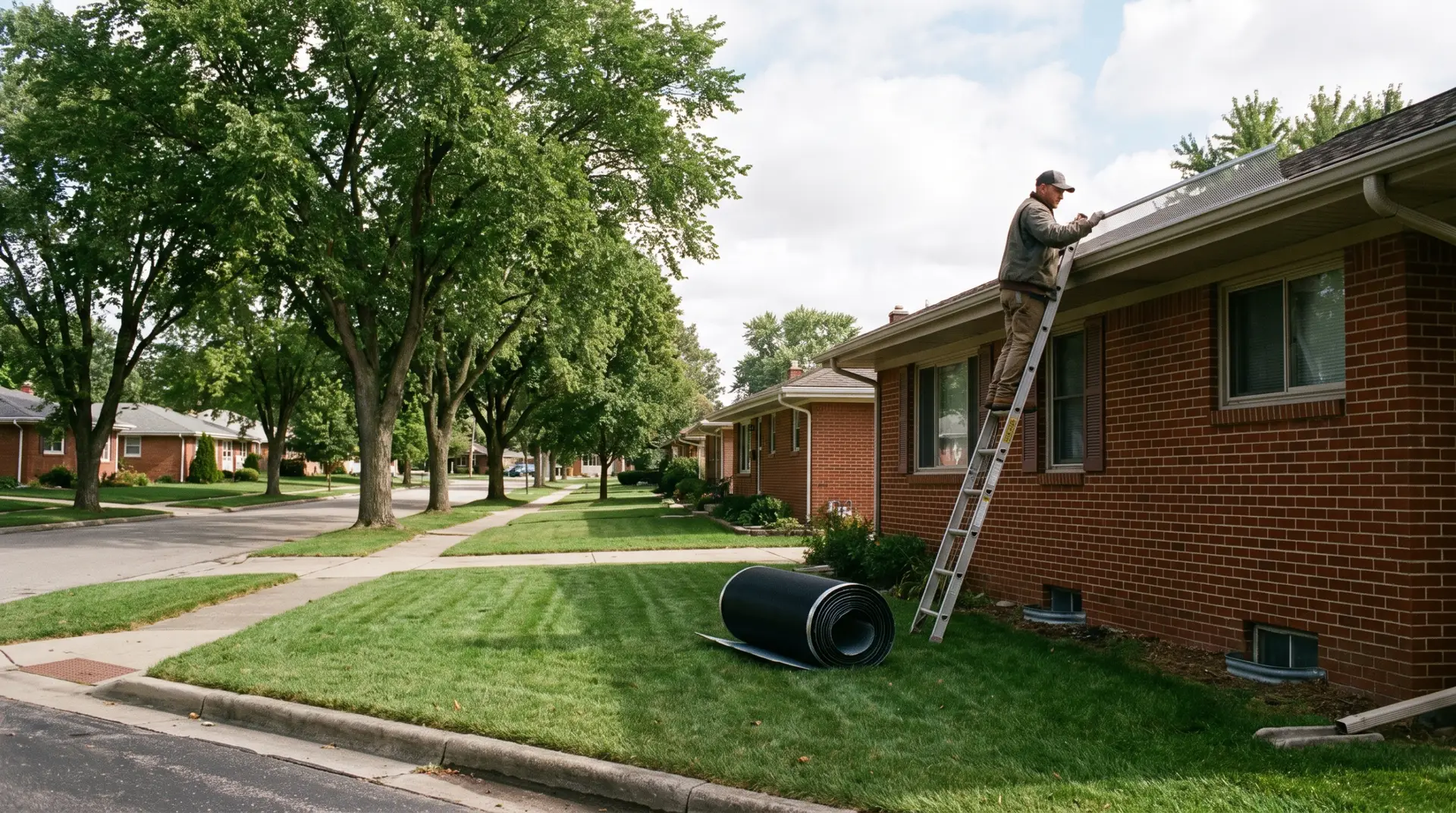
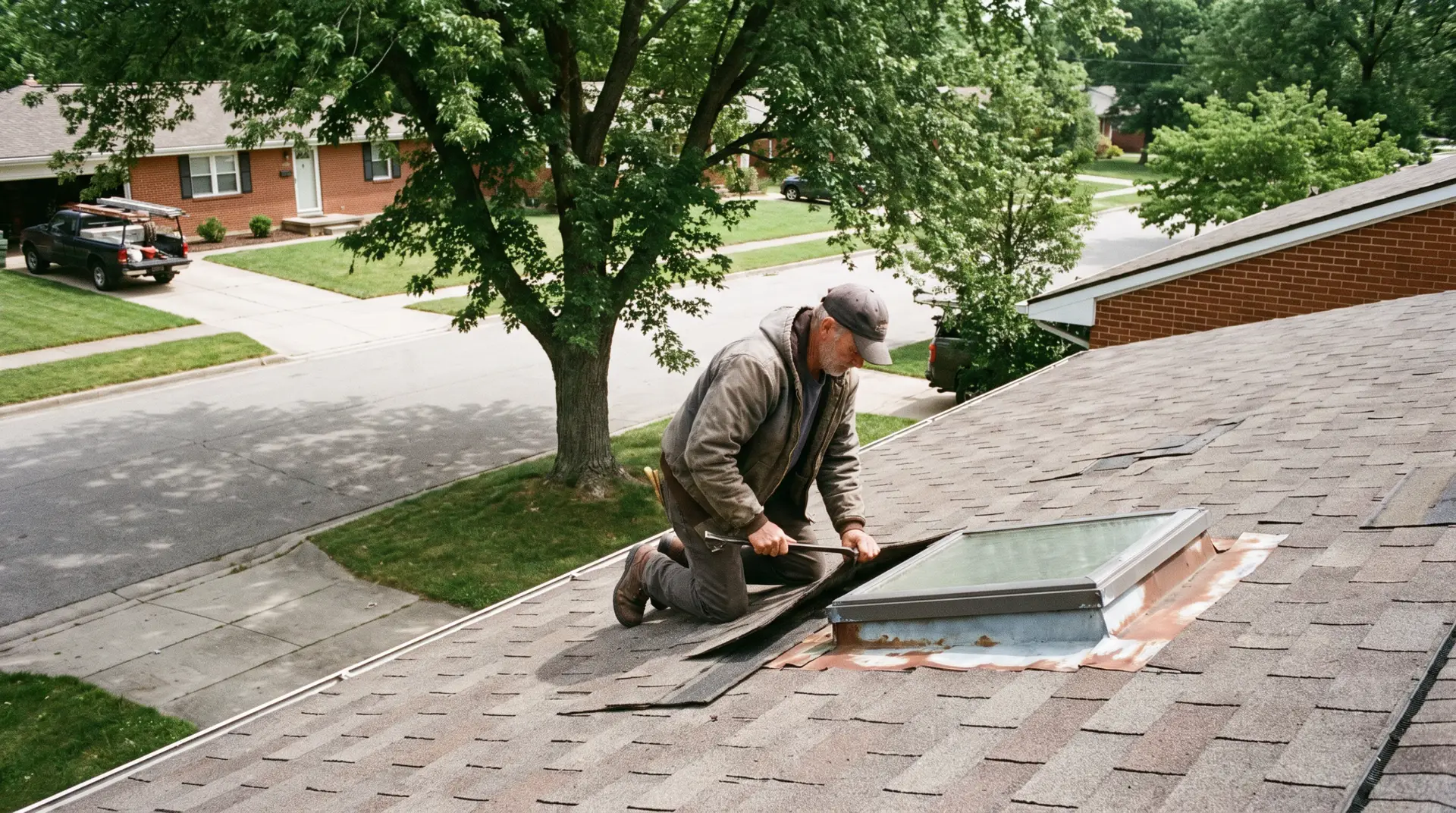
Soffit and fascia are the two parts of a Lubbock roof that almost nobody thinks about until a bird gets into the attic or a strip of trim starts flapping in a spring gust. They are the finish carpentry at the roof edge, and they do considerably more work than their appearance suggests.
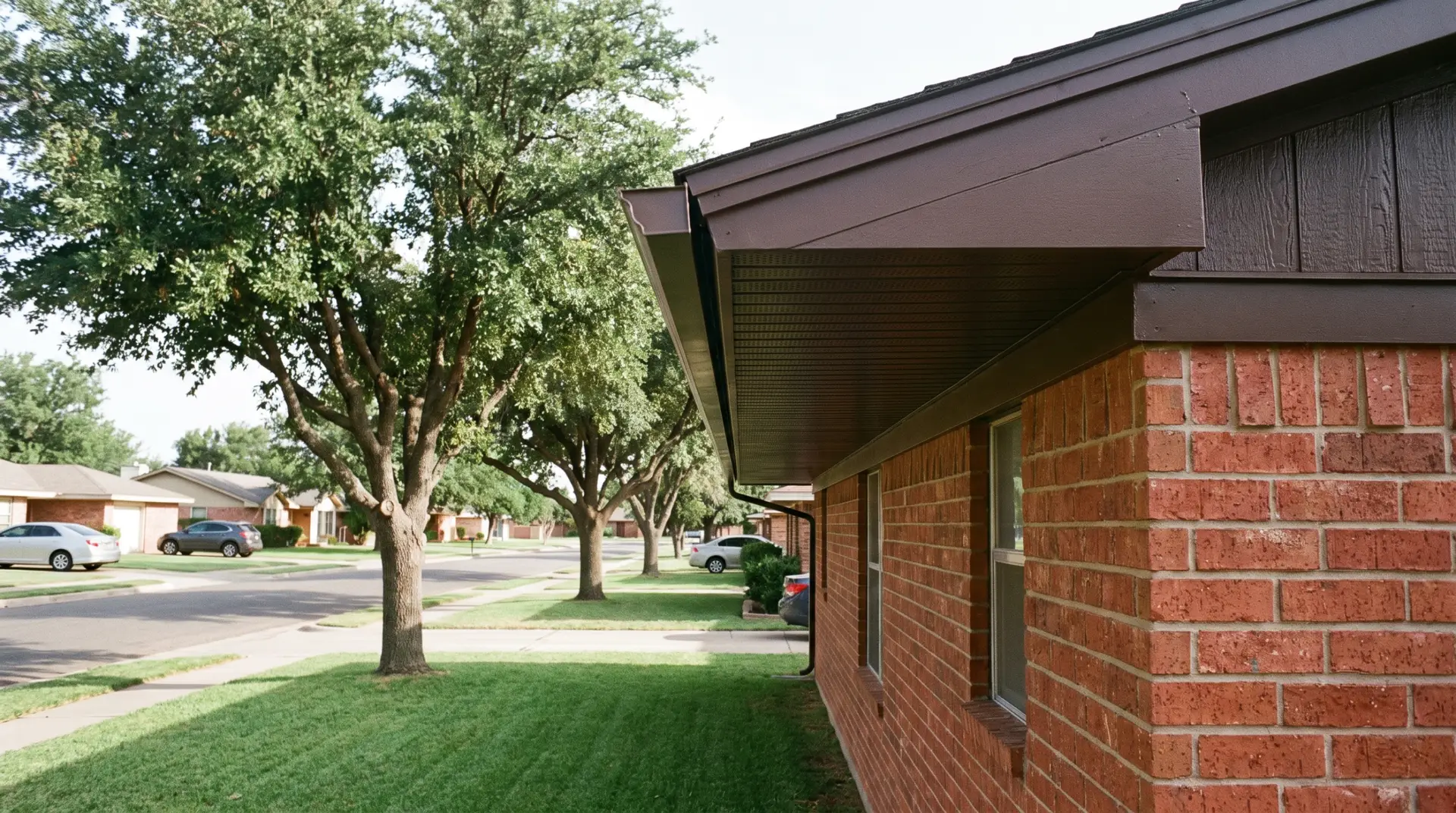
The fascia is the vertical board running along the roof edge that your gutters hang from. The soffit is the horizontal underside of the overhang, tucked between the wall and the fascia. Together they close off the roof structure, carry the gutter load, and feed intake air to the attic.
Out here they fail for reasons that have little to do with rain. Wind pressure, blowing grit, relentless UV and the occasional woodpecker do most of the damage, and by the time it is visible from the driveway the board behind it has usually been wet for a while.
On this page, a complete guide to soffit and fascia in Lubbock, TX:
- Quick Answer: What Soffit and Fascia Repair Costs in Lubbock
- Signs Your Soffit and Fascia Need Attention
- Why Soffit and Fascia Matter More Than They Look
- What West Texas Does to a Roof Edge
- Choosing Materials for Soffit and Fascia in Lubbock
- Final Word: Handling Soffit and Fascia Before It Spreads
- Frequently Asked Questions About Soffit and Fascia
Quick Answer: What Soffit and Fascia Repair Costs in Lubbock
Most soffit and fascia repairs in Lubbock run $8 to $20 per linear foot installed, depending on material and height. A typical single-story home has 150 to 220 linear feet of roof edge, so a full replacement usually lands between $1,500 and $4,000. Spot repairs of a rotted section run $300 to $900.
Material drives the spread. Painted wood is cheapest up front at roughly $8 to $12 per foot. Aluminum or steel wrap over wood runs $12 to $18. Fiber cement and PVC trim sit at the top at $15 to $22, and both hold up better to our sun than anything that needs field paint.
Two things push a quote higher: a second story, which turns a ladder job into staging, and gutters that have to come off and go back on. If the gutters are original and brittle, replacing them at the same time usually costs less than removing and rehanging them twice.
Those figures assume the rafter tails behind the fascia are sound. Where water has been running behind the board for years, the ends of the rafters themselves can be soft, and that is structural carpentry rather than trim work. It is not common, but it is the one finding that changes a repair quote materially once the old board is off.
Soffit and fascia repair runs $8 to $20 per linear foot in Lubbock, or roughly $1,500 to $4,000 for a full single-story replacement. Wind, UV and blowing grit cause most failures here, and the damage is usually worse behind the board than in front of it.
Signs Your Soffit and Fascia Need Attention
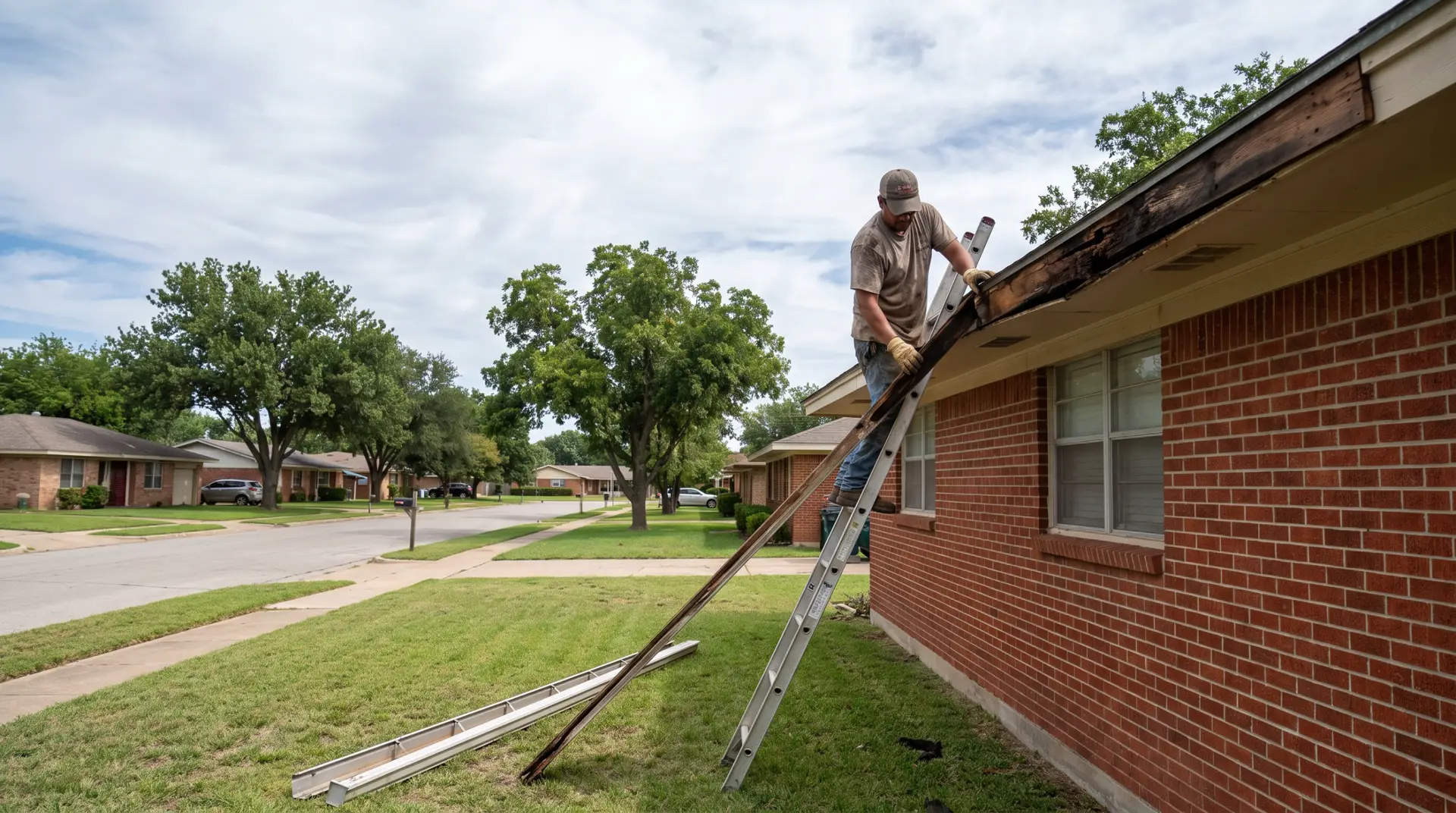
The roof edge is visible from the ground, which makes this one of the few roofing problems a homeowner can genuinely assess without a ladder. Walk the perimeter of the house slowly on a bright day and look up at the overhang rather than at the roof. Most of what matters shows from there.
Pay closest attention to the north and east elevations. Those get less sun, dry more slowly after the rain we do get, and are where wood rot tends to start. Then check anywhere a downspout turns or a gutter joint sits, because that is where water concentrates.
Do this in the fall if you can. Spring wind will have found any loose section over the previous months, and fixing it before the next hail season means the roof edge is sound when it matters most.
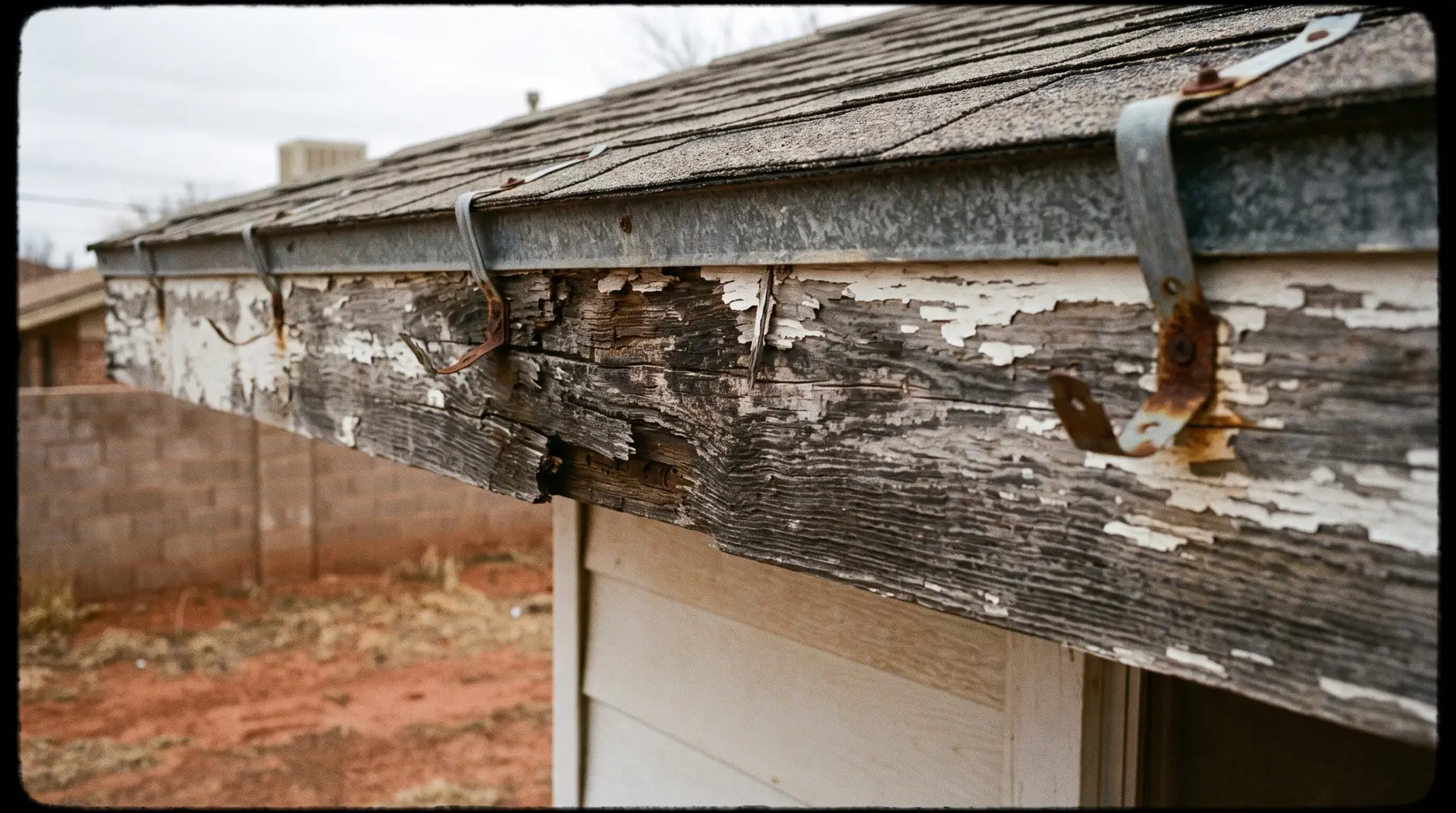
- Peeling or blistered paint on the fascia: The earliest visible sign, and it means moisture is moving through the board rather than sitting on it. Paint fails from behind before it fails from the front, so blistering usually indicates the wood is already damp.
- Sagging or wavy gutter line: Gutters hang from the fascia. If the run dips between brackets or pulls away at one end, the board holding the fasteners has usually gone soft rather than the bracket having failed.
- Gaps or missing panels in the soffit: Wind gets under a loose soffit panel and works it free over a season. Once one panel is out, the next one goes faster, and the opening is an invitation to birds, wasps and squirrels.
- Stains or streaks under the eave: Dark streaking on the soffit usually means water is coming over the back of the gutter or through a failed drip edge, and it has been doing so for a while.
- Daylight visible from inside the attic: Stand in the attic during the day and look toward the eaves. Light where the soffit should be closed means an opening that is also letting in dust, heat and wildlife.
- Woodpecker or insect holes: More common here than people expect, particularly on cedar fascia. A row of small holes means something has found the board soft enough to work on, and soft wood does not hold gutter fasteners.
Resist the temptation to simply wrap damaged wood in aluminum. Capping rotten fascia hides the problem rather than fixing it, traps the moisture that caused it, and gives a gutter nothing solid to hang from. Any wrap should go over sound wood, with the rotten sections replaced first.
The same applies to soffit. Screwing a new panel over a rotted framing member gives it nothing to hold, and the next spring wind will take both.
Why Soffit and Fascia Matter More Than They Look
The first job is structural, and it is the one people notice when it fails. Fascia carries the entire weight of the gutter system plus whatever water and debris is in it during a storm. A single run of full gutter is surprisingly heavy, and it is all hanging off screws driven into that one board. Soft fascia means fasteners that pull, which means a gutter that dumps water against the foundation instead of away from it.
The second job is ventilation, and it is the one that quietly costs money. Vented soffit is the intake half of an attic ventilation system. Hot air leaves through ridge or turbine vents at the top, and replacement air has to come in somewhere low. If the soffit vents are blocked by insulation, painted shut, or missing entirely, the exhaust vents at the ridge cannot do their job and the attic runs hot. In a Lubbock summer that shortens shingle life and raises cooling bills at the same time. Our guide to roof ventilation in Lubbock covers how intake and exhaust have to be balanced.
The third job is exclusion. A closed soffit keeps birds, wasps, squirrels and blowing dust out of the attic. Once an opening exists, something will find it, usually in spring. Removing a nest and repairing the damage afterwards costs considerably more than closing the gap would have.
The fourth is water management at the roof edge. The drip edge, the fascia and the back of the gutter form a detail that either sends water into the gutter or behind it. Get it wrong and the water runs down the fascia every time it rains, which is how most rot starts in the first place.
What West Texas Does to a Roof Edge
Roof edges here fail differently than they do in wetter climates. We are not fighting ice dams or persistent damp. We are fighting wind pressure, an abrasive atmosphere, and a UV load that breaks down coatings faster than most manufacturers assume. Each one attacks a different part of the assembly.
Wind pressure at the eave
The roof edge is where wind uplift is strongest. Air moving over a roof creates suction along the eaves and rakes, and a 60 mph gust front puts real force on anything not fastened well. Soffit panels are the usual casualty because they are light, held in a channel rather than screwed through, and only as secure as the J-channel they sit in. Once wind lifts one edge, the panel works itself loose over a season of ordinary windy days. This is why soffit repairs in Lubbock so often show up in April rather than after a single dramatic storm.
Blowing grit and UV
Caliche dust carried on a spring wind abrades paint and coatings, and it concentrates at the roof edge where air accelerates around the building. Add UV at 3,200 feet and a field-painted wood fascia on a west elevation can chalk and check within a few years, while the same board on the sheltered north side still looks acceptable. Once the paint film is broken, the wood takes on moisture every time it does rain, and the freeze-thaw swings we get in winter open those checks wider.
Dry rot from brief, heavy rain
Lubbock averages under twenty inches of rain a year, which convinces people that rot is a wet-climate problem. The trouble is how our rain arrives: an inch in under an hour, wind-driven, straight at the roof edge. Gutters overshoot, water runs behind the fascia, and the board stays damp in a shaded overhang long after the sun has dried everything else. Rot here is concentrated and local rather than general, which is why a house can have twenty feet of ruined fascia and a hundred and eighty feet of perfectly sound board.
Choosing Materials for Soffit and Fascia in Lubbock
Painted wood is still the most common fascia here, and on a sheltered elevation with a sound paint film it performs fine. The problem is maintenance: it needs repainting on a cycle that most homeowners do not keep to, and our sun is unforgiving about the gap between coats. If you like wood and will keep after it, it is a reasonable choice. If you know you will not, choose something else.
Aluminum or steel wrap over sound wood is the pragmatic middle. The metal takes the weather and the wood underneath still carries the gutter load. Done well it lasts decades with no painting. Done badly, with a wrap over damp or rotten wood, it hides an accelerating problem. Insist that every soft section is replaced before anything gets capped. The Forest Products Laboratory at the USDA Forest Service publishes research on how exterior wood weathers and why trapped moisture accelerates decay, which is the mechanism behind most bad wrap jobs.
Fiber cement and cellular PVC trim are the low-maintenance options. Fiber cement holds paint far longer than wood because it does not move much with moisture. PVC never rots at all, though it expands and contracts noticeably with temperature and has to be fastened with that in mind. Both cost more up front and both are worth it on a two-story where getting back up there is expensive.
For soffit, vented aluminum or vinyl panels are the practical default, and the important specification is net free vent area rather than the look of the perforations. A panel that appears vented but delivers very little airflow is common. If the attic runs hot, check what is actually installed before adding more exhaust at the ridge.
Final Word: Handling Soffit and Fascia Before It Spreads
This is one of the few exterior problems that reliably gets cheaper the earlier you deal with it. A single rotted eight-foot section is a half-day repair. The same neglect two years on has usually taken the gutter, some of the roof decking at the edge, and occasionally a rafter tail with it.
The practical rhythm is simple: walk the perimeter each fall, look up at the overhang, and deal with anything loose, stained or peeling before spring wind finds it. Pair that with a gutter clean and you have covered most of what goes wrong at a roof edge.
If you are already replacing gutters, do the fascia at the same time. The gutters have to come off either way, and paying for that removal once instead of twice is the single easiest saving available on this kind of work. Our guide to gutter installation in Lubbock covers how the two jobs fit together.
If you have a stain under an eave you cannot explain, or a gutter that has started to sag, it is worth having someone look before the next storm season. We handle roof edge work across Lubbock and the South Plains, and you can read more on our roof repair page. If the water has already found its way inside, our roof leak repair guide covers what happens next.
Frequently Asked Questions About Soffit and Fascia
Common questions from Lubbock homeowners about the trim at the edge of the roof
The fascia is the vertical board that runs along the edge of the roof, closing off the ends of the rafters. It is what your gutters are fastened to. The soffit is the horizontal surface underneath the roof overhang, running from the fascia back to the exterior wall. Fascia is mostly a structural and water-management part, while soffit is mostly about closing the space and letting intake air into the attic. They fail for different reasons and are often repaired together because reaching one means disturbing the other.
Expect $8 to $20 per linear foot installed, which puts a typical single-story home with 150 to 220 feet of roof edge somewhere between $1,500 and $4,000. Painted wood sits at the low end, aluminum wrap over wood in the middle, and fiber cement or PVC trim at the top. A localised repair of one rotted section usually runs $300 to $900. A second story adds meaningfully to the price because the work needs staging rather than ladders.
Not properly. The gutters hang directly from the fascia, so the board cannot be replaced with them still attached. A competent crew removes the gutter run, replaces the damaged fascia, then rehangs the gutters with new fasteners into sound wood. If your gutters are old, brittle or already sagging, replacing them during the same visit usually costs less overall than paying to take them down and put them back twice.
It can, significantly. Vented soffit is the intake side of attic ventilation. If panels are missing, painted over, or blocked by insulation pushed into the eaves, the ridge or turbine vents at the top have no replacement air to pull in and airflow stalls. The attic then runs much hotter through a Lubbock summer, which shortens shingle life and raises cooling costs. If you are adding exhaust ventilation, check the intake first, because adding more exhaust to a blocked intake achieves very little.
Painted wood typically lasts 15 to 25 years here if the paint is maintained, and considerably less if it is not, particularly on west and southwest elevations. Aluminum-wrapped wood commonly runs 30 years or more. Fiber cement and PVC can exceed 40 years. The variable that matters most is not the material but whether water is being kept off the board: a sound drip edge and gutters that actually catch the runoff will extend any of these by years.